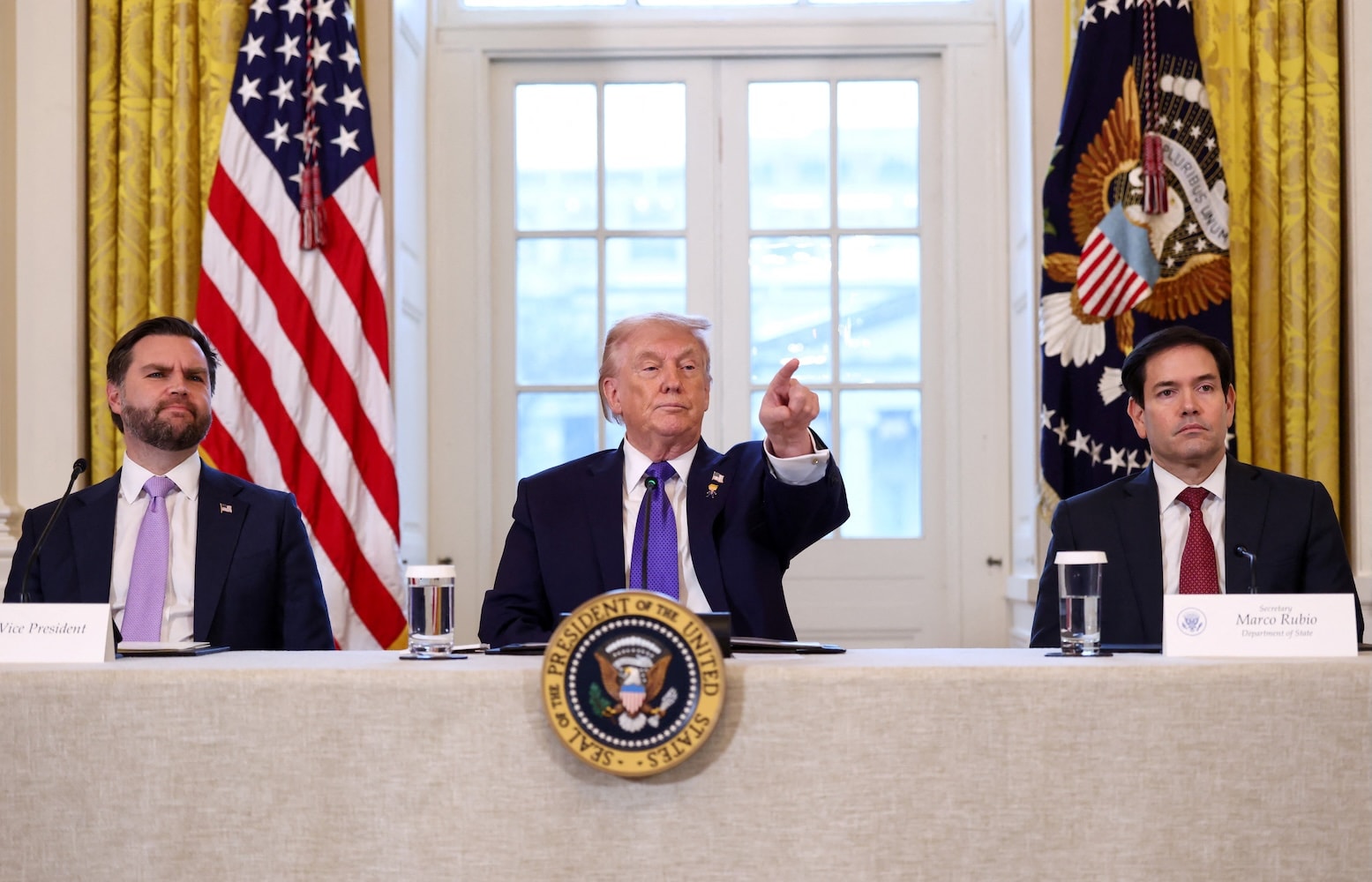
The efficacy of verbal intervention in global crude markets is governed by the law of diminishing marginal utility, specifically regarding the "credibility-action gap" in American foreign policy. When a political leader utilizes social media or public briefings to suppress oil prices or signal military outcomes, the market initially reacts to the information asymmetry. However, as the gap between rhetorical threats and kinetic or economic follow-through widens—particularly during a prolonged conflict involving Iran—the market shifts from a reactive stance to a structural "discounting" phase. The current erosion of the "Trump effect" on energy markets is not a failure of individual charisma but a systemic recalibration of how algorithmic trading and institutional hedges process non-binding political signaling.
The Mechanics of Market Desensitization
Traders operate on a hierarchy of data. At the foundation are physical fundamentals: inventories, spare capacity, and refinery throughput. Above these sit geopolitical risk premiums. Rhetorical intervention attempts to manipulate the risk premium without altering the physical fundamentals. This strategy relies on three specific transmission mechanisms, all of which are currently failing.
The Signal-to-Noise Compression
In the early stages of a geopolitical standoff, every statement from the White House acts as a high-fidelity signal. In a prolonged conflict scenario involving Iranian proxies or direct regional friction, the frequency of these statements increases while their predictive value decreases. This creates signal-to-noise compression. When a leader "warns" of a strike or "demands" an Opec+ production increase for the fiftieth time without a corresponding change in the Straits of Hormuz's daily tanker flow, the market reclassifies the communication as "background noise." High-frequency trading (HFT) algorithms are now tuned to filter out specific keywords that lack a "commitment trigger"—a measurable policy shift like an Executive Order or a confirmed deployment of a Carrier Strike Group.
The Exhaustion of the Strategic Petroleum Reserve (SPR) Lever
Verbal intervention is most effective when backed by a credible physical threat. Historically, the implicit threat accompanying a "low oil" tweet was a release from the Strategic Petroleum Reserve. However, the utility of this threat is a function of the reserve’s total volume. As the SPR reaches multi-decade lows, the "empty holster" effect takes hold. The market recognizes that the capacity for further physical intervention is mathematically constrained. Therefore, a demand for lower prices that isn't supported by the ability to flood the market with physical barrels is viewed by institutional desks as a bluff.
The Risk Premium Paradox
Constant rhetorical engagement intended to calm the market often has the inverse effect. By repeatedly highlighting the "Iran problem," the administration keeps the conflict at the forefront of the news cycle. This ensures that the risk premium remains "sticky." Instead of allowing the market to settle into a new equilibrium based on current supply levels, the frequent updates remind participants of the catastrophic "tail risk" (e.g., a total closure of the Strait of Hormuz). The attempt to talk the price down actually prevents the volatility index from retreating.
The Three Pillars of Iranian Counter-Signaling
Iran has mastered a strategy of "calibrated escalation" that directly undermines Western rhetorical influence. Their approach exploits the limitations of a news-cycle-driven Western strategy.
- Asymmetric Friction: Iran does not need to win a war to drive oil prices; it only needs to maintain the possibility of disruption. By using low-cost drones or proxy sabotage, they force the U.S. into high-cost rhetorical or military responses. The market observes this cost imbalance and realizes the U.S. cannot maintain its "tough" stance indefinitely without significant domestic economic pain.
- Sanctions Permeability: The market knows that "maximum pressure" is a relative term. So long as "ghost fleets" continue to deliver Iranian crude to independent Chinese teapots, the rhetorical threat of total economic isolation is seen as a fiction. Traders track the AIS (Automatic Identification System) data of tankers, not the transcripts of press conferences. If the tankers are moving, the rhetoric is ignored.
- Temporal Arbitrage: Iran plays a long-term game, knowing that U.S. political leaders are beholden to the short-term pressures of election cycles and gas station price displays. By dragging the conflict out, Iran forces the U.S. to exhaust its rhetorical ammunition.
The Cost Function of Credibility Erosion
Every time a market-moving statement is made and the market fails to move—or moves in the opposite direction—the "Credibility Delta" increases. We can express the impact of a leader’s statement ($S$) on price ($P$) as a decaying function:
$$\Delta P = \beta (C \cdot I)$$
Where:
- $\Delta P$ is the change in price.
- $\beta$ is the sensitivity of the market to political news.
- $C$ is the current Credibility Score (ranging from 0 to 1).
- $I$ is the Intensity of the statement.
In the current environment, $C$ is approaching a critical floor. When $C$ is low, even a high $I$ (e.g., threatening "fire and fury") results in a negligible $\Delta P$. The market has transitioned from a linear response model to a non-linear, threshold-based model. It will no longer react to words; it will only react to a "black swan" event or a fundamental shift in supply.
Structural Bottlenecks in the "Trump Move" Playbook
The specific tactics used by the previous administration—and being mimicked or anticipated now—face structural hurdles that did not exist in 2017.
The Opec+ Pivot to Sovereignty
Previously, a direct phone call to Riyadh could influence production quotas. Today, the Saudi-Russian alliance within Opec+ has decoupled from U.S. security interests to a significant degree. The Riyadh-Moscow axis prioritizes a "price floor" to fund their respective domestic transformations and war efforts. When the U.S. signals a desire for lower prices, Opec+ now views this as a request to subsidize the American consumer at the expense of their own national budgets. The lack of a "quid pro quo" that satisfies these sovereign requirements makes verbal pressure ineffective.
Domestic Shale Elasticity
The U.S. shale industry is no longer in a "growth at all costs" phase. Wall Street has demanded capital discipline. In previous years, high prices triggered an immediate surge in drilling, which a president could claim as a victory for "energy independence." Now, even if the administration encourages more production, public companies are hesitant to increase CAPEX. This removes the "supply response" part of the presidential influence equation. The market sees that the president cannot actually force U.S. companies to drill more, just as he cannot force Opec+ to pump more.
The Geopolitical Risk Convergence
We are witnessing a convergence where traditional geopolitical analysis fails because it ignores the technical realities of modern energy trading.
- Algorithmic Immunity: Large language models and sentiment analysis tools used by hedge funds have "learned" the pattern of political hyperbole. They are now programmed to look for "hard" nouns (names of specific oil fields, ship names, legislative bill numbers) rather than "soft" adjectives (huge, disastrous, amazing).
- The Insurance Barrier: Even if a leader says the seas are safe, Lloyd’s of London and other insurers set the rates. War risk premiums for tankers in the Gulf are based on actuarial data and recent kinetic incidents, not political assurances. The disconnect between "official" optimism and "insurance" reality creates a floor for oil prices that words cannot penetrate.
Strategic Play: The Shift to Hard Asset Contingency
For institutional investors and corporate strategists, the era of "trading the tweet" is over. The strategy must move from reactive sentiment tracking to structural position hedging.
The primary bottleneck is no longer the rhetoric coming out of Washington, but the physical security of the global midstream infrastructure. Since verbal intervention has lost its "shock value," the market is now more susceptible to actual supply shocks. We are in a "coiled spring" scenario. Because the market has become so cynical and desensitized to verbal warnings, it is likely underpricing the risk of a genuine, sudden disruption in the Strait of Hormuz.
The tactical recommendation is to ignore the "war of words" and focus on the "war of logistics." Monitor the "dark fleet" volumes and the deep-water storage levels in Qingdao. These are the only metrics that provide a factual basis for Iranian oil flow. Expect a return to "Mean Reversion" where oil prices stop reacting to headlines and stay range-bound based on the cost of the marginal barrel—until a kinetic event breaks the supply chain. At that point, the lack of rhetorical credibility will lead to a delayed but far more violent price spike, as there will be no "trusted voice" left to calm the panic.
Stop treating political statements as leading indicators. They have become lagging indicators of a leader's desperation to control a system that has outgrown the power of the bully pulpit. The real alpha lies in the divergence between the "administrative narrative" and the "maritime reality." Monitor the insurance premiums and the dry-dock schedules; ignore the press releases.