The water is too quiet.
At the bottom of a six-million-gallon pool in Houston, an astronaut named Reid Wiseman is learning how to move again. He is encased in a suit that weighs nearly three hundred pounds on land, a pressurized white fortress of fabric and polycarbonate. But here, suspended in the Neutral Buoyancy Lab, the weight is a lie. Divers have spent hours meticulously adding small lead weights and floatation foam to his gear until he neither sinks nor rises. He is a ghost in a machine.
This is the Neutral Buoyancy Laboratory (NBL), the closest thing we have to the lunar surface without leaving the atmosphere. It is a cathedral of engineering dedicated to one terrifying reality: the moon does not want us there.
Standard reports will tell you that NASA’s Artemis II mission is about "testing systems" or "validating hardware." That is technical shorthand for staying alive. When Wiseman and his crew—Victor Glover, Christina Koch, and Jeremy Hansen—step onto the Orion spacecraft, they aren't just piloting a ship. They are testing the limits of human biology against a vacuum that would boil their blood if given a single millimeter of weakness.
The training is a grueling, repetitive fight against physics.
The Mechanics of a False Floor
On the floor of this massive pool sits a mock-up of the lunar terrain. It isn't just a flat surface. It is a meticulously crafted landscape of sand, rocks, and craters designed to mimic the South Pole of the moon. This is where the sunlight hits at such a low angle that shadows become infinite, pitch-black pits.
Astronauts practice "Moon walking" in one-sixth gravity. In the pool, this is achieved by a complex ballet of "weighing out." If you move too fast, the water resists you. If you move too slow, you lose the momentum required to navigate the lunar dust.
Consider the gloves. A pressurized spacesuit glove is not a piece of clothing; it is a pneumatic tool. To close your hand, you have to fight against the internal air pressure of the suit. Imagine squeezing a tennis ball. Now imagine doing that every second for eight hours straight while trying to operate a delicate scientific drill or a geological hammer. Your forearms scream. Your fingernails sometimes delaminate from the beds.
This isn't just "training." It is an endurance sport played in a vacuum.
The Invisible Stakes of a Five-Second Delay
While the physical toll is obvious, the mental tax is what keeps flight directors awake at night. In the simulators, NASA doesn't just run through the "nominal" mission—the one where everything goes right. They spend 90% of their time in the "off-nominal."
They break the ship.
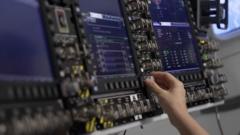
A computer screen flickers. A cooling pump hums a fraction too high. In that moment, the crew has seconds to diagnose a problem that could end their lives. But here is the catch: as they move further from Earth, the umbilical cord of communication stretches.
On the International Space Station, communication is nearly instantaneous. On the moon, there is a lag. It is a haunting silence. You ask a question, and you wait. You wait for your voice to travel 240,000 miles, and you wait for the answer to travel back. In an emergency, that delay feels like an eternity.
The crew must become a single organism. They learn each other’s breathing patterns. They learn the specific cadence of a crewmate’s voice when they are stressed versus when they are merely focused. They practice "high-fidelity" simulations where they are locked in a capsule for days, breathing recycled air, eating rehydrated paste, and dealing with simulated system failures that require them to tear apart the walls of their home to fix a leaking CO2 scrubber.
The Geography of Darkness
The Artemis missions are targeting the lunar South Pole, a region we have never visited with humans. Why? Because that is where the ice is. Ice is water. Water is oxygen. Water is fuel.
But the South Pole is a nightmare for a pilot.
On previous Apollo missions, the sun was high. The shadows were manageable. At the South Pole, the sun hugs the horizon. The shadows are long, distorted, and deeper than anything we experience on Earth. It creates a terrifying optical illusion. You might think you are stepping onto flat ground, only to realize you are stepping into a crater.
To prepare, astronauts train in "The Rock Yard" at Johnson Space Center. They wear headlamps in the dead of night, navigating through artificial boulders and craters. They learn to trust their instruments over their eyes. Their eyes lie to them. The instruments, cold and unfeeling, are the only things that tell the truth.
The Emotional Core of the Countdown
Why do we do this?
It is easy to point to the $28 billion price tag or the geopolitical optics of a new space race. But those are the concerns of people on the ground. For the four people sitting in the Orion capsule, the motivation is something far more primal.
It is the legacy of the "Earthrise." In 1968, William Anders snapped a photo of our planet rising over the lunar limb. It was the first time humanity saw itself as a whole, a fragile blue marble in a void of nothingness. Artemis is about seeing that again, but through a modern lens.
Christina Koch, who holds the record for the longest single spaceflight by a woman, isn't just going to break more records. She is going because we are a species of explorers who have spent too long looking at our feet.
There is a specific kind of bravery required to climb into a controlled explosion. It isn't the absence of fear. It is the calculated acceptance of it. The training isn't designed to remove the danger; it’s designed to make the danger manageable. It’s about building a bridge of competence over an abyss of uncertainty.
The Silence After the Splash
The mission doesn't end on the moon. It ends in the Pacific Ocean.
The re-entry is perhaps the most violent part of the entire journey. The Orion capsule will hit the atmosphere at 25,000 miles per hour. The heat shield will endure temperatures of 5,000 degrees Fahrenheit—half as hot as the surface of the sun.
The astronauts practice this, too. They sit in a mock-up capsule in the Gulf of Mexico, bobbing in the waves, waiting for recovery teams. They are nauseous. They are exhausted. They have just spent ten days in a space the size of a large SUV.
In these moments, the "behind the scenes" glamour of NASA evaporates. There are no cameras, no cheering crowds, just the smell of salt water and the cramped, hot interior of a metal bucket. This is the reality of the New Moon. It is dirty, it is uncomfortable, and it is incredibly dangerous.
But then, the hatch opens.
The first breath of Earth air after a week of bottled oxygen is said to be the sweetest thing a human can experience. It tastes like life. It tastes like the culmination of millions of man-hours, billions of dollars, and the quiet, steady heartbeat of a diver at the bottom of a pool in Texas, practicing how to take one small step.
We aren't going back to the moon to plant a flag. We are going back to see if we still have the courage to do things that are hard, simply because they are hard. The training is the proof. The sweat in the suit, the bruised fingernails, and the long silences in the simulator are the down payment on our future.
The moon is waiting. It is cold, it is dark, and it is indifferent to our arrival. But for the first time in over fifty years, we are finally ready to answer its silence.