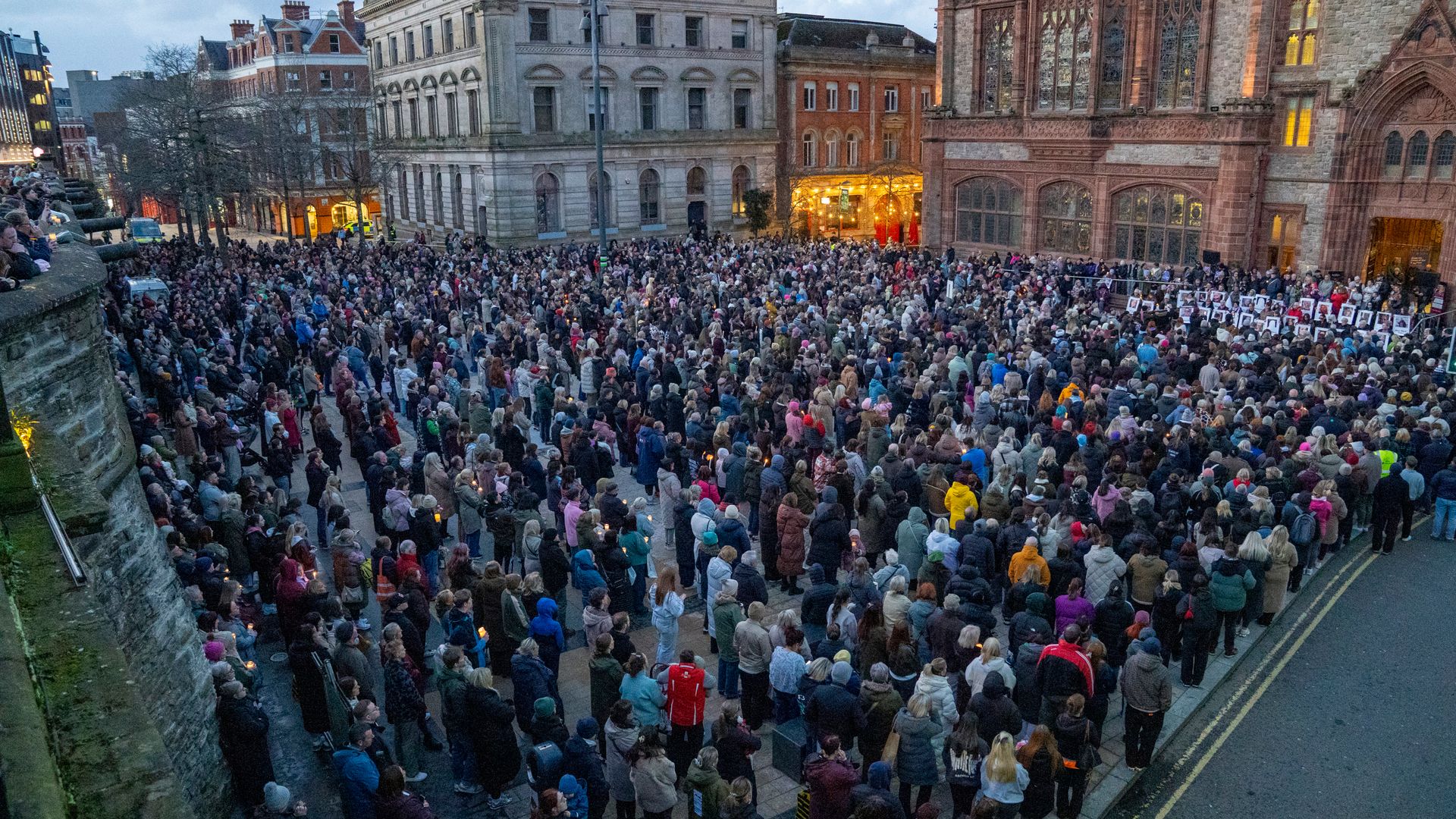
Thousands of people standing in a park with candles do not scare a murderer. They do not rewrite the criminal code. They do not fix the systemic collapse of proactive policing.
The recent outpouring for Amy is a textbook display of what I call "performative grief." It is the societal equivalent of changing a profile picture to a ribbon while the house is still burning down. The media loves it because it provides a visual—a sea of flickering lights and tear-stained faces. It makes for a great headline. But if we are honest about what justice actually looks like, we have to admit that these vigils are a sedative for the public, not a solution for the victim.
We are addicted to the catharsis of the crowd. We mistake shared emotion for civic action.
The Myth of Collective Healing
The common narrative suggests that these gatherings are "essential for the community to heal." That is a lie. Healing is a private, grueling process for the family left behind. For the other five thousand people in attendance, the vigil is an exit ramp. It allows the public to feel they have "done something" so they can go home, blow out the candle, and go back to their lives without demanding the uncomfortable, granular policy changes that actually prevent violence.
Justice is not a feeling. Justice is a cold, mechanical function of the state.
When a man is charged with murder, the "justice" phase has already failed. True justice would have been the intervention three months ago when the first red flag appeared. True justice would be a legal system that prioritizes the rights of the vulnerable over the procedural convenience of the offender. A vigil is just a wake for a failure we all accepted long before the crime occurred.
The Problem with Emotional Sentencing
The "justice for Amy" cries at these rallies often morph into a demand for blood. This is understandable, but it’s a strategic dead end. When we lead with emotion, we get emotional legislation.
I have seen this cycle play out for twenty years. A tragedy occurs, a crowd gathers, and politicians scramble to pass a "Name of Victim Act." These laws are almost always redundant or poorly drafted because they were written in the heat of a media cycle rather than in the cool light of data-driven criminology.
- Logic Check: If tougher sentencing alone stopped murder, the United States would be the safest country on earth. It isn't.
- The Reality: Deterrence happens at the point of opportunity, not at the point of sentencing.
By focusing on the "after," the vigil culture ignores the "before." We are obsessed with the monster in the dock, yet we refuse to look at the broken mental health databases, the backlogged restraining orders, and the underfunded patrol units that let the monster walk through the door in the first place.
Stop Watching the News and Start Watching the Budget
If you want justice, stop buying candles. Start reading your local council’s police budget and social services allocation.
The "lazy consensus" of the competitor article is that showing up is an act of defiance. It isn't. It’s an act of compliance. It fits perfectly into the state’s preferred narrative: Grieve collectively, go home quietly, and wait for the trial.
Real defiance looks like:
- Demanding a transparent audit of why the suspect was on the street if prior warnings existed.
- Challenging the privacy laws that prevent high-risk individuals from being tracked.
- Voting out the officials who prioritize "community outreach" fluff over hard-target security.
The Cost of the Crowd
There is a dark side to these mass gatherings that no one wants to admit. They create a "tragedy of the week" cycle. We peak in our outrage during the vigil, and then the interest drops off a cliff. By the time the case actually hits a courtroom eighteen months later, the park is empty. The cameras are gone. The "thousands" are busy at the next vigil for the next victim.
This creates a vacuum where the legal system can return to its sluggish, bureaucratic baseline. The pressure vanishes right when it needs to be at its highest.
Imagine a scenario where those same five thousand people didn't go to a park, but instead sat in the gallery of every minor bail hearing in their city for a month. The judicial system would buckle under the scrutiny. Judges would be forced to realize that the public is actually watching the mechanics of the law, not just the drama of the crime.
The Nuance of Real Protection
We talk about Amy as if her death was a natural disaster—unavoidable and tragic. It wasn't. Violence is usually a series of escalating data points.
The industry insider secret that no one tells you is that most "random" acts of violence are entirely predictable to those within the system. But the system is built on a philosophy of "wait and see." We wait for the assault to happen before we trigger the response.
Vigils reinforce this "wait and see" culture. They celebrate the response while ignoring the preventative failure. We are honoring the victim's memory while effectively ignoring the conditions that created her.
What You Should Be Asking Instead
Instead of asking "How can we show our support?", you should be asking "Where was the breakdown in the chain of custody?"
- Was the suspect out on early release?
- Was there a protective order that wasn't enforced?
- Did a neighbor call the police three hours before the event?
The answers to those questions won't fit on a poster at a vigil. They are boring. They involve paperwork, legislation, and accountability. But those answers are the only things that will stop the next Amy from becoming a hashtag.
The candles will be wax on the pavement by tomorrow morning. The suspect will still be in a cell, and the system that failed to stop him will still be running on the same faulty software.
If you think standing in a crowd is justice, you’ve already lost the fight.
Real justice is silent, rigorous, and happens in the rooms where the budgets are signed, not in the parks where the songs are sung.
Put the candle down and pick up a ballot.