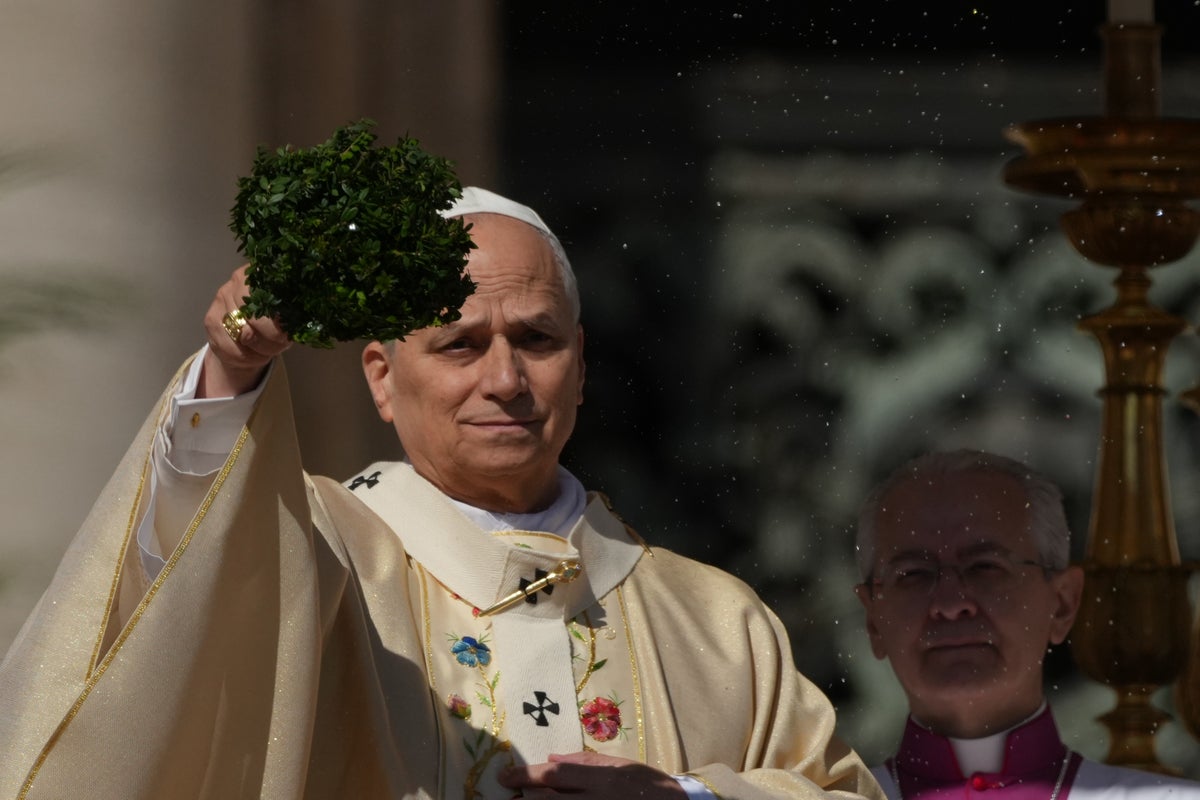
Pope Francis stood before the traditional Urbi et Orbi crowd this Easter Sunday, framing a plea for peace that was far more than a religious ritual. He called for a general exchange of all prisoners between Russia and Ukraine and demanded immediate humanitarian access to Gaza. While the headlines captured the moral clarity of his words, the geopolitical reality remains stubborn. Papal influence is hitting a ceiling in a world where hard power and national security interests override the soft power of the Holy See. This is not just a story about a religious leader making a speech; it is a look at the breakdown of traditional mediation in an era of total war.
The Logistics of Mercy in a Scorched Earth Conflict
The Pope’s specific demand for an "all-for-all" prisoner swap between Moscow and Kyiv is a calculated diplomatic maneuver. It bypasses the complex territorial disputes that have stalled previous peace talks and focuses on a human cost that both sides, theoretically, could agree to mitigate. However, the mechanism for such an exchange is fraught with intelligence and military hurdles.
Ukraine and Russia have conducted periodic swaps, but these are often lopsided or used as psychological leverage. When the Vatican attempts to insert itself as a neutral broker, it faces a Kremlin that views the Catholic Church with historic suspicion and a Kyiv that, while respectful, cannot afford to appear weak. The Pope is not just asking for a gesture; he is asking for a logistical miracle.
Historical precedent shows that the Vatican succeeds best when it operates in the shadows. The 2014 rapprochement between the United States and Cuba was a masterclass in quiet diplomacy. In contrast, the public nature of the Easter message serves a different purpose. It puts world leaders on notice. By making these demands from the central balcony of St. Peter’s Basilica, the Pope is attempting to shame the international community into action. Shame, however, is a dwindling currency in modern statecraft.
The Gaza Deadlock and the Limits of Moral Suasion
In the Middle East, the Vatican finds itself navigating an even more treacherous path. The call for a ceasefire and the release of hostages in Gaza is consistent with the Holy See’s long-standing support for a two-state solution. But the current conflict has fundamentally shifted the baseline for negotiation.
The Israeli government remains focused on the total dismantling of Hamas, while Hamas uses the hostage situation as its primary survival tool. Into this void, the Pope offers a plea for humanitarian aid. While necessary, it does not address the underlying security fears that drive the tactical decisions on the ground. The Vatican's voice is one of many in a crowded room of mediators, including Qatar, Egypt, and the United States, all of whom bring actual financial or military leverage to the table.
The Problem of the Neutral Arbiter
Neutrality is the Vatican's greatest asset and its most significant liability. Because the Holy See does not command an army or control trade routes, its only weapon is the "word." In a conflict like Gaza, where both sides see the struggle as existential, the moral middle ground feels like a vacuum.
- Humanitarian Corridors: The Pope’s insistence on these routes is backed by international law, yet they are frequently blocked by military necessity or political brinkmanship.
- Hostage Negotiations: The Vatican has offered to facilitate releases before, but the lack of direct leverage over non-state actors like Hamas complicates these efforts.
- Long-term Stability: The Church looks toward decades-long outcomes, while the combatants are looking at the next twenty-four hours.
Weapons of War and the Business of Death
One of the most stinging portions of the Easter address targeted the global arms trade. Francis pointed out the irony of celebrating the "Prince of Peace" while record amounts of capital flow into the production of increasingly sophisticated weaponry. This is where the Pope shifts from a religious figure to a systemic critic of the global economy.
The defense industry is currently experiencing a gold rush. From the drone manufacturers in Turkey and Iran to the massive aerospace firms in the United States and Europe, war is a growth sector. When the Pope calls for an end to the "winds of war," he is effectively calling for a massive restructuring of how nations protect themselves and how their economies function.
The Economic Shield
Nations justify arms spending as a deterrent. They argue that peace is only maintained through strength. The Pope argues the opposite: that the very existence of these weapons makes their use inevitable. This ideological clash is the heart of the current global stalemate. We are seeing a return to Cold War-style buildup, where the threat of total destruction is the only thing keeping the Great Powers from direct confrontation.
The Vatican’s stance is that this "peace of terror" is unsustainable. It ignores the accidental triggers and the localized suffering in proxy wars. Yet, no major power is willing to be the first to blink. The Pope’s message is a direct challenge to the military-industrial complex, a force that holds more sway over policy than any pulpit.
The Fragmentation of Global Unity
The underlying crisis that the Easter message highlights is the decay of international institutions. The United Nations is paralyzed by the veto power of the Security Council. Regional blocs are fractured. In this environment, the Pope is one of the few global figures who can still claim to speak for a universal humanity rather than a specific national interest.
But speaking is not the same as governing. The 1.3 billion Catholics worldwide provide a massive base of support, but that support is not monolithic. In Poland, the Church's view on the war in Ukraine might lean more toward military defense. In the Global South, the focus might be on the secondary effects of war, such as food insecurity and inflation.
The Shift to the Global South
Francis has increasingly centered his papacy on the concerns of the Global South. This is visible in how he discusses war, not just as a political event, but as a catalyst for poverty and migration. The Easter message touched on the suffering in Syria, Lebanon, and sub-Saharan Africa—conflicts that have largely fallen off the front pages of Western newspapers.
By broadening the scope, the Vatican is trying to prevent a narrow "Western-centric" view of global security. It reminds the world that a grain shipment blocked in the Black Sea means a famine in the Horn of Africa. Everything is connected. This systemic view is the Vatican's unique contribution to the dialogue, even if it is often ignored by the people actually pulling the triggers.
Strategic Silence and Public Outcry
There is a tension within the Vatican's diplomatic corps. Professional diplomats often prefer the "quiet path," avoiding public denunciations to keep channels open with dictators and aggressors. Francis, however, has shown a tendency to break this silence when he feels the moral cost of inaction is too high.
This creates a high-stakes environment. If the Pope speaks too harshly against a particular leader, the Church in that country may face retaliation. If he is too vague, he is accused of moral cowardice. The Easter message attempted to walk this line by focusing on the victims and the general "folly of war" rather than naming and shaming every individual perpetrator.
The Success of Small Gains
While a total end to global conflict is a tall order, the Vatican measures success in smaller increments.
- A single prisoner released because of a back-channel request.
- A shipment of medicine that reaches a besieged city.
- A temporary truce that allows civilians to flee a combat zone.
These are the metrics of a diplomacy that deals in souls rather than territories. The hard-hitting reality is that while the Pope's words fill the air in St. Peter's Square, the decisions that will determine the fate of the "all-for-all" prisoner swap are being made in bunker-style war rooms in the Kremlin and Kyiv.
The Pope is essentially a man with a megaphone standing in front of a landslide. He cannot stop the mountain from moving, but he can alert the people in its path. The real question is whether the world leaders he is addressing have already tuned out the frequency he is broadcasting on.
The effectiveness of the Vatican's intervention depends on whether these leaders still value the "rules-based order" they so often cite. If the world has truly moved into a post-rule era where only force matters, then the Easter message is a beautiful, tragic relic of a different time. If there is still a shred of desire for international legitimacy, then the Pope’s call for prisoner swaps and aid corridors provides a necessary off-ramp for leaders who have painted themselves into a corner.
The pressure now moves from the pulpit to the foreign ministries. They are the ones who must take these moral demands and turn them into workable treaties. It is a grueling, unglamorous task that often fails. But as the smoke rises over Gaza and the trenches deepen in the Donbas, the alternative to this difficult diplomacy is a slide into a global conflict that no amount of prayer can contain.
Stop waiting for a grand peace treaty that solves everything in one stroke. The path forward is through the granular, painful work of exchanging one human being for another and ensuring one truck of flour reaches one hungry family. That is the baseline. Anything else is just noise.