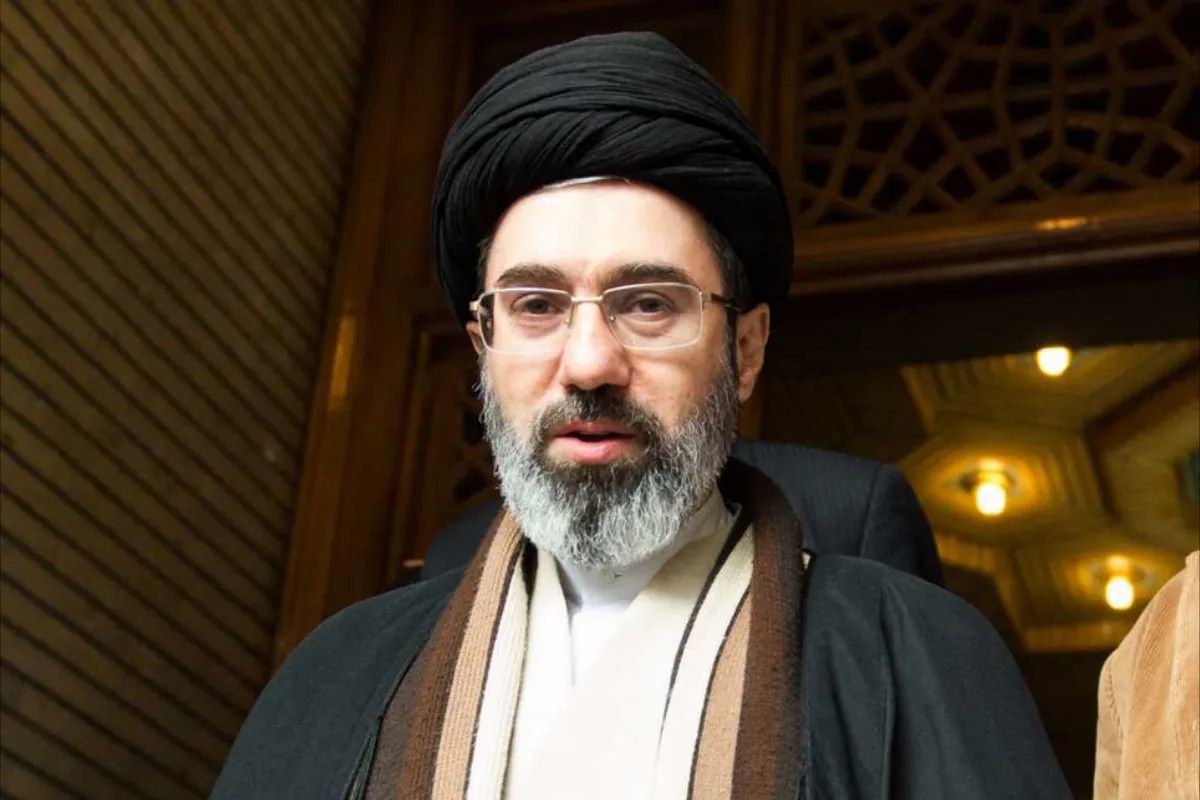
The sudden silence surrounding Mojtaba Khamenei has triggered a frantic intelligence scramble from Washington to Tel Aviv. While the world watches the kinetic exchange of missiles and drones across the Middle Eastern sky, a far more consequential drama is unfolding within the labyrinthine corridors of the Beit Rahbari. The apparent disappearance of the Supreme Leader’s second son is not merely a tactical mystery. It is a systemic shock to the Iranian clerical establishment that could rewrite the regional order before the next election cycle.
Intelligence agencies have long viewed Mojtaba as the shadow operator of the Islamic Revolutionary Guard Corps (IRGC) and the designated heir to his father’s theocratic throne. His absence from recent high-profile state functions and the lack of digital footprints in a regime that increasingly relies on visual propaganda suggests something is broken. This isn't just about a missing person. This is about the viability of the transition plan for a nuclear-threshold state.
The Infrastructure of a Shadow Heir
To understand why the CIA and Mossad are burning through assets to locate Mojtaba, one must understand his role as the bridge between the old guard clergy and the modern military industrial complex of Iran. He is the primary conduit through which the Office of the Supreme Leader exerts control over the IRGC’s sprawling business empire.
For years, Mojtaba has managed the financial networks that bypass international sanctions. These are not simple bank accounts. We are talking about a sophisticated web of front companies, shipping lanes, and digital currency exchanges that keep the Iranian economy breathing. If he is incapacitated, in hiding, or sidelined by an internal coup, the structural integrity of these financial bypasses is at risk.
The Western interest in his whereabouts is not just a matter of curiosity. It is about identifying the new point of contact for the regime's deep-state operations. If Mojtaba has been removed from the board, the IRGC may be operating without its traditional leash. That makes the entire region significantly more volatile.
Signals Intelligence and the Sound of Silence
Modern espionage relies heavily on electronic emissions. In Tehran, the movements of high-level officials are usually tracked through a combination of satellite imagery, intercepted communications, and the "digital noise" generated by their security details.
The current "black hole" regarding Mojtaba’s location suggests a high-level operational security (OPSEC) shift. There are three realistic scenarios that analysts are currently weighing:
- The Preemptive Bunker Strategy: Given the precision of Israeli strikes against Hezbollah and IRGC leadership in Damascus and Beirut, the regime may have moved its most valuable political asset into a "hardened" facility. This would involve a total severance from electronic communication.
- The Internal Purge: The rivalry between the clerical establishment and the hardline military commanders is at an all-time high. Mojtaba’s ascent was never a guarantee, and his absence might signal a shift in favor of a non-hereditary succession model favored by certain IRGC factions.
- Medical Crisis: Ali Khamenei is 85. The health of the successor is often more guarded than the health of the incumbent. A sudden medical emergency would be treated as a top-tier state secret to prevent a collapse in morale among the Basij and regular forces.
The difficulty in confirming any of these stems from Iran's mastery of "denied area" operations. They have learned from the vulnerabilities shown by their proxies. They know that a single cell phone signal can lead to a precision munition.
The Succession Vacuum and Regional Fallout
If Mojtaba Khamenei is out of the picture, the list of viable candidates to replace the Supreme Leader shrinks to a dangerously small pool. The late Ebrahim Raisi was the other "favorite son" of the establishment. His death in a helicopter crash earlier this year already left a massive hole in the regime's long-term planning.
Without Mojtaba, the transition of power becomes an open floor fight. This is the scenario that keeps Pentagon planners awake at night. A stable, albeit hostile, Iran is predictable. An Iran in the middle of a violent, internal succession crisis is a wild card with a massive arsenal.
Israel’s intelligence focus on Mojtaba is particularly intense because he is seen as the architect of the "Ring of Fire" strategy—the encircling of Israel with high-precision rocket fire from Lebanon, Syria, Iraq, and Yemen. Removing the architect doesn't necessarily stop the construction, but it creates confusion in the command structure.
Why Conventional Surveillance is Failing
Western agencies are finding that traditional satellite imagery is insufficient when dealing with a regime that has spent decades building an "underground city" infrastructure. Tehran has invested billions in tunnel networks and reinforced bunkers that are deep enough to withstand conventional bunker-busters.
- Human Intelligence (HUMINT) Gaps: The IRGC’s internal security wing, the Intelligence Organization of the IRGC, has conducted a ruthless "cleansing" of potential informants over the last eighteen months.
- Encrypted Dead Drops: Instead of satellite phones, the inner circle has reportedly reverted to physical couriers and low-tech communication methods that leave no trace in the electromagnetic spectrum.
- The Double Problem: There are persistent reports of the regime using body doubles for high-ranking officials to confuse overhead surveillance and potential assassination teams.
The Economic Consequences of a Missing Successor
Markets hate uncertainty, and the Iranian Rial has historically reacted violently to rumors of instability within the Rahbar’s inner circle. Mojtaba’s disappearance coincides with a period of extreme economic pressure. If the "Manager of the Empire" is gone, the shadowy companies that fund the regime's survival are effectively leaderless.
We are seeing a stagnation in high-level decision-making regarding oil exports to China. This suggests that the person responsible for signing off on these back-channel deals—Mojtaba—is currently unavailable. Foreign investors, specifically those from Beijing and Moscow, are likely asking the same questions as the CIA. They need to know if the person they've been dealing with for a decade still has the keys to the vault.
The Role of the Clerical Assembly
The Assembly of Experts is officially tasked with choosing the next leader, but everyone knows the real decision is made in the shadows. Mojtaba’s disappearance creates a dilemma for this body. If they cannot produce a clear successor, the IRGC might decide that a "Council of Leaders" or a direct military junta is more effective than a traditional theocracy.
This would represent the final evolution of the Iranian state: from a revolutionary religious movement to a standard military autocracy with a religious veneer. Mojtaba was the last best hope for maintaining the clerical-military hybrid model.
The search for Mojtaba Khamenei is not just about one man. It is a search for the future direction of a nation that sits at the center of the world's most volatile energy and security corridors. Every day he remains missing is a day the regime's aura of invincibility erodes further.
The silence is loud. It is the sound of a system holding its breath, waiting to see if the architect of its survival has been permanently deleted from the script. Intelligence assets will continue to probe the edges of Tehran's security perimeter, but the most telling sign will be the next state broadcast. If the son does not appear when the father speaks, we can assume the transition has already failed.
Monitor the movement of the IRGC’s 10th Seyyed al-Shohada Division; their redeployment to the capital’s perimeter often precedes a major internal announcement regarding the leadership's status.