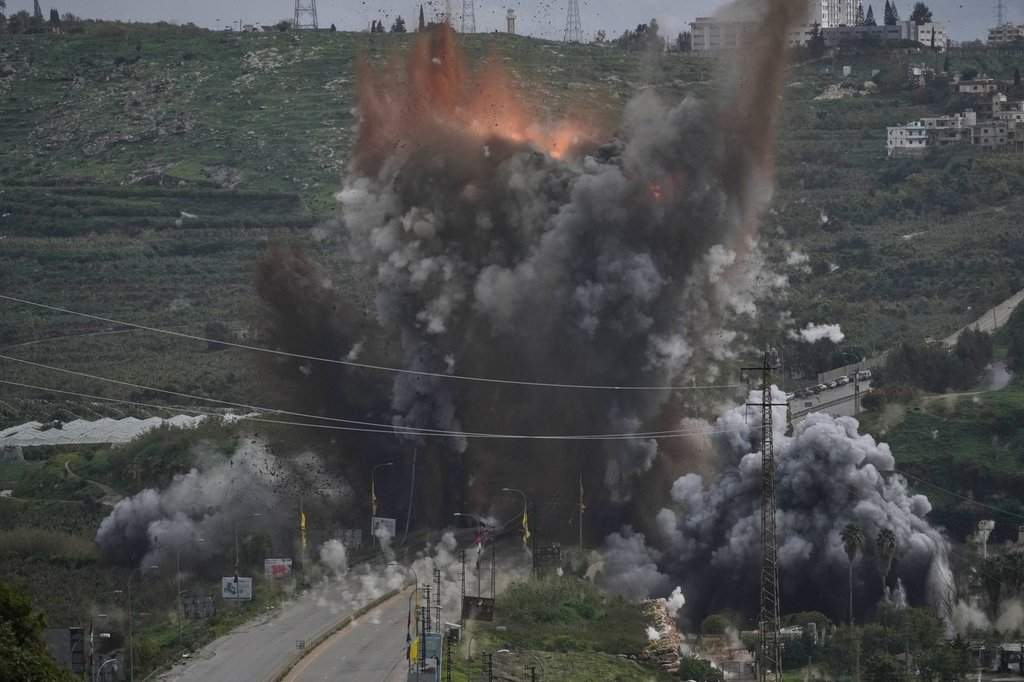
The pundits are screaming about "escalation" and "global energy collapse" because Donald Trump mentioned Iran’s power plants. They see a scorched-earth military strategy. I see a massive failure to understand how modern asymmetric warfare actually functions. If you think blowing up a transformer in Bushehr is about winning a war, you’re still playing with lead soldiers while the world has moved to high-frequency algorithmic destruction.
Standard geopolitical analysis suggests that hitting Iran's energy infrastructure is the "ultimate leverage." The logic is lazy: kill the lights, kill the economy, kill the regime. It sounds clean. It sounds decisive. It is also fundamentally wrong. You might also find this related story useful: The $2 Billion Pause and the High Stakes of Silence.
The Myth of the Crippling Blow
History is littered with the corpses of "decisive" infrastructure campaigns that did nothing but harden the target. From the Blitz to the rolling blackouts in modern conflicts, civilian populations don't just give up when the air conditioning stops. They adapt. They radicalize. Most importantly, the regime's core military capabilities—the ones that actually project power through proxies and missiles—are rarely tied to the civilian grid.
I’ve spent two decades watching analysts overestimate the fragility of authoritarian energy sectors. They treat a national power grid like a delicate glass ornament. In reality, it’s a series of redundant, dirty, and highly repairable nodes. You don't "end" a war by hitting a turbine; you just start a more expensive, more chaotic version of it. As highlighted in recent articles by Al Jazeera, the results are worth noting.
Why Oil Is the Wrong Metric
The "Energy Target" obsession usually centers on oil. The assumption is that if the U.S. or its allies take out Iran’s ability to export crude, the regime's bank account hits zero.
This ignores the reality of the shadow market. As long as there is a demand for a $70 barrel of oil, there will be a way to move it. We’ve seen this with "ghost fleets" and mid-sea transfers that bypass every sanction imaginable. Attacking the physical plants doesn't stop the flow; it just increases the risk premium, which ironically puts more money into the pockets of the middlemen and the black-market financiers the West is trying to starve.
If you want to actually disrupt a nation’s power, you don't aim for the smoke stacks. You aim for the clearinghouses. But that’s boring. It doesn't make for good television or a strong campaign rally.
The Secondary Market Chaos
Let’s talk about the data the "lazy consensus" ignores: the ripple effect on global LNG and Brent Crude.
Imagine a scenario where a strike successfully takes 2 million barrels per day off the market. The immediate price spike doesn't just hurt Iran. It subsidizes every other adversary on the planet. You’re effectively giving a massive pay raise to every oil-producing rival while simultaneously strangling the industrial base of your own allies in Europe and Asia.
It’s a strategic own-goal. You are burning down your neighbor’s house to get rid of a wasp nest on the porch, then wondering why your own roof is on fire.
Tactical Reality vs. Political Theater
When a leader threatens "power plants," they are speaking to a domestic audience that wants to feel powerful. They aren't speaking to the Joint Chiefs.
Real dominance in the 2020s isn't about physical destruction. It’s about interdiction.
- Cyber-Kinetic Asymmetry: Why drop a billion-dollar bomb on a concrete structure when you can manipulate the frequency of the grid until the hardware destroys itself?
- Financial De-platforming: The real "power plant" of the Iranian state is its ability to access hard currency.
- Supply Chain Strangulation: Modern turbines require specialized parts. If you can’t get the bearings, the plant is a paperweight within six months anyway.
The obsession with "kinetic" strikes—explosions you can see from a satellite—is a 20th-century hangover. It’s expensive, it’s messy, and it creates a moral high ground for the target that they don't deserve.
The Logistics of the "No End in Sight" Fallacy
The media loves the phrase "no end in sight." It implies a stalemate. In reality, there is no end in sight because the objectives are poorly defined. If the goal is "regime change via darkness," you will be waiting forever.
I’ve watched Western firms pour money into "security analysis" that predicts a 90% chance of regime collapse if the lights stay off for a month. It never happens. The elite have generators. The military has dedicated fuel reserves. The only people who suffer are the shopkeepers and the families—the very people you supposedly want to "liberate."
Stop Asking About Targets
People keep asking, "Which plant will they hit first?"
That is the wrong question.
The right question is: "What happens to the price of neon, or the insurance rates for tankers in the Strait of Hormuz, the second a single spark flies?"
The economic fallout of a strike on energy infrastructure is non-linear. It doesn’t just move the price of gas at your local station; it breaks the fragile insurance and reinsurance markets that keep global trade moving. If you can't insure a ship, it doesn't matter if the oil is there or not. The trade stops.
The Brutal Truth of Energy Warfare
Attacking energy infrastructure is the ultimate sign of intellectual bankruptcy in foreign policy. It is what you do when you have run out of ideas and want to look "tough."
It’s a high-risk, low-reward gamble. You risk a global depression for the sake of a temporary tactical win that the target can repair with Chinese or Russian help in a matter of weeks. We saw this in Ukraine; we saw this in Iraq. Infrastructure is resilient. Human systems are resilient.
If the goal is truly to win, you don't attack the source of the power. You attack the utility of it. You make the energy irrelevant by cutting off the systems it’s meant to fuel.
Anything else is just fireworks. Expensive, dangerous, and ultimately useless fireworks.
Stop looking at the map of power plants. Start looking at the ledger of the banks that fund them. That’s where the war is actually won, and that’s exactly where no one is looking.
Shutting down a grid is a headline. Controlling the flow of capital is a victory.
Choose one.