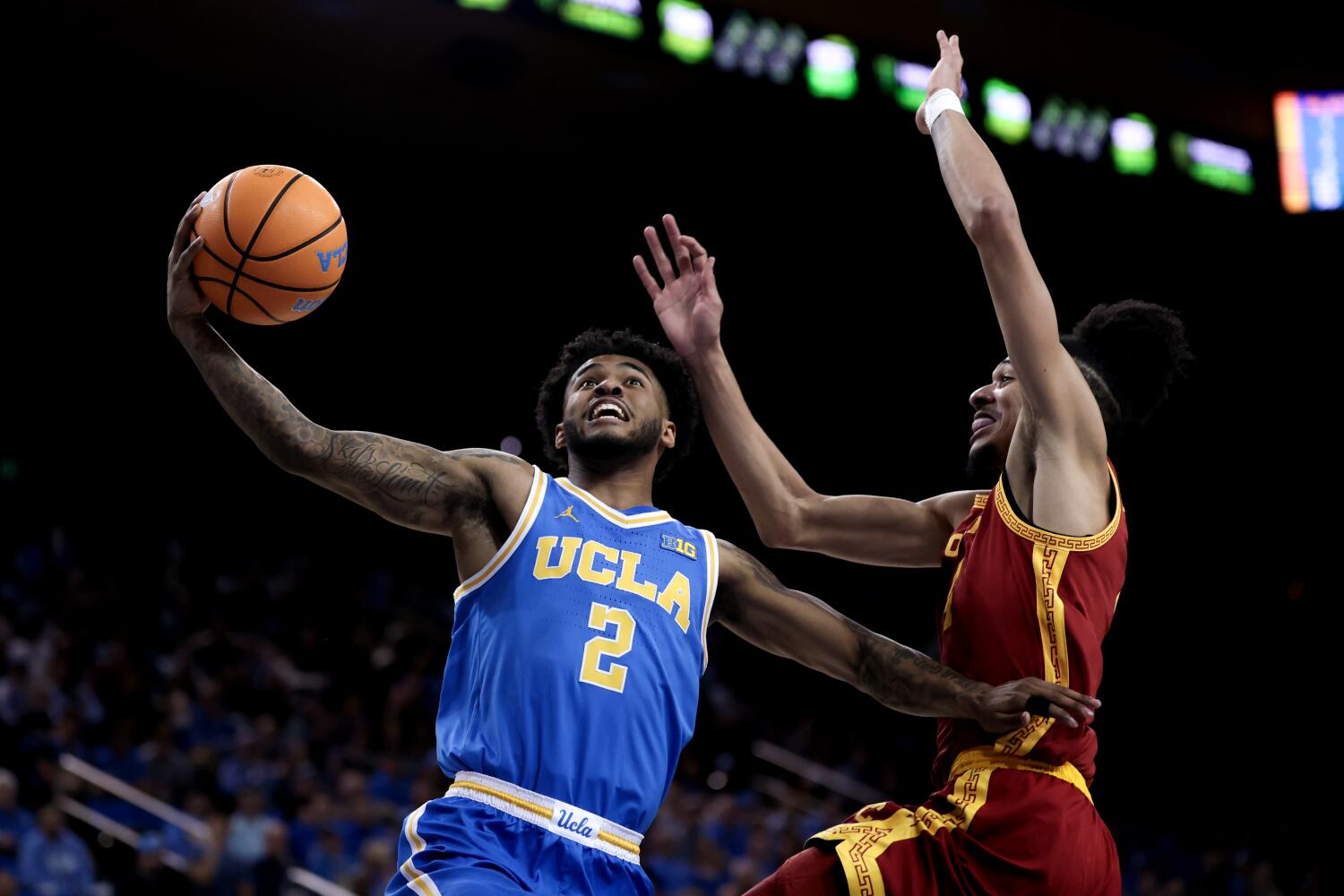
The post-game autopsy of USC’s loss at Pauley Pavilion reads like a Victorian tragedy. Pundits are crying about "what could have been." They are mourning a season of "missed opportunities." They are acting as if a few injuries or a bad bounce are the only things standing between the Trojans and a Final Four run.
They are wrong.
This isn't a story about bad luck. This is a story about a fundamental failure in program building. The "humbling" loss to UCLA wasn't an outlier or a fluke; it was a mirror. It showed a program that has traded its soul for hype, its grit for social media impressions, and its defensive identity for a roster of names that look better on a recruiting graphic than they do on a box score.
If you’re wondering "what could have been," stop. You’re asking the wrong question. The real question is: Why did anyone believe this team was built for anything else?
The Myth of the "Talent Gap"
The loudest complaint after the UCLA blowout was that USC didn’t have its "full complement of weapons." This is the favorite shield of the mediocre coach and the delusional fan. It suggests that basketball is simply an additive equation of star ratings.
It doesn't work that way.
UCLA didn't win because they had "more talent" in the traditional, recruiting-service sense of the word. They won because they have a system. Mick Cronin doesn't recruit "weapons"; he recruits soldiers. While USC was busy collecting "high-upside" guards and players with famous last names, UCLA was building a wall.
Basketball at the collegiate level is won in the gaps. It’s won by the team that can sustain 40 minutes of physical, exhausting, soul-crushing defense. USC’s roster construction prioritized "NBA potential." That’s great for the draft in June. It’s a death sentence in the Pac-12 (or the Big Ten) in February.
I’ve spent fifteen years watching programs prioritize the "look" over the "engine." When you build a team around offensive versatility without a foundation of defensive accountability, you aren't building a contender. You’re building a circus act. And when the shots stop falling—which they always do on the road—the circus has nowhere to go but the exit.
The Star Power Trap
Let’s talk about the elephant in the Galen Center: the obsession with celebrity.
USC has become the "influencer" of college basketball. They want the bright lights. They want the headlines. They want the Bronny James circus and the Isaiah Collier hype train. But celebrity is a distraction, not a strategy.
Every minute spent managing the media frenzy surrounding a superstar freshman is a minute NOT spent drilling closeouts. Every ounce of energy spent on the "brand" of USC basketball is energy diverted from the actual work of basketball.
Look at the successful programs of the last decade. Villanova. Virginia. Connecticut. Even the blue bloods like Kansas. They don't build around the brand; they build around the grind.
- Villanova: Built on the "Attitude" chart, tracking deflections and "great" teammates.
- Virginia: Built on the Pack-Line defense that forces you to beat them over the top.
- UCLA: Built on the premise that if you don't play defense, you don't play. Period.
USC? USC is built on the premise that if we get enough five-stars, the wins will just happen. That is a loser’s mentality. It ignores the chemistry required to win in March. It ignores the fact that a team of three-star juniors who have played 90 games together will dismantle a team of five-star freshmen every single time.
The Identity Crisis
Who is USC basketball? Under Andy Enfield, the Trojans had a brief window where they were "Big Ball U." They had length. They had Mobley. They had a defensive identity that actually bothered people.
They threw that away to get smaller and "more modern."
In the pursuit of playing a more "NBA-style" game, USC lost its edge. They became a team that is easy to play against. If you are easy to play against, you are a bad team. I don't care what your record is. If the opposing point guard doesn't feel like he's going through a car wash every time he crosses half-court, you have failed as a coaching staff.
During that UCLA loss, the Bruins weren't just better; they were meaner. They wanted the ball more. They fought through screens while USC went under them. They dived for loose balls while USC watched.
The Real Stats That Matter
People love to point to field goal percentage or three-point attempts. Those are "vanity metrics." If you want to know why USC got humiliated, look at these:
- Points off Turnovers: When you turn the ball over and don't sprint back, you aren't "unlucky." You’re lazy.
- Second Chance Points: If you give up offensive rebounds, you don't respect the game.
- Deflections: This is the ultimate indicator of effort. USC’s hands were at their sides while UCLA’s hands were in their faces.
Stop Blaming Injuries
"If Collier was healthy..."
"If Ellis was at 100%..."
Enough. Every team in the country deals with injuries. To use them as an excuse for a double-digit loss to your rival is pathetic. If your entire system collapses because one or two players go down, then you didn't have a system. You had a gimmick.
A real program has "Next Man Up" baked into its DNA. It means the style of play doesn't change just because the names on the jerseys do. When UCLA loses a starter, they still play the same suffocating defense. When USC loses a starter, they look like five strangers meeting at a local YMCA for the first time.
The injury excuse is a way for the administration and the fans to avoid the hard truth: the foundation is cracked.
The Big Ten Reality Check
If you think getting "humbled" by UCLA was bad, wait until this program has to play a Tuesday night game in East Lansing or a Saturday afternoon in West Lafayette.
The Big Ten is a league of grown men. It is a league of 250-pound centers who will move you out of the way like a piece of furniture. It is a league where if you don't have a physical identity, you will be eaten alive.
USC is currently built for a league that no longer exists. They are built for a "finesse" Pac-12 that they think they can out-talent. That era is over. Moving to the Big Ten with this "Stars and Vibes" approach is like bringing a knife to a tank fight.
To survive, USC doesn't need better recruits. They don't need a new practice facility. They need a total cultural reset.
The Blueprint for a Reset
- Stop Recruiting for the Draft: If a kid's only goal is the NBA, let him go to Kentucky or the G-League. Recruit the kids who want to win a college basketball game.
- Rebuild the Defense First: Offensive players are a dime a dozen. Find the kids who take pride in holding an opponent under 60 points.
- Kill the Hype Machine: Turn off the cameras. Stop the "access" documentaries. Go into a dark room and learn how to box out.
The Brutal Truth
The loss at UCLA wasn't a "tough night at the office." It was a referendum.
It was a clear signal that the current path leads to nowhere. You can "wonder what could have been" all you want, but the reality is that this team achieved exactly what its culture deserved. It was a group of talented individuals who got reminded—violently—that basketball is a team sport.
Until USC decides it wants to be a "basketball program" instead of a "content play," the results will remain the same. The humiliation was the point. It was the only logical outcome for a team that valued the name on the back of the jersey more than the one on the front.
Take the "humbling" and own it. Stop making excuses for a flawed philosophy. If you want to compete with the big boys, you have to stop acting like a guest star in your own movie.
Throw away the scouting reports. Burn the highlights. Start over. Or get used to the feeling of walking off the court while the other team celebrates. The choice is yours, but the clock is ticking.
The "what could have been" era is over. The "what you actually are" era has arrived. And right now, it isn't pretty.