The headlines are screaming again. Washington threatens to "obliterate" Iranian missile production sites. Tehran reacts with the usual scripted fury, promising a "crushing response." The mainstream media treats this like a brand-new escalation, a binary choice between a strike or a stalemate.
They are wrong.
The entire narrative—that the US can simply "dismantle" Iran’s missile capability through surgical strikes—is a relic of 1990s military thinking. It ignores the fundamental shift from centralized industrial manufacturing to the era of the Distributed Kill Chain. If you think a few Tomahawks can reset the clock on Middle Eastern proliferation, you aren’t paying attention to how modern hardware actually gets built.
The Myth of the "Unplugged" Factory
The competitor headlines focus on "factories." This term conjures images of massive, Soviet-style assembly lines with chimneys and gates that can be conveniently identified via satellite and turned into craters.
That version of Iran no longer exists.
Over the last decade, the Islamic Revolutionary Guard Corps (IRGC) has mastered modular, underground production. I’ve watched intelligence analysts struggle with this for years: when you move from a massive central plant to a network of a thousand small, nondescript workshops buried under 50 meters of reinforced concrete and granite, the "factory" becomes an abstract concept.
You cannot destroy a concept with a bunker-buster.
The "threats" from the US are essentially a diplomatic bluff meant to satisfy domestic hawks. If the Pentagon actually attempted to "wipe out" the manufacturing base, they would find themselves playing a multi-billion dollar game of Whac-A-Mole where the hammer costs $2 million and the mole is a $50,000 CNC machine hidden in a basement in Isfahan.
Tehran’s Secret Weapon: Low-Tech Resilience
Tehran isn't angry because they are scared of losing their toys. They are angry because the rhetoric disrupts their regional export business.
The dirty secret of the Iranian missile program is its reliance on dual-use, off-the-shelf technology. While the US tries to track high-end carbon fiber or specialized guidance chips, Iran is building effective, terrifyingly accurate platforms using components you can find in a high-end agricultural drone or a hobbyist’s workshop.
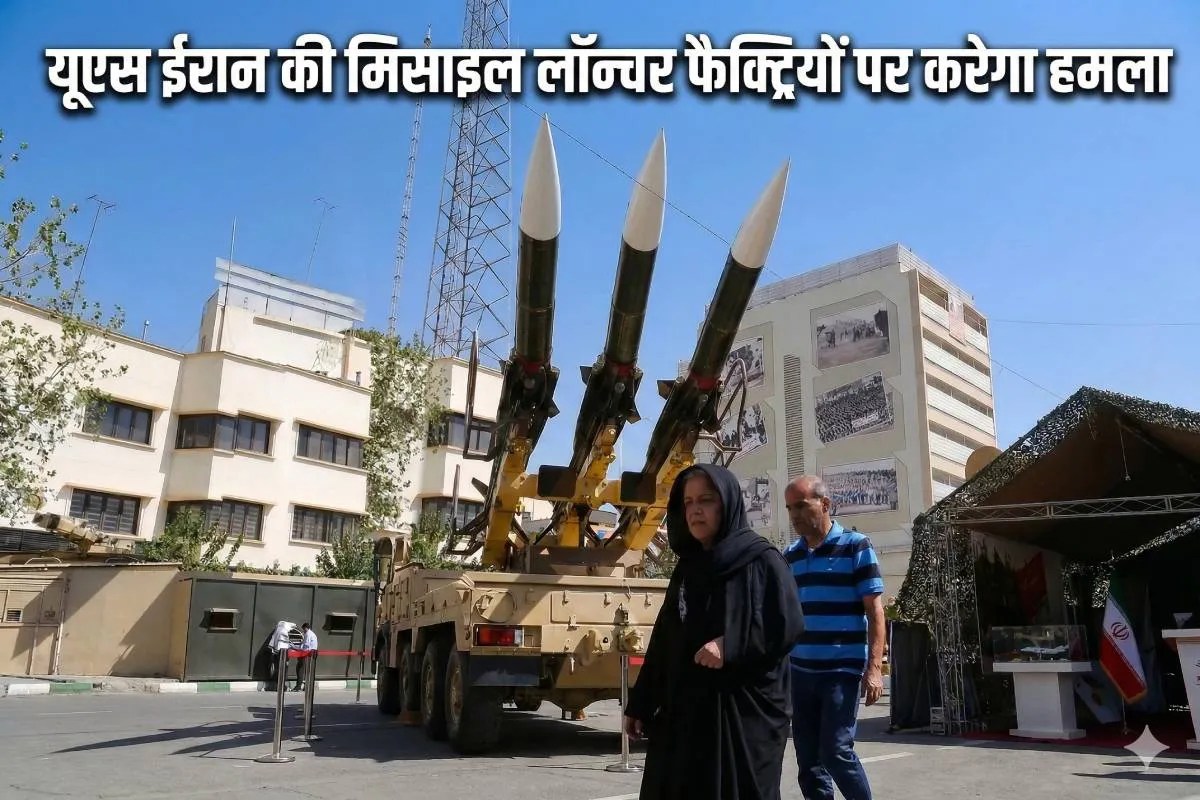
Consider the physics of the $Fateh-110$ or the $Zolfaghar$. These aren't exquisite, handcrafted pieces of jewelry like an American $SM-6$. They are the "Toyota Hilux" of the sky.
- Logic Check: If a missile costs $100,000 to make and requires a $2,000,000 interceptor to stop, who is actually winning the war of attrition?
- The Nuance: Striking a factory doesn't erase the blueprints. It doesn't kill the thousands of engineers who have already memorized the tolerances for the solid-fuel rocket motors.
Why "Surgical Strikes" are a Medical Malpractice
People ask: "Can't we just take out the power grid and the logistics?"
This assumes Iran plays by the rules of Western logistics. It doesn't. Their supply chain is "dark." They don't use centralized shipping hubs that show up on a heat map. They use a fragmented network of front companies and "private" transport that mimics civilian traffic so perfectly that identifying a "missile part" versus a "water pump" is a coin flip for an AI-driven sensor.
By threatening these sites, the US actually provides Iran with a massive R&D gift. Every time we point a finger at a specific site, Tehran learns exactly what our satellites can see—and what they can't. We are essentially providing them with a free penetration test of their own security.
The Counter-Intuitive Truth: We Need Their Factories
This is the pill no one wants to swallow.
A localized, known Iranian missile industry is a target you can monitor. If you successfully "destroy" the formal industry, you force the program further into the shadows, into the hands of non-state actors and proxy groups who have even less accountability than the regime in Tehran.
When manufacturing is "industrial," it is subject to some level of state control and diplomatic leverage. When it becomes "guerrilla manufacturing," you lose the ability to negotiate because there is no longer a single person with their hand on the off-switch.
Stop Asking if We Can Hit Them
The question isn't "Can the US destroy the factories?" The answer is technically yes, but strategically irrelevant.
The real question is: "What happens the day after?"
If you crater every known site in Iran, you trigger a regional firestorm that would make the 2003 Iraq invasion look like a minor zoning dispute. Iran’s response wouldn't just be "big words." It would be the activation of thousands of pre-positioned assets across the Strait of Hormuz.
- The Cost of "Success": Oil hits $250 a barrel.
- The Result: Global recession.
- The Reality: Iran rebuilds the factories in eighteen months, but this time, they build them deeper.
The US isn't making a threat; they are performing a ritual. They know they can't kill the program. Tehran knows they can't kill the program. The only people who don't know are the readers of mainstream news who think geopolitical problems can be solved with a "Delete" key.
The Industry Insider’s Map to the Real Conflict
Forget the missile launchers. Watch the smuggling routes for high-grade aluminum and specialized resins.
The real war is being fought in the ports of the UAE, the shell companies in Hong Kong, and the back-alley banks of Turkey. If you want to "destroy" a missile factory, you don't drop a bomb on it. You make it impossible for them to buy the ball bearings.
But that’s boring. It doesn't make for a good campaign speech. It doesn't sell newspapers.
The "Lazy Consensus" says we are on the brink of a massive air campaign. The "Contrarian Truth" says we are watching a stale stalemate where both sides are profiting from the tension while the actual technology continues to proliferate, unaffected by the noise.
Stop looking at the satellite photos of buildings. Start looking at the bill of lading for every shipping container entering the region. That is where the missiles are actually built.
If the US was serious about stopping Iran, they’d stop talking about factories and start talking about the global supply chain that makes those factories possible. They won’t, because that would require confronting "allies" and disrupting global trade—things far more difficult than dropping a few bombs for the cameras.
Go ahead, look at the map again. Those red dots the media shows you? Those are the targets Iran wants you to see. The real ones are already moved.
Direct your attention to the silent flows of capital and the untracked shipments of dual-use electronics. That is the only theater that matters, and currently, the West is barely even in the audience.