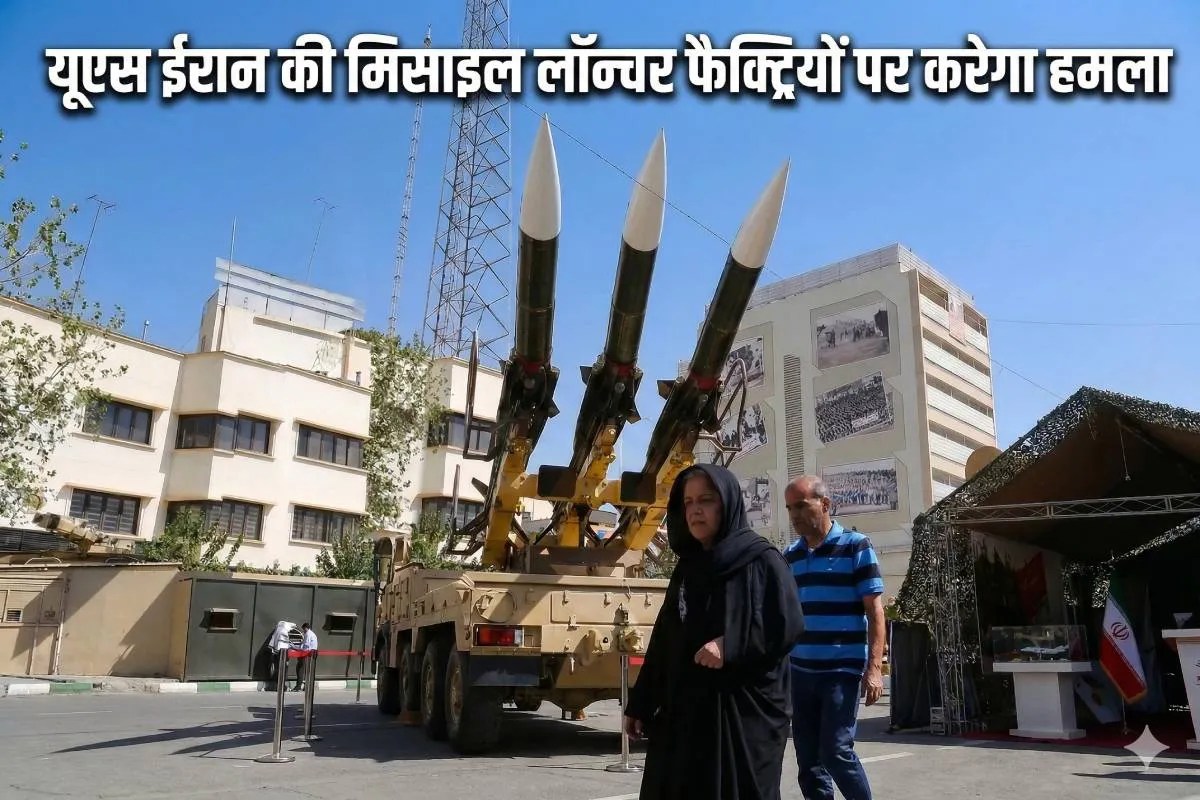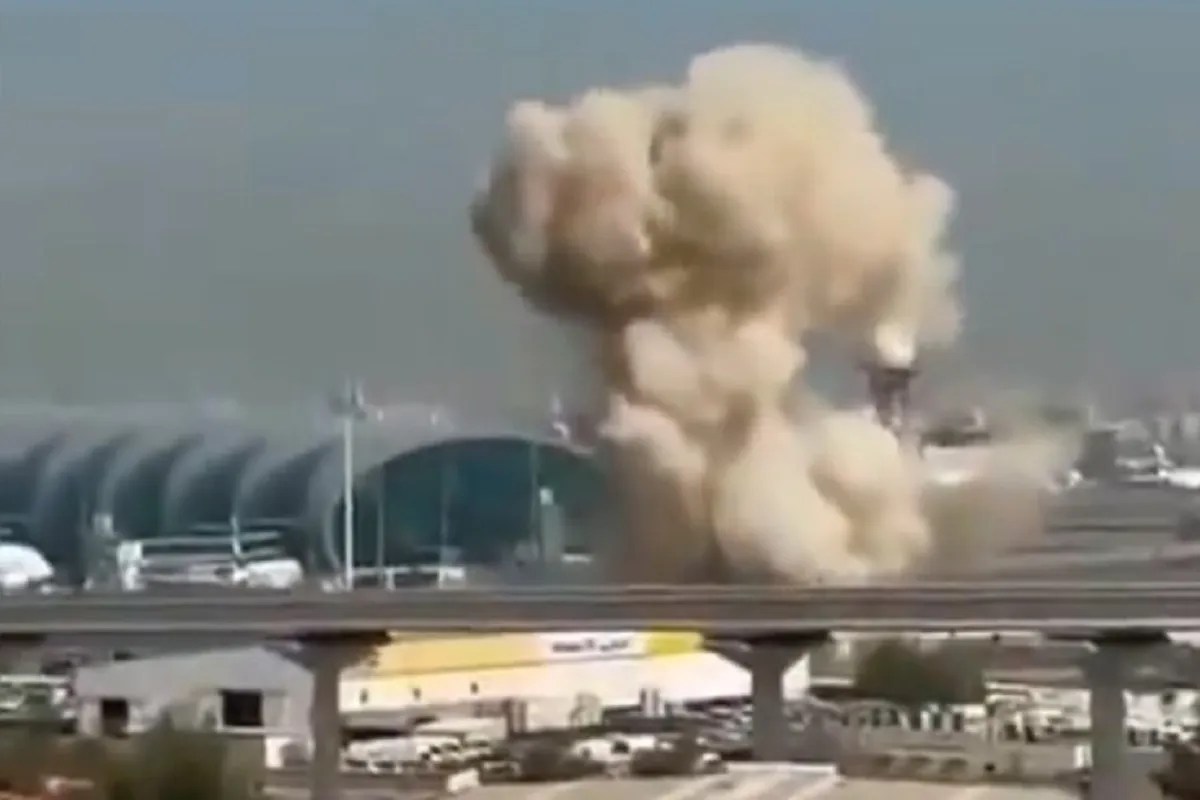
The sudden grounding of flight operations at Dubai International Airport represents a terrifying shift in the mechanics of Middle Eastern conflict. For decades, the United Arab Emirates functioned as a neutral zone, a gilded safe harbor where the world’s capital flowed regardless of the regional fires burning nearby. That era is over. The reported involvement of Iranian-linked kinetic actions against the world's busiest international hub indicates that the "shadow war" between Tehran, Tel Aviv, and Washington has moved from the periphery into the very heart of global commerce.
While early reports focused on the immediate chaos of stranded travelers and redirected Boeing 777s, the true story lies in the sophisticated deployment of low-cost drone technology and electronic warfare that bypassed one of the most expensive defense umbrellas on the planet. This was not a random act of aggression. It was a calculated demonstration of vulnerability. By hitting the logistical jugular of the UAE, Iran and its proxies are signaling that the cost of an escalating US-Israel alliance will be paid in the currency of global trade and regional stability.
The Myth of the Iron Dome in the Desert
For years, the Gulf monarchies have spent billions on Western missile defense systems. We are talking about the highest-tier Patriot batteries and THAAD installations designed to intercept high-altitude ballistic threats. However, the events at Dubai International reveal a glaring mismatch in defensive capabilities.
Modern asymmetric warfare does not rely on massive missiles that leave a heat signature visible from space. Instead, it utilizes "swarm" tactics—cheap, slow-moving, and low-flying loitering munitions. These devices are often made of carbon fiber or plastic, making them nearly invisible to traditional radar tuned for high-speed jets. When dozens of these units are launched simultaneously, they saturate the decision-making capacity of air defense operators.
The financial math is brutal. An interceptor missile can cost $2 million. The drone it is trying to kill costs $20,000. This is an economic war of attrition where the defender loses even when they successfully "win" the engagement. The suspension of flights in Dubai was not necessarily because drones were crashing into terminals, but because the mere presence of unidentified objects in restricted airspace makes commercial aviation insurance premiums skyrocket to the point of unviability.
Why Dubai is the Ultimate Leverage Point
To understand why this specific target was chosen, one must look at the UAE’s precarious balancing act. The Abraham Accords fundamentally changed the chemistry of the region, bringing Israeli security cooperation to the doorstep of the Iranian coast. Tehran views this as an existential threat.
Dubai is the crown jewel of the Emirati economy, but it is also its greatest weakness. Unlike Riyadh, which has vast oil reserves to fall back on, Dubai is built on the "three pillars" of tourism, trade, and transport.
- Aviation: Emirates Airline is the connective tissue of the global East-West transit.
- Logistics: DP World manages ports that act as the gateway to Central Asia and Africa.
- Finance: The city-state thrives on the perception of being the "Singapore of the Middle East."
By forcing a total stop on flight operations, the aggressor proves they can turn off the UAE’s economic engine with a few lines of code and a handful of fiberglass wings. It is a psychological operation designed to force the Emirati leadership to distance themselves from US-led military initiatives against Iran.
The Electronic Warfare Component
Information coming out of the ground suggests that physical drones were only half the battle. There is significant evidence that localized GPS jamming and "spoofing" played a major role in the airport shutdown.
When a pilot loses GPS integrity during a critical phase of flight, the aircraft's internal navigation systems begin to drift. In the crowded corridors of the Gulf, where planes are separated by mere minutes of flight time, a GPS outage is an automatic ground stop. Investigative analysis of flight telemetry during the incident shows multiple aircraft reporting "signal interference" consistent with ground-based electronic countermeasure (ECM) units.
This technology is no longer the exclusive province of superpowers. We are seeing a democratization of electronic warfare where non-state actors can deploy "suitcase-sized" jammers that can throw an entire metropolitan area into navigational chaos. The difficulty for the UAE is that these jammers can be hidden in the back of a delivery van or on a small fishing dhow in the Persian Gulf, making them almost impossible to pre-emptively strike without causing significant civilian collateral damage.
The Intelligence Failure and the Proxy Network
The question that haunts the halls of the Pentagon and the UAE’s Ministry of Defence is simple: How did they not see this coming?
The answer lies in the shifting nature of the Houthi and Hezbollah drone pipelines. Intelligence suggests that the components for these attacks are no longer shipped as complete units. Instead, they are moved as "dual-use" commercial electronics—motors for hobbyist drones, fiberglass resins for boat repair, and off-the-shelf flight controllers. They are assembled locally, often within the borders of the target countries or in neighboring waters.
This "distributed manufacturing" model means there is no central factory to bomb and no large-scale movement of hardware to track via satellite. The strike on Dubai was likely coordinated through a multi-nodal network that spans from Sana'a to the outskirts of Basra. It is a ghost insurgency that operates in the gaps between traditional military intelligence sectors.
The Impact on Global Energy Markets
While the world watches the flight boards, the energy markets are reacting to a deeper fear. If Dubai’s airspace is not safe, the shipping lanes of the Strait of Hormuz are effectively under a permanent shadow of threat.
Approximately 20% of the world's liquid petroleum passes through this choke point. The insurance industry, specifically Lloyd’s of London, monitors these kinetic events with cold precision. Each time a drone enters the vicinity of a major Gulf infrastructure point, the "War Risk" surcharges for tankers increase. This creates a hidden tax on global energy that eventually reaches the gas pump in London, New York, and New Delhi.
The Iranian strategy is to make the status quo so expensive for the West that the US is forced to provide concessions on sanctions or restrain Israeli military movements. It is a high-stakes game of chicken where the global economy is the road.
The Limitations of Western Intervention
The US Fifth Fleet is stationed in Bahrain, and the region is bristling with American hardware. Yet, this massive military footprint has proven remarkably ineffective at stopping the "mosquito stings" of drone warfare.
You cannot sink a drone with an aircraft carrier. You cannot deter a localized jammer with a nuclear submarine. The mismatch in scale is the defining characteristic of this conflict. The United States is currently attempting to build a "Middle East Air Defense" (MEAD) alliance, but the technical challenges of integrating different radar systems from various nations are immense.
Furthermore, there is a lack of political will. The UAE and Saudi Arabia are increasingly skeptical of American long-term commitment. They saw the withdrawal from Afghanistan and the hesitant response to previous attacks on oil facilities. This skepticism is leading to a dangerous trend of "hedging," where Gulf states may feel forced to cut private deals with Tehran to ensure their own survival, undermining the unified front Washington desperately wants to maintain.
Hard Realities for the Travel Industry
For the average traveler, the Dubai shutdown is a wake-up call. The days of assuming that high-end transit hubs are immune to regional politics are over. We are entering a period where "geopolitical risk" must be factored into commercial flight planning.
Aviation experts are now discussing the need for "hardened" commercial navigation. This includes:
- Inertial Navigation Systems (INS): Upgrading aircraft to rely less on GPS and more on sophisticated internal gyroscopes.
- Anti-Jamming Antennas: Installing hardware that can filter out malicious signals.
- Alternative Hubs: A shift in traffic toward Istanbul or Doha, though these cities are not immune to the same pressures.
The immediate cost of the Dubai freeze is measured in tens of millions of dollars in lost revenue and operational resets. The long-term cost is the erosion of the UAE's brand as the world’s playground. If people do not feel safe landing in Dubai, the entire economic model of the region begins to collapse.
The Escalation Ladder
We are currently on the middle rungs of an escalation ladder that has no clear exit. If the attacks on civil infrastructure continue, the UAE and its allies will be pressured to respond with direct kinetic strikes on the launch sites. This leads directly to a hot war—a scenario that would see oil prices triple overnight and the global supply chain grind to a halt.
The current strategy of "wait and see" is failing. The drones that closed Dubai International are proof that the technology of disruption has outpaced the politics of containment. Every hour that the runways remain silent is a victory for the architects of chaos in the region.
The focus must now shift from traditional defense to a comprehensive overhaul of "Deep Tech" security. This means investing in directed-energy weapons—lasers that can shoot down drones for the cost of a gallon of diesel—and decentralized communication networks that cannot be jammed by a single actor. Until these systems are in place, the world's most impressive airports remain high-tech hostages to low-tech threats.
The silence over Dubai is the loudest warning we have received in a generation.