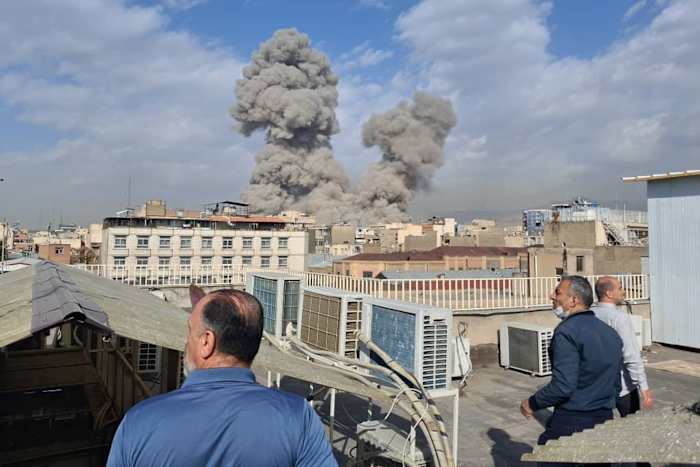
The Western media is currently obsessed with a fairytale. It is a narrative of "hope through high-altitude precision." The logic is as thin as a wafer: if the United States drops enough kinetic energy on Iranian military infrastructure, the "oppressed masses" will magically rise, sweep away the mullahs, and install a Jeffersonian democracy by brunch.
This isn't geopolitical strategy. It is fan fiction.
I’ve spent years watching the wreckage of "regime change" experiments across the Middle East. From the halls of think tanks in D.C. to the scorched earth of Libya and Iraq, the pattern is identical. We mistake a population’s hatred for their government for a love of our bombs. We assume that because Iranians are brave enough to protest in the streets for "Woman, Life, Freedom," they are desperate for an external power to turn their cities into a laboratory for Tomahawk missiles.
They aren't. And thinking they are is the most dangerous misconception in modern foreign policy.
The Rally Around the Flag Trap
The most common "lazy consensus" among pundits is that a strike weakens the regime’s grip. History, and the basic psychology of nationalism, says otherwise.
When you attack a nation, you don’t just hit the government; you hit the soil. Even the most hardened dissident in Tehran, someone who has spent time in Evin Prison, still considers themselves an Iranian patriot. When external steel falls on Iranian soil, the regime stops being a domestic oppressor and starts being a "defender of the motherland."
Look at the Iran-Iraq War. In 1980, the Islamic Republic was fragile. It was a chaotic, post-revolutionary mess. Then Saddam Hussein invaded. Instead of collapsing, the Iranian people unified under the banner of survival. The regime used that war to consolidate power for eight years, branding every internal critic as a traitor or a foreign agent.
A U.S. strike today would provide the Islamic Revolutionary Guard Corps (IRGC) with a decade’s worth of propaganda. It would allow them to crush the current grassroots protest movements under the guise of "national security." You aren't helping the protestors; you are handing the Basij a license to kill with total impunity.
The Myth of the Surgical Strike
Let’s talk about the technical arrogance of the "surgical strike."
In theory, you hit the nuclear facilities at Natanz or Fordow, take out some air defense batteries, and go home. In reality, modern warfare is never contained. Iran’s military doctrine is built on asymmetric response. They don’t need to win a dogfight with an F-35. They just need to set the Strait of Hormuz on fire.
- Global Oil Shock: Roughly 20% of the world's petroleum passes through that narrow choke point. A strike triggers an immediate spike in global energy prices.
- The Proxy Firestorm: Hezbollah in Lebanon, the Houthis in Yemen, and militias in Iraq don't sit still. You aren't striking Iran; you are igniting a regional conflagration that spans five borders.
- Nuclear Acceleration: If you bomb a country to stop them from getting a bomb, you give them the ultimate moral and strategic justification to build it faster. After a strike, the "peaceful" facade of the Iranian nuclear program evaporates. They go underground, they go dark, and they go for broke.
Why the Middle Class is the Real Threat to the Mullahs
The status quo media loves the "hope for regime change" angle because it’s cinematic. It suggests a clean break. But real change in Iran—the kind that actually sticks—comes from economic integration and the expansion of the middle class, not their impoverishment or incineration.
The regime survives on isolation. They thrive in a "resistance economy" where they control the black markets and the distribution of smuggled goods. Sanctions and threats of war empower the IRGC because they own the ports and the smuggling routes.
If you want to dismantle the Islamic Republic, you don't use a MOAB. You use the internet, global trade, and the slow, agonizing pressure of a population that demands to live like the rest of the world. The regime is terrified of a Tehran that looks like Dubai or Seoul. They are perfectly comfortable with a Tehran that looks like Baghdad in 2003.
The False Hope of the Diaspora
We often listen to the loudest voices in the Iranian diaspora—the ones with offices in D.C. or London—who claim the people are "praying for a strike."
Be careful whose "expertise" you buy. Many of these groups have been out of the country for forty years. They have no skin in the game. It is easy to advocate for a "liberating" bombardment from a coffee shop in Potomac. It’s much harder when you’re the one trying to find medicine for your parents in a city where the infrastructure has been crippled.
The brave Gen Z Iranians filming themselves dancing in the streets or removing their hijabs are not asking for a repeat of the "shock and awe" campaign. They are asking for the world to stop legitimizing their oppressors, not to turn their neighborhoods into a war zone.
The Cost of Being Wrong
I’ve seen this movie before. The "experts" promise a quick win. They promise the locals will greet us with flowers. They promise the "regime is on its last legs."
They said it about Iraq. They said it about Afghanistan. They said it about Libya.
In every case, the vacuum created by a forced collapse was filled by something far worse than what came before. If the Iranian state collapses overnight due to external military pressure, you don’t get a secular democracy. You get a fractured, nuclear-capable territory run by competing warlords and IRGC remnants. You get a refugee crisis that makes the 2015 Syrian exodus look like a weekend trip.
The Brutal Truth
The hard reality—the one that doesn't fit into a 30-second news segment—is that the Iranian people must win this fight themselves. It is a slow, bloody, and frustrating process. But it is the only way the result will be legitimate.
External military intervention is the "easy button" for politicians who want to look tough, but it is a death sentence for the very democratic aspirations they claim to support.
Stop asking when the B-2s are taking off. Start asking why we are so eager to destroy a civilization in the name of "saving" it.
If you think a war with Iran ends with a victory parade in Azadi Square, you haven't been paying attention for the last quarter-century. You’re not a strategist; you’re a tourist in a tragedy.
The mullahs are failing because they cannot govern a modern, connected generation. Don't give them the one thing that can save them: a foreign enemy to fight.
Leave the bombs in the hangar. Let the regime choke on its own obsolescence.