The seventh day of the war in West Asia began not with a ceasefire, but with a digital ultimatum that has effectively frozen the gears of global diplomacy. President Donald Trump, writing from a position of perceived total military leverage, has demanded the unconditional surrender of the Iranian state. This is not a rhetorical flourish or a "maximum pressure" tactic of years past; it is a live military objective being enforced by the most aggressive air campaign since the 2003 invasion of Iraq.
By insisting that there will be "no deal" until the current leadership is replaced by "acceptable" figures, the White House has moved beyond the goal of behavioral change and into the territory of dictated regime collapse. The response from Tehran has been a pivot to what the Islamic Revolutionary Guard Corps (IRGC) calls a prolonged war, a strategy designed to bleed the U.S. Navy in the Persian Gulf and turn the region into a "quagmire" for Western forces.
The Logic of Total Capitulation
The current conflict, dubbed Operation Epic Fury, was triggered on February 28, 2026, after the collapse of nuclear talks in Geneva. The administration’s core premise is that the Iranian regime is no longer a rational actor capable of being contained by treaties. Instead, the U.S. and Israel have opted for a "decapitation and degradation" strategy.
Following a strike that reportedly killed Supreme Leader Ali Khamenei and senior military commanders in late February, the U.S. has systematically targeted:
- Ballistic Missile Infrastructure: Razing production facilities in Lorestan and Zanjan provinces.
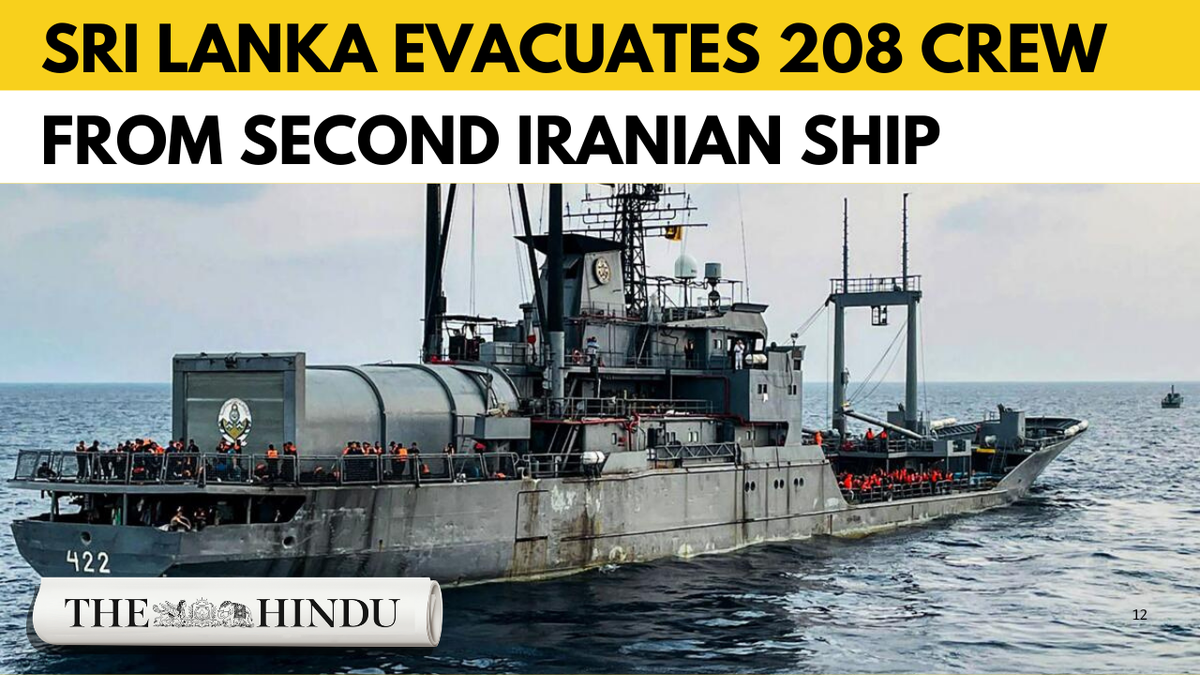
- Naval Assets: Neutralizing the IRGC Navy to prevent a total blockade of the Strait of Hormuz.
- Internal Security: Bombing Basij and Law Enforcement Command hubs to weaken the regime’s grip on a restless population.
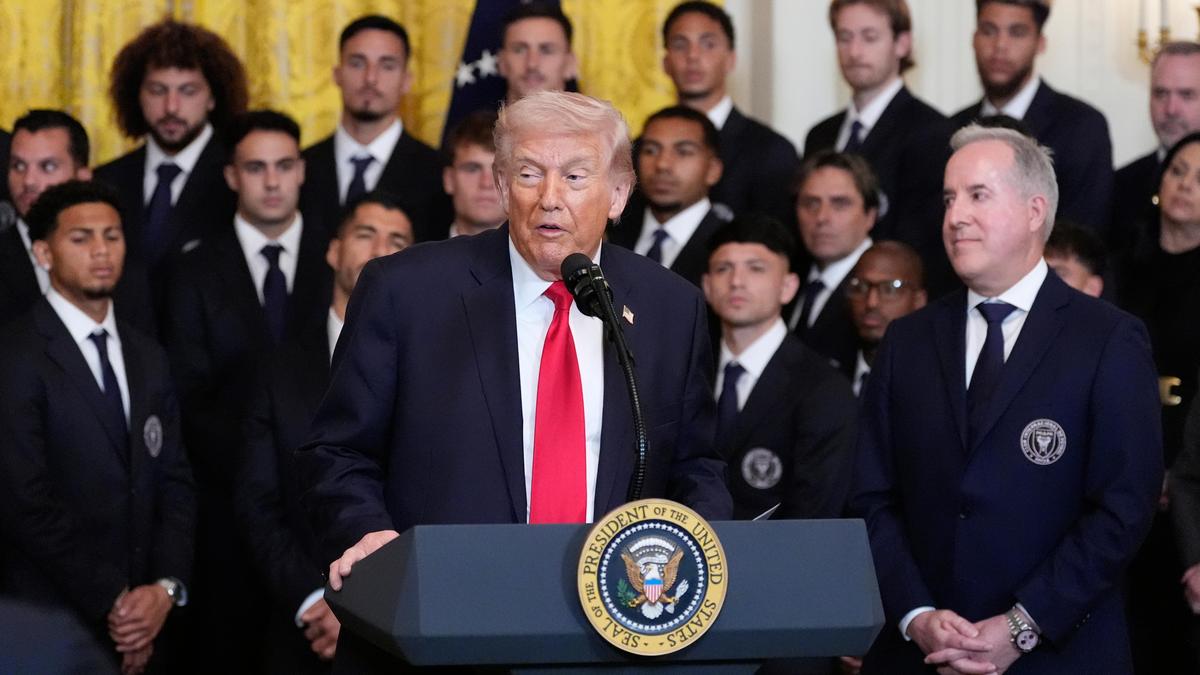
Trump’s demand for surrender is grounded in the belief that the Iranian military is "hollowed out." On Friday, March 6, the President clarified that surrender might not even look like a formal ceremony on a battleship. It could simply be the moment the Iranian military "can’t fight any longer" because they have nothing left to fight with. This is a war of attrition, not of occupation.
The IRGC’s "Plan B" and the Threat of a Forever War
Tehran is not playing by the Pentagon’s script. Despite U.S. Central Command (CENTCOM) reporting a 90% decline in Iranian missile launches, the IRGC has shifted to asymmetric, high-impact strikes. They are utilizing Operation True Promise 4, a campaign of suicide drone swarms and advanced Fattah missiles targeting "the heart" of U.S.-aligned territories.
The Iranian strategy is to broaden the pain. By targeting the Israeli embassy in Bahrain, a refinery in Manama, and the Al-Udeid airbase in Qatar, Tehran is signaling that if it goes down, the regional economy goes down with it. Iranian Foreign Minister Abbas Araghchi has been blunt: they are "waiting" for a ground invasion. They believe that while the U.S. can win the sky, it cannot survive a land war in the Zagros Mountains.
The Successor Vacuum
A critical overlooked factor in this crisis is the internal chaos within the Iranian "Assembly of Experts." With Khamenei dead, the expected succession of his son, Mojtaba Khamenei, has hit a wall of both internal dissent and external veto. Trump has publicly dismissed the younger Khamenei as a "lightweight" and "unacceptable," even suggesting he should have a personal hand in selecting the next leader—a move that mirrors his 2026 intervention in Venezuela.
This power vacuum is the IRGC’s greatest vulnerability and its greatest motivator. Without a clear Supreme Leader, the Guard has become the de facto government, and its only path to survival is to ensure the war never ends.
The Economic Shrapnel
The geopolitical shockwaves have already hit the energy markets. Oil is surging toward $150 a barrel as insurance rates for tankers in the Gulf become prohibitive. The International Energy Agency (IEA) has warned of a "bidding war" between Europe and Asia for scarce LNG supplies.
While the U.S. claims to have "air dominance," the reality on the water is more complex. The IRGC has successfully deployed sea mines and "listening" technologies—some reportedly shared by Ukraine in a bizarre secondary-market trade—to track U.S. movements. The USS Abraham Lincoln was forced to reposition after a wave of drone attacks, a move the Iranian Parliament Speaker Mohammad-Bagher Ghalibaf called "taking to its heels."
A Doctrine of Unpredictability
What differentiates this conflict from previous Middle Eastern interventions is the Trump Doctrine's rejection of "rules-based" restraint. The administration has introduced a 25% tariff on any country doing business with Iran, turning trade policy into a secondary front.
The humanitarian cost is rising. A strike on a girls' school in southern Iran on February 28 killed dozens, an event the White House blames on Iranian "inaccuracy" but which Tehran uses to galvanize a population that might otherwise have welcomed the regime's end. This is the gamble: by demanding unconditional surrender, the U.S. may be unifying a fractured nation against a foreign invader rather than facilitating an internal uprising.
There is no defined timetable. The President has stated he will do "whatever it takes," and Defense Secretary Pete Hegseth has signaled that the Pentagon is investigating more expansive targets. The U.S. is betting that the Iranian state will crack before the global economy does.
Would you like me to analyze the specific impact of these 2026 energy tariffs on the European Union’s alliance with the U.S.?