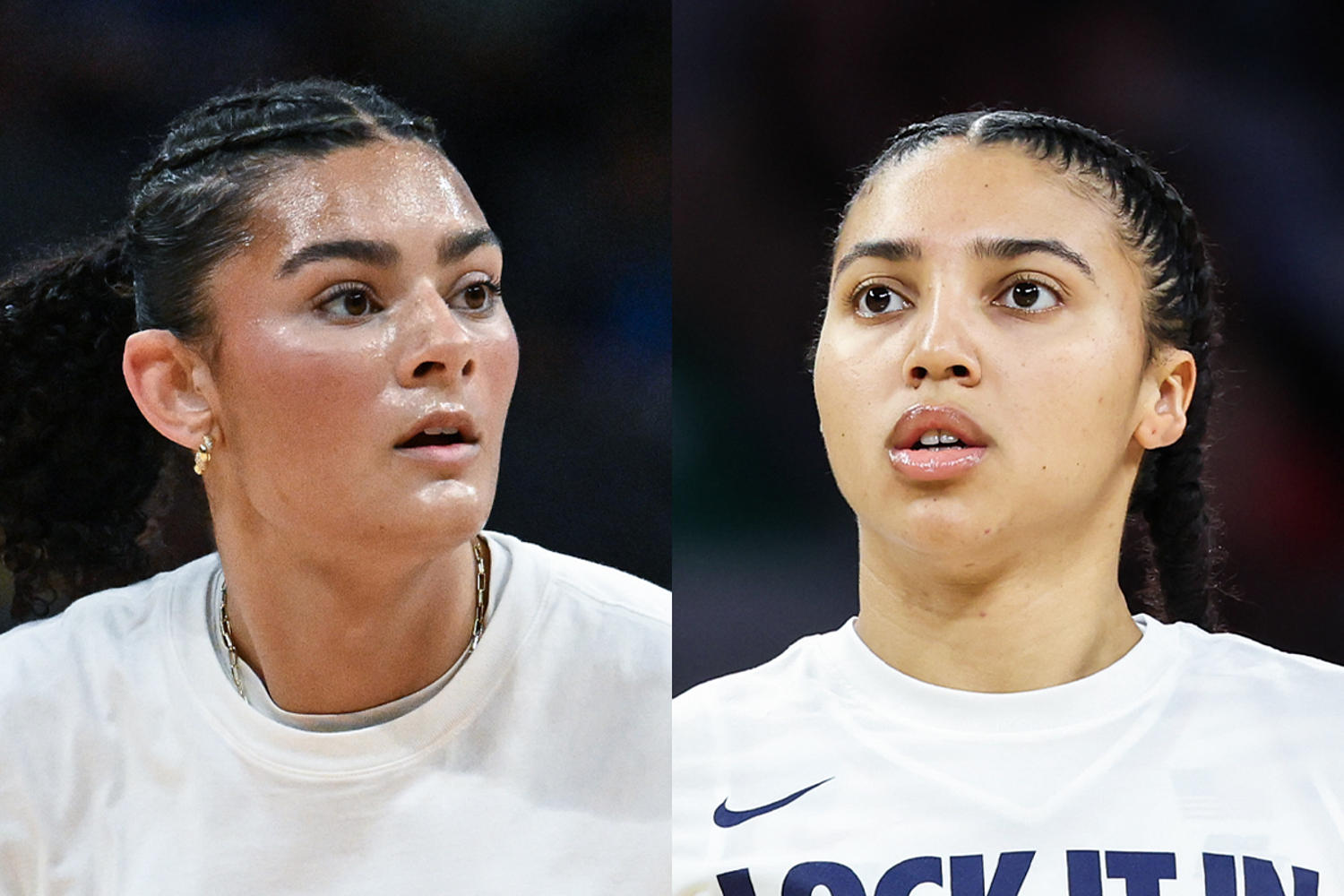
The national media is currently salivating over a Final Four featuring UConn, UCLA, Texas, and South Carolina. They’ll tell you it’s a "golden era" for women’s basketball. They’ll cite TV ratings and sold-out arenas in Portland and Albany as proof that the sport has finally arrived.
They are lying to you. Or, more accurately, they are mistaking a concentrated oligarchy for a healthy ecosystem.
What we are witnessing in the 2026 tournament isn't a surge in parity; it’s the final solidification of a two-tiered class system that threatens to turn the Big Dance into a predictable, four-team invitational. While everyone praises the "star power" of the remaining rosters, they’re ignoring the fact that the gap between the elite 1% and the rest of the field is wider than it was a decade ago.
We don't have a tournament. We have a coronation ceremony with expensive travel costs.
The Myth of Growing Parity
Every year, a double-digit seed makes the Sweet 16, and the "experts" start chirping about how the field is leveling out. It's a localized delusion.
Look at the Final Four. You have South Carolina, a program that has essentially turned the transfer portal into a personal farm system. You have UConn, a brand so dominant that its "down years" still result in Elite Eight appearances. You have Texas and UCLA, two massive athletic departments leveraging football money to brute-force their way into the inner circle.
Real parity isn't a 12-seed winning one game on a Thursday night. Real parity is a world where the top recruits don't all cluster at the same four schools. Right now, the blue-bloods aren't just winning; they are hoarding the very air the rest of the sport needs to breathe.
When Dawn Staley or Geno Auriemma can lose a starter to the WNBA and replace them with a First-Team All-Conference veteran from a mid-major via the portal, the "cinderella" story is dead before the brackets are even printed. We aren't watching a competition of coaching and development. We are watching a competition of resource accumulation.
The NIL Arms Race is a Zero-Sum Game
Let's talk about the money no one wants to be "negative" about. NIL (Name, Image, and Likeness) was sold as a way for athletes to get their fair share. In reality, it has become a legal way for the wealthiest programs to build a wall around the Final Four.
If you’re a standout guard at a school like Florida Gulf Coast or Drake, you aren't thinking about a deep March run with the teammates who developed you. You’re looking at the six-figure collective check waiting for you at a school that’s already been to three straight Final Fours.
The result? The rich get richer, and the middle class of women's college hoops is being stripped for parts.
- Talent Consolidation: The top 25 players in the country are now concentrated in fewer than 10 programs.
- Experience Inflation: Because elite teams can "buy" veteran leadership through the portal, young, talented mid-majors never get the chance to grow into contenders.
- Regional Irrelevance: Why should a fan in the Midwest care about the tournament when they know the trophy will inevitably end up in Columbia or Storrs?
I’ve watched athletic directors at mid-tier Power 5 schools look at the budget required to actually compete with South Carolina’s depth and simply decide to stop trying. They’ll compete for a conference title, sure. But they know the glass ceiling is made of reinforced steel.
Why the "Star Power" Argument is a Trap
The media loves the "Caitlin Clark Effect" or the "JuJu Watkins Era." It’s easy to market a face. It’s hard to market a sport.
By focusing entirely on the individual brilliance of a few stars at top-seeded programs, the NCAA is ignoring the structural rot. We are building a league of celebrities, not a league of competitive balance. When those stars graduate, the casual fans leave with them because they weren't taught to care about the competition—only the clout.
[Image comparing viewership spikes of star-driven games versus standard tournament matchups]
Compare this to the men's side. While the men's tournament has its own issues, the "One and Done" rule and the sheer volume of talent actually lead to chaos. In the men's bracket, a 1-seed losing in the first round is a regular occurrence. In the women's bracket, a 1-seed losing before the Sweet 16 is a national emergency.
We are told that dominance is good for the game. "People want to see dynasties!" they scream. But dynasties are only interesting when they are at risk. Currently, the UConn/South Carolina/Texas tier is playing a different sport than the other 60 teams in the bracket.
The Strategy of Forced Chaos
If the NCAA actually wanted a better product, they’d stop protecting the seeds. The current tournament structure is designed to usher the top four teams into the Final Four with as little friction as possible.
- Home Court Advantage: Giving the top 16 seeds home-court advantage for the first two rounds is a competitive joke. It’s a gift to the wealthy.
- Regional Protection: The committee consistently manipulates the bracket to ensure high-profile matchups in the later rounds, rather than letting the best teams play the most deserving teams regardless of "narrative."
If you want a tournament that actually captures the nation's imagination for more than a weekend, you have to break the monopoly. You have to move to neutral sites for every round. You have to implement a luxury tax on NIL collectives that gets redistributed to mid-major programs.
But they won't do that. Because the current system is profitable, even if it's predictable.
The Brutal Truth About This Final Four
South Carolina is going to win. Or maybe UConn will pull an "upset" that isn't really an upset. Texas and UCLA will play hard, but they are essentially the supporting cast in a play that has already been written.
The "experts" will tell you this is the greatest Final Four in history because of the names on the jerseys. I’m telling you it’s a symptom of a sport that is refusing to grow outward, choosing instead to grow upward until it collapses under its own top-heavy weight.
Stop asking who is going to win. Start asking why we already know the answer.
The 2026 tournament isn't a celebration of women's basketball progress. It’s a eulogy for the idea that anyone can win on any given Sunday. If you aren't one of the chosen four, you aren't playing for a title. You’re playing for a chance to be a footnote in someone else's documentary.
Bet on the chalk. Ignore the hype. The machine is working exactly as intended, and that’s the biggest problem in sports today.
Don't clap for a lopsided system just because it's dressed in a trendy brand. Demand a game where the outcome isn't decided by a balance sheet three months before Selection Sunday.
Until then, enjoy the reruns.