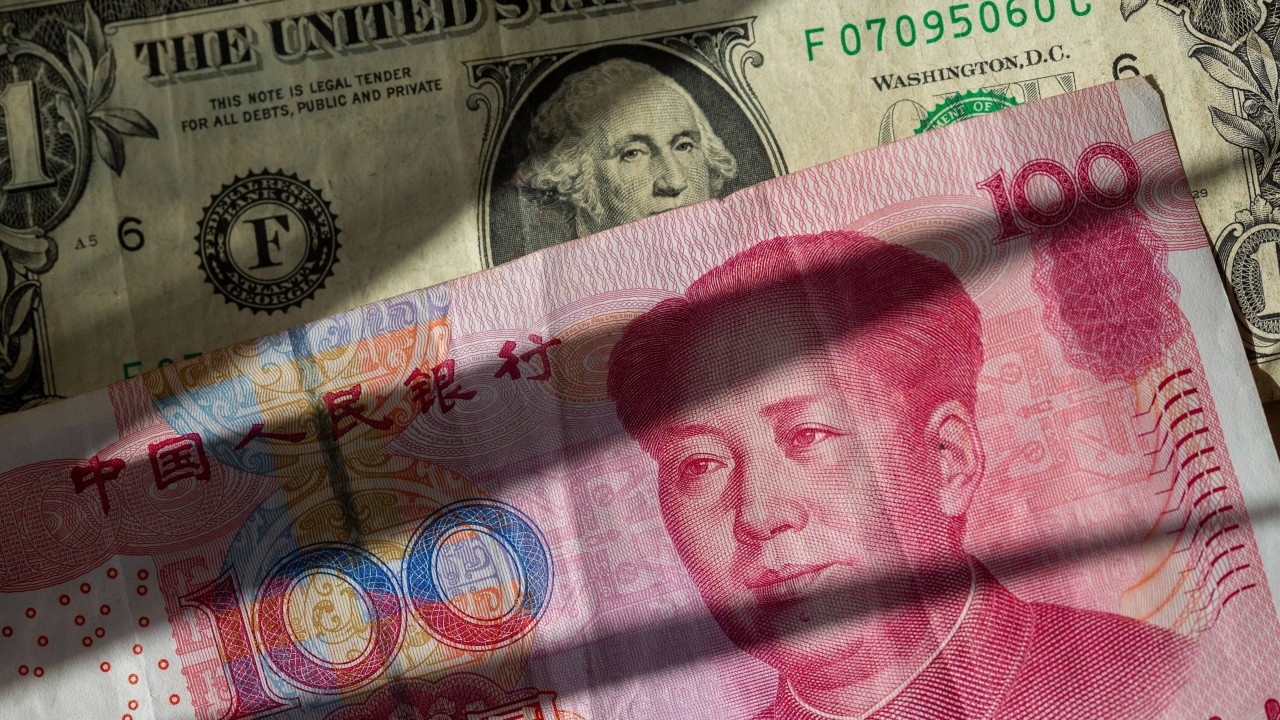
China’s sitting on the world’s largest mountain of foreign cash—over $3.4 trillion. It’s a number so large it’s basically abstract. For years, this hoard was seen as a shield against financial ruins. But as we move through 2026, the logic is shifting. Beijing is pushing the yuan to become a global heavyweight, and that creates a massive contradiction. You can't really have a global currency while you're still obsessively clutching trillions of your rival’s greenbacks.
The latest data from February 2026 shows China’s reserves hitting a 10-year high at $3.428 trillion. That’s seven straight months of growth. On paper, it looks like a position of absolute strength. In reality, it’s a golden cage. If China wants the yuan to eventually rival the dollar, it has to let go of the very "insurance policy" that made it a superpower. If you found value in this article, you should read: this related article.
Why the Yuan is Growing but the Dollar Still Rules
Despite all the "de-dollarization" talk, the yuan’s share of global reserves hasn’t skyrocketed. It actually dipped to 1.93% in late 2025 from a previous peak of nearly 3%. Why? Because while people are happy to use the yuan to buy Chinese EVs or electronics, they’re still hesitant to hold it as a long-term savings account.
To make the yuan a true reserve currency, China has to open its doors. That means letting money flow in and out without the government constantly hovering over the "stop" button. But Beijing hates losing control. This is the "Trilemma" of international finance: you can’t have a fixed exchange rate, free capital movement, and independent monetary policy all at once. Something has to give. For another look on this event, check out the recent coverage from The Motley Fool.
Right now, the yuan is thriving in trade—it's passed the dollar in some cross-border settlement categories—but it’s lagging as a "store of value." Most central banks don't want to hold a currency they might not be able to sell in a crisis.
The Gold Pivot and the Dollar Exit
While the total reserve number is rising, the composition is what you should be watching. China has been on a gold-buying bender. As of March 2026, the People’s Bank of China (PBOC) has added to its gold piles for 16 consecutive months.
- Total Gold Reserves: 74.22 million troy ounces.
- Value: Approximately $387.59 billion.
- Goal: Diversification away from the "weaponized" dollar.
It's not just about the money; it's about the risk. After seeing how Western sanctions froze Russia’s reserves, Beijing realized that $3 trillion in someone else’s ledger isn't wealth—it’s a vulnerability. They’re buying gold and shifting into other currencies not because they’re "richer," but because they’re trying to build a fortress that the US Treasury can’t touch.
The Asset Liability Mismatch
There's a hidden problem for Chinese companies going global. They’re taking out loans in dollars but earning revenue in yuan. This "asset-liability mismatch" is a nightmare when the dollar gets volatile.
By pushing the yuan, Beijing isn't just trying to be a world leader; they’re trying to save their own exporters from currency swings. If a Chinese company can borrow and earn in the same currency, they don't have to worry about the Fed’s interest rate hikes ruining their profit margins.
Current Reserve Levels (February 2026)
- Total Foreign Exchange: $3.4278 Trillion
- Monthly Increase: $28.7 Billion
- Gold Holdings: $387.59 Billion (Value-adjusted)
What Happens When the Shield Becomes a Burden
There’s a weird irony here. To support the yuan’s rise, China actually has to hold more dollars in the short term. Central banks around the world won't hold yuan if they aren't sure they can swap it back for dollars easily. So, the PBOC has to maintain massive dollar liquidity to prove the yuan is "safe."
It’s like a parent holding the back of a bike. You want the kid to ride solo, but if you let go too soon, everything crashes. For now, China is still holding the bike.
The "World-1" order—a system decoupled from US influence—is growing. We’re seeing more yuan-denominated trade with BRICS partners and more use of the digital yuan (e-CNY) to bypass traditional banking rails. But don't expect the dollar to vanish overnight. It still accounts for nearly 58% of global reserves.
How to Navigate This Shift
If you're managing international trade or investments, you can't ignore the plumbing of the global system.
- Hedge for Volatility: As China experiments with the 15th Five-Year Plan (2026-2030), expect the yuan to become more flexible. This means more swings, not fewer.
- Watch the Gold-to-Reserve Ratio: If China’s gold holdings cross 15% of their total reserves, it’s a signal they are preparing for a much more aggressive break from the dollar system.
- Use Local Currency Settlement: If you're trading with Chinese entities, look into yuan settlement. The infrastructure is now faster and cheaper than the old dollar-based SWIFT routes for those specific corridors.
Stop thinking about China’s reserves as just a bank account. It’s a geopolitical scoreboard. And right now, they’re trying to change the rules of the game while they still have the lead.