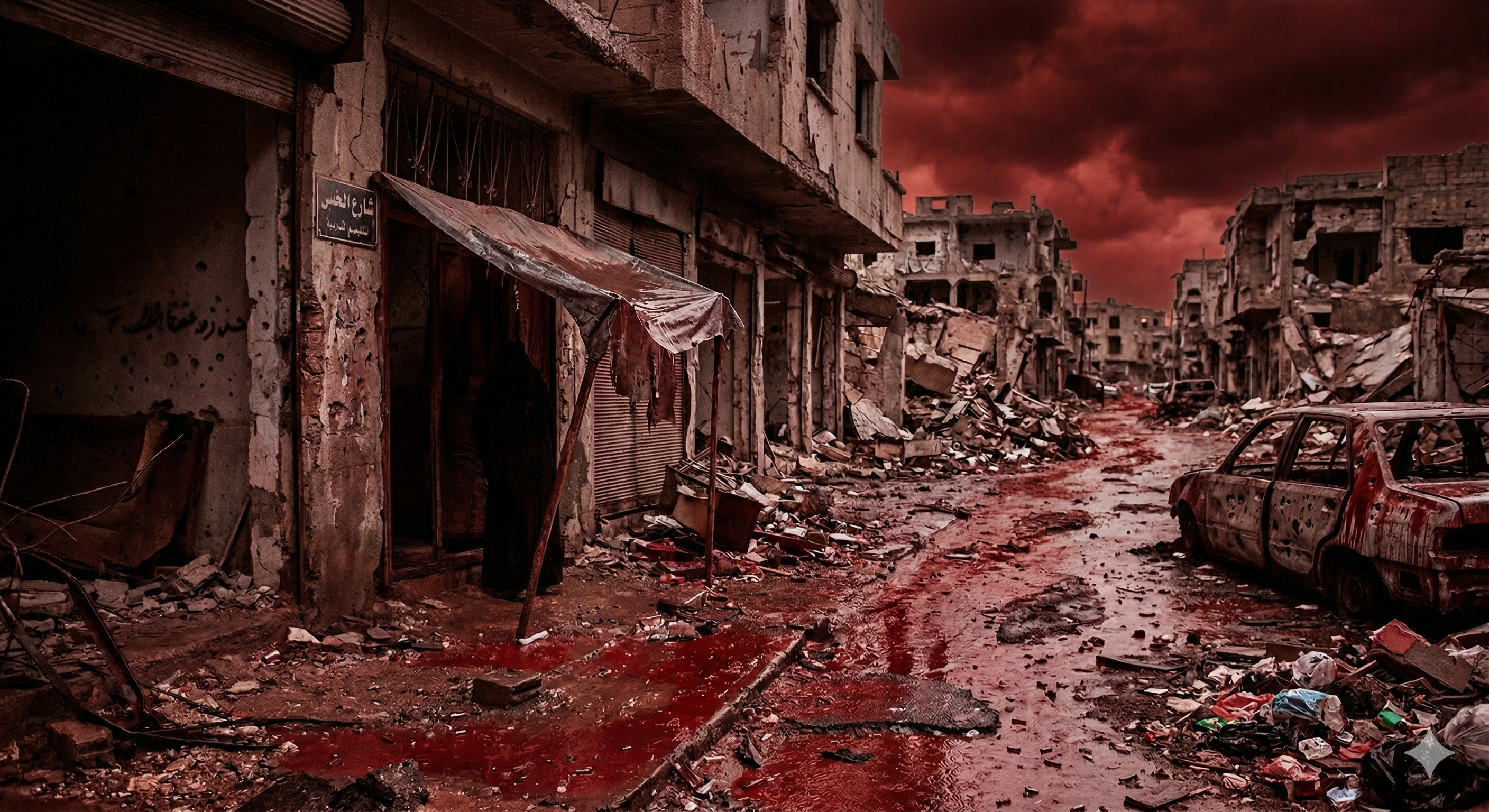
Red water falling from the sky feels like a scene ripped straight from a post-apocalyptic movie. When it happens over a landscape already torn apart by shelling and gunfire, the symbolism is heavy. People start talking about divine warnings or the literal blood of the fallen rising into the clouds. It’s an easy jump to make when you’re standing in a trench and the rain starts staining your uniform a rusty crimson. But if we look past the superstition, the reality of blood rain during conflicts is a mix of atmospheric science and the brutal physical impact of modern warfare.
You’ve probably seen the viral clips. A storm hits a region in the Middle East or Eastern Europe, and suddenly the puddles look like a crime scene. It’s unsettling. Most people assume it’s a direct result of chemical weapons or some strange biological side effect of high-intensity combat. They’re usually wrong. While war definitely messes with the environment, the red tint in the rain has been happening since long before we invented gunpowder.
Why the Sky Turns Red
The most common culprit for blood rain has nothing to do with human blood. It’s dust. Specifically, it’s micro-particles of desert sand or clay that get swept up into the upper atmosphere. When these particles contain high levels of iron oxide—essentially rust—they turn the water droplets red.
During conflicts, this process gets a massive boost. Think about what happens when a thousand tanks roll across a dry plain. They grind the topsoil into a fine, powdery silt. Artillery strikes don't just blow things up; they displace tons of earth, throwing it high into the air. In regions like North Africa or the Levant, that soil is already naturally rich in red minerals. You take a massive military offensive, add a localized weather system, and you’ve got a recipe for a "blood" storm.
The Sahara Desert is the world’s biggest contributor here. It sends millions of tons of dust across the Mediterranean every year. If that dust hits a rain cloud over a combat zone in Syria or Libya, the locals see red. It’s a natural phenomenon amplified by the mechanical chaos of war.
Microscopic Invaders and Crimson Cells
Sometimes the red isn't mineral. It's alive. In 2001, the famous red rain of Kerala, India, baffled people for months. Researchers eventually found that the color came from the spores of a specific type of green algae called Trentepohlia. These spores are everywhere. They're hardy. They wait for the right conditions to hitch a ride on the wind.
In a war zone, the ecological balance is trashed. Deforestation, the destruction of wetlands, and the mass movement of refugees and equipment can trigger sudden blooms of localized microorganisms. When these spores or certain types of red yeast get sucked into a storm system, the rain comes down looking like a hematology lab spilled its samples. It’s creepy, sure, but it’s biology, not a supernatural omen.
The Chemicals We Leave Behind
We can't ignore the darker side. While most blood rain is just dusty water, modern warfare introduces specialized chemicals that can tint the atmosphere. Smoke screens, phosphorus flares, and certain types of thermite produce aerosols that don't just disappear. They linger.
If a heavy rain hits immediately after a massive chemical or incendiary bombardment, the water can wash these particulates out of the air. You’ll see a muddy, reddish-brown precipitation that smells like sulfur or metallic burnt toast. This isn't "natural" blood rain. It's industrial runoff from the sky. In the 1990s during the Gulf War, the massive oil fires in Kuwait created "black rain" that was thick with soot. Red rain follows a similar logic if the right incendiary compounds are present in the air.
Historical Panic vs Modern Reality
Homer wrote about it in the Iliad. Medieval chroniclers recorded it as a sign of impending doom for kings. In those days, people didn't have satellite imagery or atmospheric sensors. They had their eyes and their fears.
Today, we have the tools to analyze the samples. When red rain fell in parts of Europe recently, meteorologists tracked the dust plumes back to the Atlas Mountains in days. The "war" element is often a coincidence of geography. If a battle happens to be fought in a place where red dust is common, the two will eventually meet.
But don't dismiss the psychological impact. For a soldier or a civilian trapped in a siege, the science doesn't matter much. The sight of red water running down the walls of a bombed-out building is a trauma multiplier. It reinforces the feeling that the earth itself is reacting to the violence. That’s why the "blood rain" myth persists—it matches the internal horror of the situation.
Checking the Facts for Yourself
If you ever find yourself looking at a red puddle after a storm, don't panic. Check the local weather maps for "dust transport" or "calima" events. These will show you if sand from the Sahara or the Arabian Peninsula is moving through your area.
You should also look at the consistency of the water. If it feels gritty or leaves a fine powdery residue when it dries, you’re looking at desert sand. If it’s oily or has a distinct chemical odor, that’s when you need to be concerned about industrial pollutants or combat byproducts.
What You Should Do Next
If you're tracking environmental changes in conflict zones, start by following the World Meteorological Organization for dust storm tracking. They provide real-time data on how aerosols move across borders. If you’re a hobbyist or a researcher, investing in a basic handheld particulate meter can help you distinguish between harmless mineral dust and dangerous soot. Stop looking for omens and start looking at the data. The sky isn't bleeding; it’s just carrying the weight of the ground beneath it.