Living on the International Space Station (ISS) isn't the high-octane sci-fi movie most people imagine. It’s more like being stuck in a noisy, cramped studio apartment that smells like ozone and metallic trash while you drift 250 miles above the Earth. You can’t go for a walk. You can’t crack a window. You're constantly surrounded by the hum of life-support fans that never, ever stop. For months on end, your world is the size of a five-bedroom house, shared with five or six other people.
If you don't manage your brain, space will break it.
Psychological isolation is the biggest hurdle for long-term missions. NASA and the ESA know this. They don't just send the smartest pilots; they send people who can handle the "monotony of the void." Keeping the mind occupied isn't just about killing time. It’s a survival strategy. If an astronaut gets bored or depressed, the risk of a mission-critical mistake sky-rockets. Here is how they actually keep it together.
The rigid power of the schedule
Most people think freedom is the key to happiness. In space, freedom is a trap. Without a sunrise or sunset every 90 minutes to tell your body what time it is, your internal clock goes haywire. Astronauts live by a "red line" on their daily schedule.
Every minute is accounted for. From the second they wake up at 6:00 AM UTC to the moment they zip into their sleeping bags at 9:30 PM, the timeline is boss. They have slots for maintenance, science experiments, and mandatory exercise. This structure prevents the "drifting" sensation. When you have a list of tasks, you have a purpose. Without purpose, the isolation feels heavy.
Even their meals are scheduled social events. They try to eat dinner together whenever possible. It sounds small, but sitting down—or velcroing yourself down—to share a meal of rehydrated shrimp cocktail and tortillas creates a sense of normalcy. It’s the one time they aren't just "units" performing a function. They're humans eating dinner.
Working out is mental medicine
You’ve probably heard about bone density loss. If astronauts don't exercise, their skeletons basically turn into Swiss cheese. But the two hours of mandatory daily gym time isn't just for the body. It’s the primary way they vent stress.
They use machines like the ARED (Advanced Resistive Exercise Device), which mimics free weights using vacuum cylinders. Pushing against resistance provides a physical release that science experiments don't. It’s sweaty. It’s hard. It’s loud. And it’s the only time they get to truly exert themselves.
Think about it. In microgravity, you don't even use your neck muscles to hold up your head. Your body feels "effortless" all day. That sounds nice for an hour, but after a month, you feel like a ghost. Pumping iron—even high-tech vacuum iron—reminds the brain that the body is still there. It grounds them.
The psychological importance of the view
The Cupola is the most important room in the station. It’s a seven-window observatory that looks directly down at Earth. Astronauts spend a huge chunk of their free time just staring out those windows.
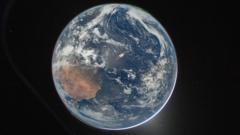
This isn't just sightseeing. It’s a phenomenon known as the Overview Effect. Seeing the planet as a fragile, borderless marble changes the way they think. It provides a "cognitive shift" that helps them feel connected to the rest of humanity even though they’re physically removed from it.
I’ve read accounts from astronauts like Scott Kelly and Chris Hadfield who describe the Earth as alive. They watch thunderstorms crawl across Africa and see the lights of cities at night. This visual stimulation is vital. The inside of the ISS is beige, gray, and cluttered with wires. The outside is a neon-blue masterpiece. That contrast keeps the brain’s visual cortex from starving.
Digital life and the connection home
Living in space used to mean being cut off. Not anymore. The ISS has a surprisingly decent internet connection, though the latency makes gaming impossible. They use a software called the "Softphone" to call any number on Earth whenever they have a satellite link.
Imagine calling your mom while you’re orbiting over the Pacific. They do it all the time.
They also get "care packages" in the form of digital data. NASA uplinks news, sports scores, and even new movies. During the World Cup or the Olympics, the crew usually watches the highlights together. They have an iPad for basically everything. They read ebooks, listen to podcasts, and scroll through social media.
But there’s a dark side to this. Being too connected to Earth can cause "telescoping." That’s when an astronaut is so focused on what’s happening at home—family drama, birthdays they’re missing—that they lose focus on the mission. Psychologists at Mission Control have to balance their "Earth time" to ensure they stay present in the station.
Hobbies in a weightless world
What do you do for fun when you can’t go to the movies? You get creative.
Photography is the big one. Most astronauts become world-class photographers by the time they land. They compete to see who can get the sharpest shot of a specific landmark or a rare weather pattern.
Then there’s the music. There’s a guitar on the ISS. There’s been a flute and even a keyboard. Playing an instrument in space is weird because the acoustics of the modules are muffled by the constant fan noise. But the act of creating something—of using a different part of the brain than the part that fixes toilets or runs fluid physics tests—is a massive relief.
Some astronauts take up "space gardening." Growing lettuce or radishes in the Veggie hardware isn't just about fresh food. It’s about the smell of dirt. In a sterile, recycled-air environment, the scent of wet soil and growing green things is an incredible psychological boost. It’s a tiny piece of the biosphere they can touch.
The weird reality of space sleep
Sleeping is the hardest part of keeping your head straight. You don't lie down. You don't have a pillow. You just zip yourself into a vertical bag tethered to a wall so you don't float into an air intake.
Many astronauts report seeing "flashes" when they close their eyes—cosmic rays hitting their optic nerves. It’s unsettling. To combat the lack of a natural day-night cycle, the ISS transitioned to LED lighting that can shift its color temperature. Blue-heavy light in the "morning" to wake them up, and warmer, redder tones in the evening to trigger melatonin.
If they don't sleep, they get "space fog." Their reaction times slow down. Their mood sours. Managing sleep hygiene is treated with the same seriousness as a spacewalk.
How to use astronaut tactics on Earth
You don't need to be in orbit to use these tricks. If you're feeling isolated or stuck in a rut, the NASA playbook works.
First, fix your routine. Stop "winging it" and give your day a rigid structure. Second, move your body hard enough to feel the resistance. Third, find your "window." Whether it’s a park or just a different view, you need visual novelty to keep your brain from stagnating.
If you want to see this in action, go watch the high-definition feeds from the ISS. Look at the way they move and interact. It looks effortless, but it’s the result of intense psychological conditioning.
The next step is to look at your own "habitat." Identify the one thing that makes you feel trapped and change the sensory input. Swap your lightbulbs for color-shifting LEDs or start a small herb garden. If it's enough to keep an astronaut sane in the vacuum of space, it's enough to help you through a tough week on the ground.