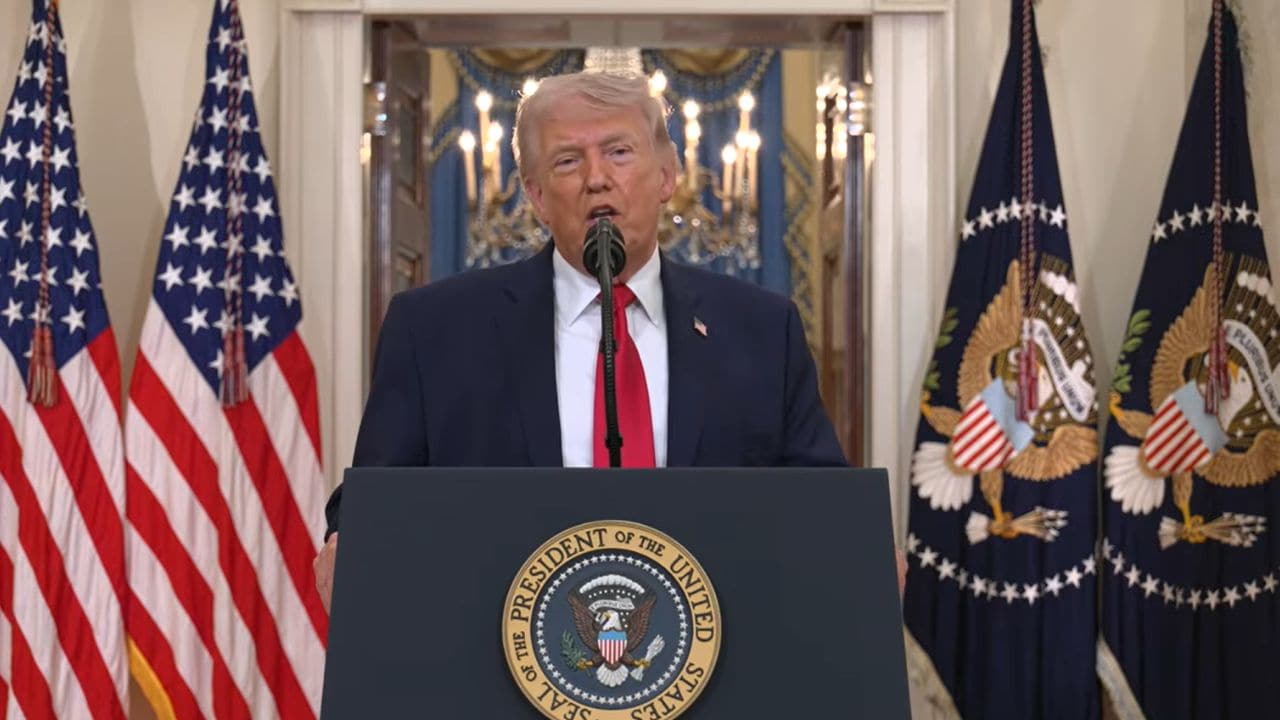
President Donald Trump just dropped a hammer on the pharmaceutical industry that most insiders didn't see coming—at least not this fast. On the one-year anniversary of what he calls "Liberation Day," the administration signed an executive order that effectively tells global drugmakers to either build factories in the U.S. and slash prices or pay a 100% tax on their patented products. This isn't just another campaign threat. It’s a calculated move to force a "Most Favored Nation" (MFN) pricing model while physically moving the supply chain back to American soil.
If you’re wondering why your prescription costs haven't dropped yet, this is the administration's aggressive answer. By targeting patented drugs specifically, they're hitting the high-margin products that keep big pharma profitable.
The Zero or One Hundred Choice for Big Pharma
The logic here is pretty brutal. If a company signs a pricing deal that matches the lowest price they charge other developed nations and they’re actively building U.S. manufacturing plants, their tariff rate is 0%. If they’re building the plants but haven't agreed to the price cuts, they start at a 20% tariff that scales up to 100% over four years.
For the companies that refuse to play ball entirely? They get hit with the full 100% immediately once the grace period ends. We're talking about a 120-day window for the "big guys" and 180 days for everyone else.
It’s a classic carrot-and-stick approach. Several major players like Pfizer and Eli Lilly have already reportedly struck deals to avoid these levies for at least three years. They’re basically trading profit margins for market access. For the ones left outside, the math is terrifying. Doubling the cost of a patented drug at the border will either force them to eat the cost or price themselves out of the American market.
Metals Get a Math Makeover
While the drug tariffs grabbed the headlines, the administration also quietly overhauled how we tax imported steel, aluminum, and copper. This matters because the old rules had too many loopholes. Importers were getting creative with how they classified "derivative" products to dodge the 50% baseline tariff Trump set earlier in his term.
The new rule, which kicks in April 6, 2026, simplifies things in a way that’s going to hurt anyone importing heavy machinery or consumer goods with high metal content.
- The 15% Rule: If a product is less than 15% metal by weight—think a perfume bottle with a metal cap—it only pays the standard country-specific tariff.
- The Heavy Metal Rule: If it’s over 15% metal, like a washing machine or a car frame, the government is slapping a 25% tariff on the entire value of the product.
- Full Metal Jacket: Raw materials and goods made entirely of these metals stay at the 50% rate.
This change prevents companies from "hiding" foreign steel inside finished products to avoid the Section 232 duties. It’s a protectionist play that’s going to ripple through the appliance and automotive sectors fast.
National Security or Just Hardball Negotiating
Trump’s justification for the pharmaceutical move is "national security." It’s an argument we’ve heard before, but it carries more weight when you look at how much of our basic medicine is made in China and India. The administration is betting that the U.S. consumer won't be the one paying this tax. They believe the threat alone will force companies to move production to Ohio, North Carolina, and Texas.
Critics, including groups like PhRMA, argue this is just a tax on sick people. They claim it’ll stifle innovation and that building a high-tech drug plant takes years, not months. Honestly, they’re not wrong about the timeline. You can't just flip a switch and start making complex biologics in a warehouse in Scranton.
However, the administration seems fine with the short-term chaos. They’re looking at the long-term trade deficit, which they claim has already shrunk by 24% over the last year. By forcing these "pricing deals," they’re effectively trying to import the price control systems of Europe and Japan without passing new healthcare laws through a divided Congress.
What Happens to Generics
Interestingly, generic drugs are safe—for now. Most of the medicine we actually take is generic, and a huge chunk of that comes from India. The Commerce Department is keeping them exempt from the 100% tariff to prevent a total collapse of the affordable drug market.
But there’s a catch. The administration is "evaluating" the state of generic reshoring. If Indian and Chinese generic makers don't start moving some of that "fill and finish" work to the U.S., they could be next on the list. It’s a clear warning shot to the entire global supply chain.
What You Should Do Now
If you’re an investor or a business owner, the "wait and see" period is over. The 2026 trade landscape is clearly one of aggressive protectionism.
- Watch the 120-day clock: Big pharmaceutical stocks will be volatile as they either announce "Most Favored Nation" deals or prepare for 100% tariffs. Any company without a U.S. manufacturing footprint is a major risk right now.
- Audit your metal content: If you’re importing goods, you need to know exactly what percentage of your product's weight is steel or aluminum. Crossing that 15% threshold just got a lot more expensive.
- Expect localized inflation: While the goal is to lower prices through deals, the transition period is going to be messy. If a drugmaker refuses to deal, the cost of their medication will likely skyrocket for the end-user before any "reshoring" actually happens.
This isn't just about trade anymore. It's about a fundamental shift in how the U.S. interacts with the global economy. The era of cheap, frictionless imports for critical goods is officially dead.