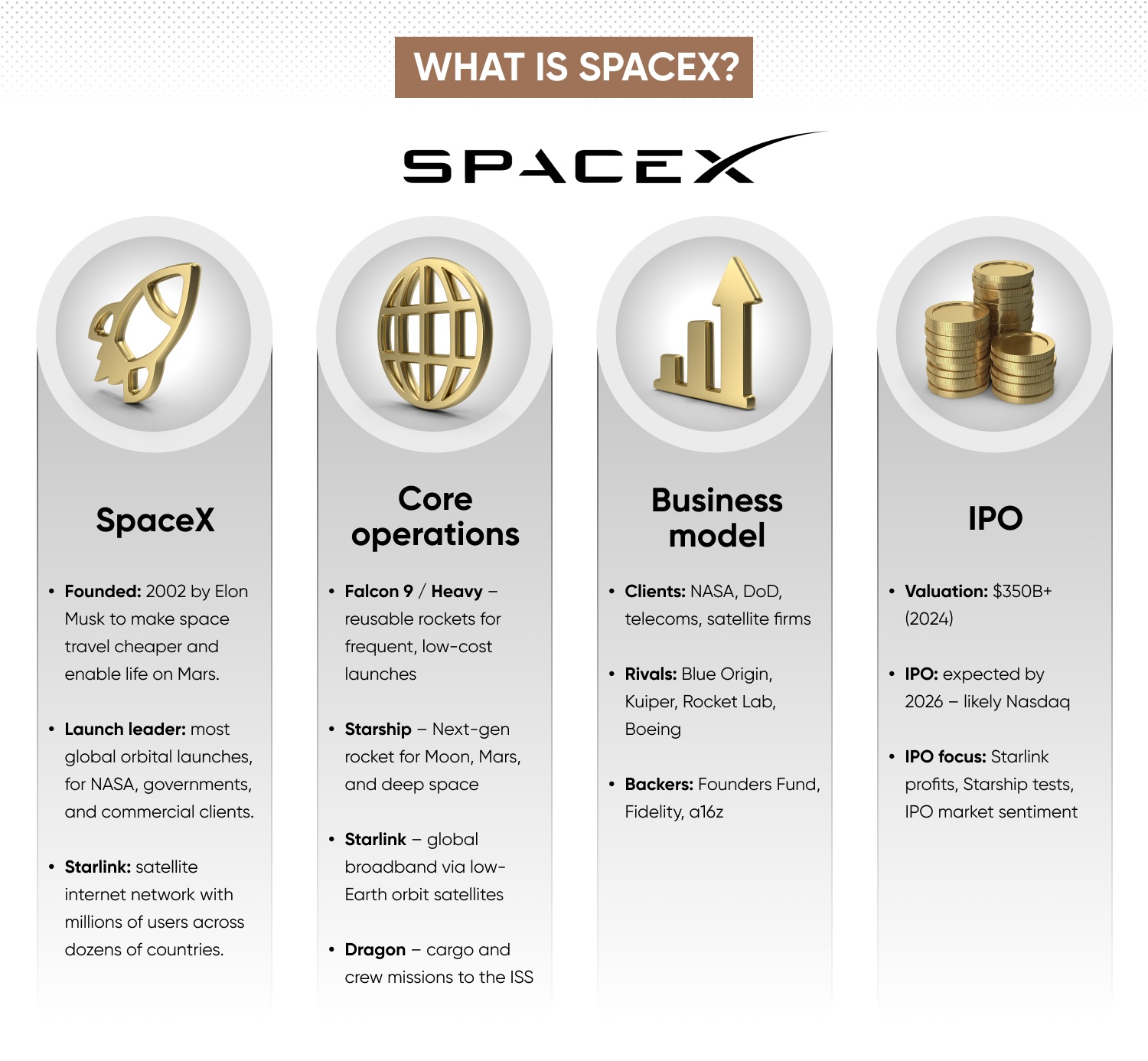
You’ve heard the rumors for years, but this time it’s actually happening. Elon Musk is finally preparing to take SpaceX public in 2026, and it isn't just another tech listing. This is a $1.75 trillion bet on the future of the human species. If you think Tesla was a wild ride, you haven’t seen anything yet.
SpaceX recently filed confidential paperwork for an IPO that could raise $75 billion. To put that in perspective, it would completely shatter the record set by Saudi Aramco. We’re talking about the largest stock market debut in history. But don't be fooled by the shiny "space" label. This isn't just about rockets anymore. It's about a vertically integrated empire that combines satellite internet, deep-space logistics, and—thanks to a massive February 2026 merger—cutting-edge artificial intelligence.
The Trillion Dollar Math
Wall Street is already buzzing about the valuation. Some analysts argue $1.75 trillion is a stretch. I disagree. When you look at the revenue shift, the numbers start to make sense. In 2025, SpaceX brought in roughly $16 billion. Starlink, the satellite internet arm, accounted for over $10 billion of that.
By the end of 2026, Starlink is projected to hit $24 billion in revenue with 10 million subscribers. It’s no longer a speculative project; it’s a cash cow. For years, people wondered if Musk would spin off Starlink separately. He didn't. He kept it inside SpaceX to fund the much more expensive dream of Mars. By keeping them together, he’s giving investors a "boring" high-margin subscription business to offset the "insane" capital costs of the Starship program.
Starship is the real engine
The success of the Starship propellant transfer test in March 2026 changed the game. It proved that we can basically build "gas stations" in orbit. This was the final technical hurdle for NASA’s Artemis III mission. It also dropped the price of putting mass into space to a level that makes competitors look like they’re using carrier pigeons.
SpaceX now launches about 80% of all global payload mass. Think about that. They don't just lead the market; they are the market.
The xAI Factor
The real wildcard in the 2026 IPO is the merger with xAI. Musk combined his AI venture with SpaceX earlier this year, creating a $1.25 trillion entity before the IPO buzz even started. Why? Because space is the ultimate data center.
Musk’s plan for "orbital AI data centers" sounds like science fiction, but it solves the two biggest problems ground-based AI faces: power and cooling. In the vacuum of space, cooling is a different beast, and solar power is constant. If SpaceX can host xAI’s massive compute needs on a network of a million satellites, they aren't just an aerospace company. They’re the backbone of the next intelligence era.
What retail investors need to know
Most IPOs are rigged for the big guys. Usually, retail investors get the leftovers after the hedge funds have had their fill. SpaceX is doing things differently. Reports suggest Musk wants to reserve up to 30% of the shares for individual investors. That’s massive. Standard IPOs usually cap retail at 5% or 10%.
But there’s a catch. This high valuation means you’re paying for a lot of future growth upfront.
- The Multiple: At $1.75 trillion, you’re buying in at roughly 110 times current sales.
- The Risk: If Starship has a catastrophic failure or Starlink growth plateaus, that valuation could crater.
- The Lock-up: Watch the filings in May. If insiders are allowed to sell early, it's a red flag. If they're locked in, they're betting on the long haul.
How to play the SpaceX debut
Don't just jump in because of the hype. If you’re looking to get exposure before the June listing, keep an eye on secondary markets like Forge Global or Rainmaker Securities. Accredited investors have been trading SpaceX shares there for months, with the price recently hovering around $420 per share.
If you aren't an accredited investor, you’re waiting for the Nasdaq debut. Start by cleaning up your portfolio. This isn't a "set it and forget it" index fund. It’s a high-volatility play. You should treat it like a venture capital investment. Only put in money you’re willing to see drop by 50% in a week if a rocket explodes on the pad.
The IPO is expected to hit in June 2026. Get your brokerage accounts ready and watch for the final S-1 filing in late May. That document will reveal the true state of the balance sheet, including exactly how much cash Starlink is spitting out. That's the only number that actually matters.
Forget the moonshot metaphors. SpaceX is already there. The IPO is just the rest of us trying to catch up. Get your capital in order now. Determine your risk tolerance. If you want a piece of the company that owns the high ground of the 21st century, this is your one and only shot before the valuation goes completely out of reach.