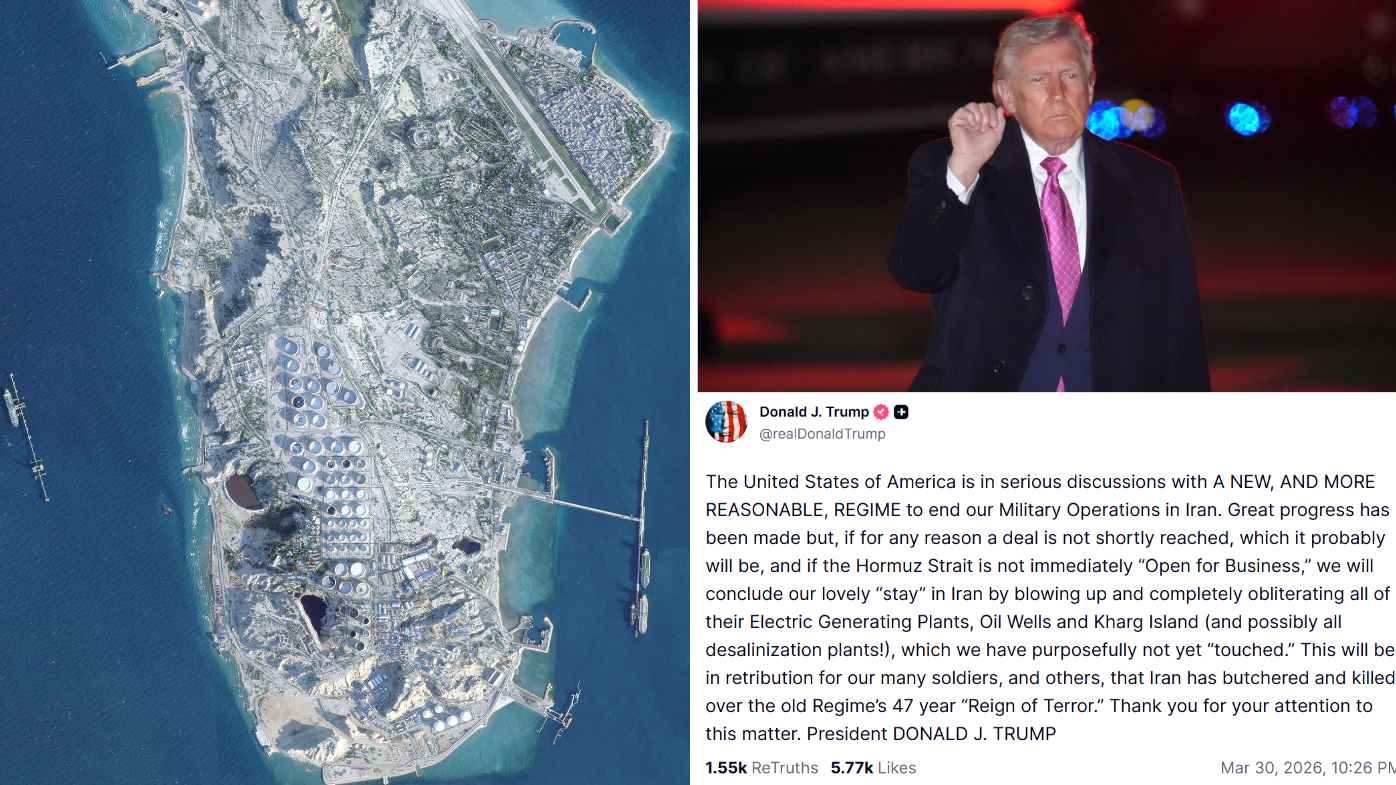
Donald Trump just put a target on Kharg Island. It’s not just another piece of land in the Persian Gulf. It’s the literal heartbeat of Iran’s entire economy. If you’ve been watching the escalation between Washington and Tehran, you know the rhetoric is usually dialed up to ten. But this is different. Trump isn't just talking about sanctions or "maximum pressure" anymore. He’s talking about total erasure.
The threat came through loud and clear. If a new, much more restrictive deal isn't signed shortly, Kharg Island might not exist on a map anymore. This isn't just a tough-guy posture for a rally. It’s a calculated strike at the one place that keeps the Iranian regime’s lights on. You have to understand that about 90% of Iran’s crude oil exports flow through the terminal on this small patch of rock. Knock that out and the country’s financial system doesn't just stumble. It collapses.
The Kharg Island Pressure Point
Why Kharg? Because it’s the bottleneck. Iran depends on oil. They always have. Even with years of heavy sanctions, they’ve found ways to slip tankers out and keep the cash flowing, mostly to buyers in Asia who don't mind bucking Western trends. Kharg Island is the infrastructure that makes those "ghost" exports possible. It has the deep-water berths. It has the massive storage tanks.
Taking it off the board would be an act of war. There’s no way around that. But Trump’s gamble is that the Iranian leadership is more afraid of total internal collapse than they are of a lopsided military conflict. He’s betting they’ll blink. He wants a deal that goes way beyond the old 2015 nuclear agreement. He wants their missile program gutted. He wants their influence in Iraq and Yemen ended. He wants it all, and he’s using the island as the ultimate chip.
What Happens to Global Oil Prices
If a single missile hits Kharg, your gas prices are going up. Instantly. The markets hate uncertainty, and they absolutely loathe the idea of a major producer being physically removed from the supply chain. We’ve seen this play out before, but never with a threat this direct against a specific, vital coordinate.
Energy analysts at firms like Goldman Sachs and S&P Global have warned for years that the Strait of Hormuz is the world’s most dangerous oil chokepoint. Kharg sits right in the middle of that tension. If the island is wiped out, the environmental disaster alone would be staggering. Millions of barrels of crude dumped into the Gulf. But the economic disaster is what has everyone on edge. We’re talking about a potential spike of $20 or $30 a barrel in a matter of hours.
The Art of the Ultimate Leverage
Trump’s approach has always been about the "big ask." He’s not interested in incremental diplomacy. He thinks the previous administration gave away the farm for a weak deal. By threatening Kharg, he’s trying to skip the years of boring committee meetings and jump straight to the "sign here or lose your economy" phase.
It’s risky. Some say it’s reckless. If Iran feels they have nothing left to lose, they might not come to the table. They might strike back at tankers from other nations or attempt to close the Strait of Hormuz entirely. That’s the nightmare scenario. You’re looking at a global recession triggered by a few days of fire in the Gulf. But the Trump camp believes the Iranians are pragmatists at heart. They believe the regime loves its own survival more than its ideology.
Can Iran Even Defend It
Let’s be real. Iran has invested heavily in air defense. They have the Russian-made S-300 systems. They’ve developed their own long-range batteries. They have swarms of fast-attack boats and drones. In a localized fight around Kharg, they could put up a hell of a struggle.
But against the full weight of the U.S. military? No chance. If the order is given to "wipe out" the island, it happens. Whether it’s B-2 bombers or carrier-based strikes, the technological gap is just too wide. The Iranian leadership knows this. They know that while they can cause a lot of pain for the world, they cannot win a direct, conventional war against a superpower determined to destroy a specific target.
Short Timelines and Hard Deadlines
The word "shortly" is the most important part of the threat. It’s not a vague "someday." It’s a ticking clock. This creates a massive amount of stress within the Iranian parliament and the Revolutionary Guard. Do they double down on their nuclear ambitions, or do they save the island?
The next few weeks are going to be incredibly volatile. Expect more military drills in the Gulf from both sides. Expect the price of Brent crude to jump every time a tweet or a statement comes out. If you’re invested in energy or defense, you need to be watching the satellite feeds of that island. It’s currently the most important piece of real estate on the planet.
Watch the movement of U.S. carrier strike groups in the region. That’s your best indicator of whether this is a bluff or a countdown. When the big ships start moving into strike range, the window for talking starts to close. If no diplomats are seen flying into neutral territory like Oman or Qatar soon, the situation is moving toward a violent head.
Keep an eye on the rhetoric coming out of Tehran. They’ll bluster. They’ll promise a "crushing response." But watch what they do, not what they say. If they start moving mobile assets or signaling a willingness to discuss "technical aspects" of a new deal, the pressure is working. If they don't, we’re heading for a summer of fire in the Gulf. Check your portfolio and keep your gas tank full. This isn't going to be a quiet month.