The smoke rising from the outskirts of Isfahan and the flattened command centers in the Bekaa Valley are not merely the results of a tactical strike. They represent the definitive collapse of a decade of diplomatic theory. For years, the prevailing wisdom in Western capitals held that Iran could be contained through a delicate balance of sanctions, back-channel dialogue, and the occasional targeted operation. That era ended this week. By rejecting the latest ceasefire proposal with the blunt assertion that "everything" of strategic value has already been neutralized, Donald Trump has moved the goalposts from containment to a forced restructuring of the Middle East power dynamic.
This is not a sudden pivot. It is the culmination of a high-stakes campaign to render the Iranian proxy network—the so-called "Axis of Resistance"—operationally irrelevant. While critics argue that total destruction of a decentralized network is a pipe dream, the current administration is betting on a different metric. They aren't looking to kill every insurgent; they are looking to dismantle the sophisticated logistics and financial conduits that allow Tehran to project power beyond its borders. The refusal to stop the clock now suggests that the White House believes it has finally found the pressure point that matters.
The Logistics of a Failed Buffer
The proposed ceasefire was never about peace in the traditional sense. It was a tactical pause designed to allow regional players to catch their breath and, more importantly, to prevent the total disintegration of Lebanese and Syrian infrastructure. To the veteran analyst, a ceasefire is often just a restocking period. Trump’s rejection stems from a refusal to grant Tehran that window.
The intelligence reports trickling out of the region suggest that the recent waves of kinetic strikes have moved past mere "warning shots." We are seeing the systematic targeting of dual-use technology. This includes high-end CNC machinery used for missile guidance, specialized carbon fibers for centrifuge development, and the encrypted communication nodes that connect the IRGC to its satellite offices in Beirut and Sana’a. When the President says everything has been knocked out, he is referring to the industrial capability to maintain a modern war machine under the weight of an absolute embargo.
The math is brutal. Without the ability to manufacture or smuggle high-tech components, Iran’s regional influence reverts to 1980s-era infantry tactics. That is a fight the administration knows it can win. By maintaining the offensive, the U.S. is effectively telling the Iranian leadership that their primary export—asymmetric instability—is no longer a viable currency.
The Energy Markets and the Risk of Silence
Global oil markets have reacted with a curious blend of volatility and resignation. Historically, the threat of a closed Strait of Hormuz would have sent Brent Crude soaring past $120 a barrel. Today, the reaction is muted. This shift is partly due to the surge in domestic U.S. production and the quiet diversification of energy routes through the Arabian Peninsula.
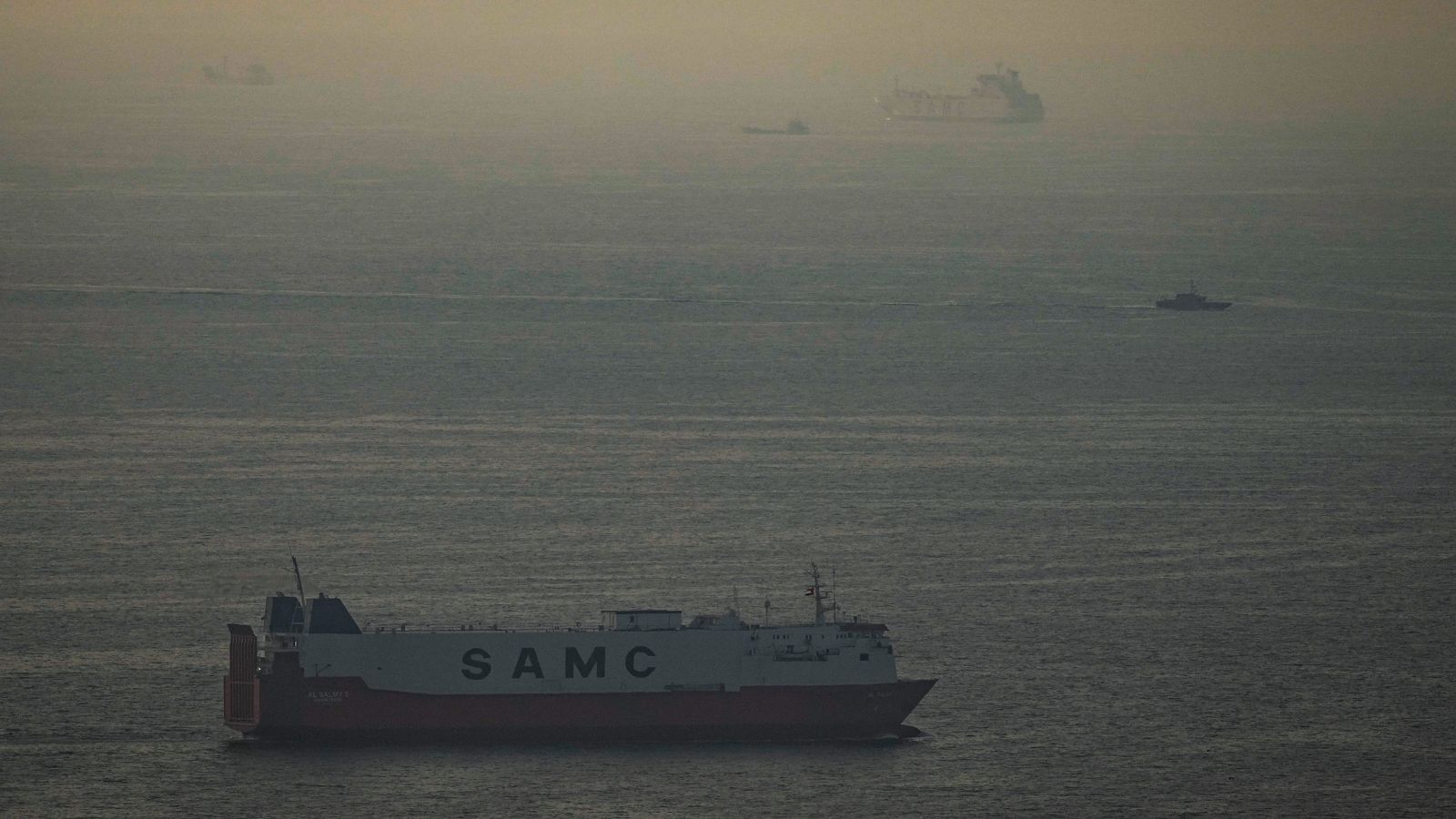
Investors are no longer pricing in a "Great Persian War" because the current strategy is designed to avoid a massive, ground-level escalation. Instead, it is an exercise in industrial and financial strangulation. By rejecting a ceasefire, the administration keeps the "Force Majeure" clauses active for international shipping and insurance firms. This makes it prohibitively expensive for anyone to move Iranian product, even through the "dark fleet" of tankers.
The economic reality is that Iran is running out of ways to pay its proxies. In Damascus and Baghdad, the local militias are reportedly seeing their monthly stipends delayed or cut. This is where the investigative lens reveals the true target. The goal isn't a regime change through a popular uprising—though that would be a welcome byproduct for Washington—but rather a "regime bankruptcy." A government that cannot pay its gunmen cannot govern a revolution.
The Technology Gap Nobody Is Discussing
One of the most overlooked factors in this refusal to stop the fight is the catastrophic failure of Iranian electronic warfare suites. In several recent encounters, supposedly advanced jamming equipment provided by regional partners failed to divert a single incoming munition. This technological disparity has created a window of opportunity that the Pentagon is loath to close.
$E = mc^2$ might be the most famous equation in physics, but in the modern Middle East, the only equation that matters is the cost per kill versus the cost of defense. Currently, the U.S. and its allies are using high-volume, low-cost autonomous systems to overwhelm expensive, finite Iranian defensive batteries. If a ceasefire were signed today, it would allow Tehran to analyze the wreckage, patch their software vulnerabilities, and procure new countermeasures.
The administration’s "no-pause" policy is essentially a live-fire stress test of Iranian desperation. By keeping the pressure on, the U.S. prevents the technical "debrief" that usually follows a conflict. They are keeping the Iranian engineers in the bunkers rather than in the labs.
The Regional Players Recalculate
Saudi Arabia, the UAE, and Jordan are watching this play out with a mixture of relief and profound anxiety. For decades, these nations have lived under the shadow of Iranian ballistic missiles. The "knockout" claim by the White House is being tested in real-time by their intelligence services. If Trump is right, and the manufacturing hubs for these missiles are truly gone, the regional balance of power shifts toward Riyadh for the next twenty years.
However, the risk remains. A cornered animal is at its most dangerous. If the conventional "knockout" is as complete as the administration claims, the only tools left in the Iranian shed are unconventional. We are talking about cyber-attacks on desalination plants, the activation of "sleeper" cells in European capitals, or a desperate sprint toward a nuclear device. The rejection of a ceasefire is a gamble that these unconventional threats can be managed through the same aggressive posture.
The Intelligence Gap and Factual Uncertainty
We must be honest about the "fog of war." While the administration claims to have neutralized "everything," total certainty in the world of underground bunkers and mountain-side facilities is impossible. The IRGC has spent forty years mastering the art of redundancy. For every visible warehouse destroyed, there is a high probability of a secondary facility buried under a hundred feet of granite.
The "investigative" truth is likely somewhere in the middle. The command-and-control structure is undoubtedly shattered. The ability to coordinate a multi-front war has been crippled. But the ideology remains intact, and the "human capital"—the scientists and commanders who survived the strikes—are still on the board. The rejection of the ceasefire is an attempt to ensure these individuals have no tools left to work with.
The Financial Noose Tightens
Beyond the missiles and the drones, the real war is being fought in the ledgers of mid-sized banks in Dubai, Ankara, and Erbil. The Treasury Department has moved in tandem with the military, blacklisting over 400 front companies in the last sixty days alone. This "financial kinetic" approach is what makes the current rejection of a ceasefire so devastating for Tehran.
In previous administrations, a ceasefire often included a "goodwill" easing of certain financial restrictions. Trump has signaled that those days are over. There will be no unfreezing of assets. There will be no humanitarian exemptions that mysteriously fund ballistic research. The message is clear: the only way out is a total capitulation on the nuclear and regional proxy fronts.
This isn't just about "winning" a news cycle. It's about a fundamental belief that the Iranian system is at a breaking point. The internal protests, the crumbling economy, and the military losses have created a "perfect storm" that the White House intends to ride until the end.
A New Doctrine of Non-Interventionist Force
What we are witnessing is the birth of a new American doctrine. It is a refusal to play the role of the "policeman" who stops the fight once the bully gets a bloody nose. Instead, the administration is acting as the "liquidator." They are overseeing the systematic dismantling of a regional competitor’s assets without committing tens of thousands of American boots to a ground war.
This approach relies heavily on technical superiority and economic leverage. It bypasses the United Nations and ignores the traditional "de-escalation" cycles favored by the State Department. It is a cold, calculated assessment of power. The ceasefire was rejected because, in the eyes of this administration, there is nothing left to negotiate. You don't negotiate with a bankrupt firm; you wait for the doors to be locked and the keys to be handed over.
The next few weeks will prove whether "everything" was truly knocked out or if the U.S. has underestimated the resilience of a regime that has made survival its primary industry. If the drones keep falling and the proxies keep retreating, the map of the Middle East will be redrawn without a single diplomat sitting at a mahogany table. The pen has been replaced by the precision-guided thermobaric charge, and the ink is the black gold that Tehran can no longer sell.
The focus now shifts to the Iranian response. With their back against the wall and the ceasefire door slammed shut, the leadership in Tehran faces a choice between internal collapse or a suicidal external escalation. The White House has bet the house that they will choose the former. It is a high-stakes play that leaves no room for error and no path for retreat.
Check the shipping manifests in the Persian Gulf tomorrow morning. If the tankers are moving and the premiums are holding steady, you’ll know the market believes the knockout was real.