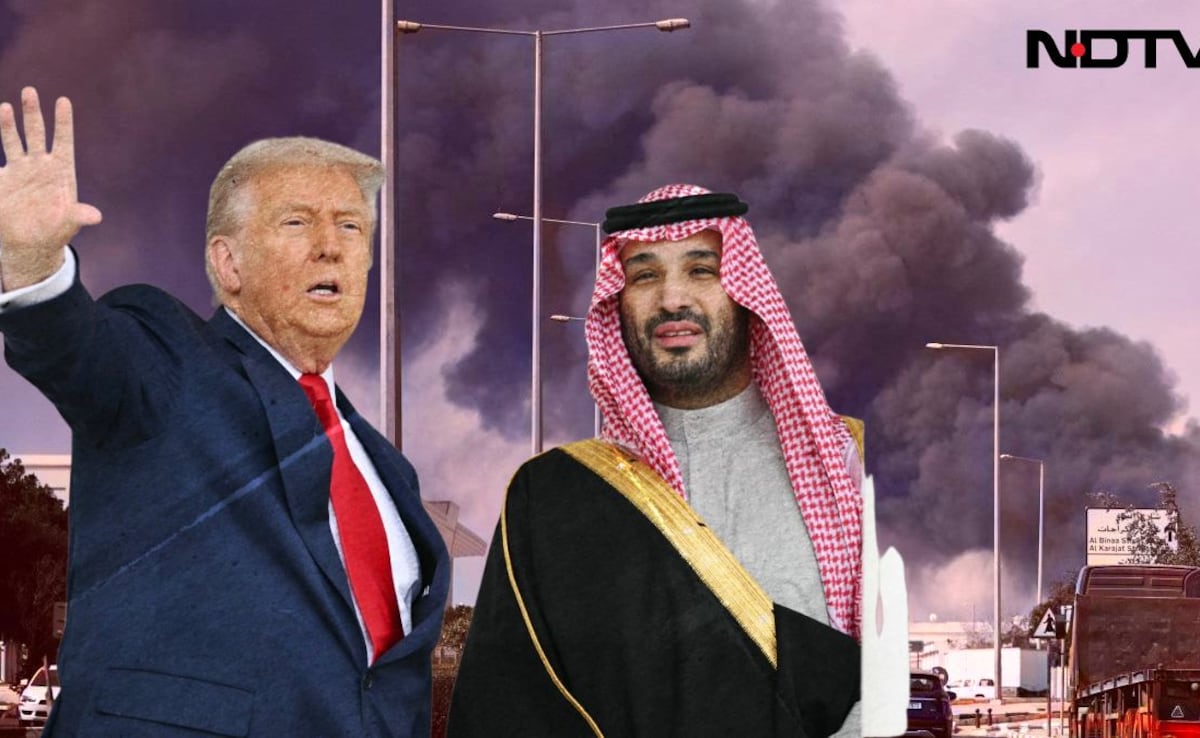
The oscillation between public derision and strategic adulation in Donald Trump’s rhetoric toward Saudi Crown Prince Mohammed bin Salman (MBS) is not an erratic behavioral trait; it is a calculated application of leverage in a high-stakes bilateral negotiation. By fluctuating between aggressive populist posturing and deep institutional praise, Trump utilizes a "volatility premium" to recalibrate the terms of the U.S.-Saudi relationship. This strategy serves three distinct functions: the domestic political signaling of strength, the extraction of economic concessions, and the solidification of a personalized security architecture that bypasses traditional bureaucratic friction.
The Volatility Premium in Diplomatic Negotiations
Traditional diplomacy operates on the principle of predictability, where incremental changes in stance are signaled through mid-level communiqués. Trump’s "jibe-then-praise" cycle disrupts this equilibrium to create a psychological disadvantage for the counterparty. When Trump references the Crown Prince’s previous deference or "kissing my a**," he is visually and linguistically establishing a hierarchy of power. This serves to remind the Saudi leadership—and the global audience—that the security umbrella provided by the United States is a service, not an entitlement.
The subsequent pivot to praise acts as the "reward" phase in an operant conditioning loop. By validating MBS as a "great leader" or a "friend" immediately following a public insult, Trump creates an environment where the Saudi leadership is incentivized to maintain favor through tangible commitments. These commitments generally fall into three measurable categories:
- Capital Reinvestment: Large-scale procurement of American defense hardware (e.g., the $110 billion arms deal framework).
- Energy Market Stabilization: Coordination on OPEC+ production levels to manage domestic U.S. gasoline prices.
- Regional Normalization: Participation in broad geopolitical shifts, such as the Abraham Accords, which require Saudi tacit approval even if formal signatures are withheld.
The Cost Function of Sovereign Protection
The Saudi-American relationship is defined by a fundamental asymmetry in the cost-benefit analysis of security. For the United States, the cost of maintaining the Fifth Fleet and regional airbases is a fixed overhead of global power projection. For Saudi Arabia, this presence is an existential necessity.
Trump’s rhetoric quantifies this unspoken reality. By mocking the Crown Prince, he signals that the "price" of American protection is subject to renegotiation. This is an application of the Protection Rent Theory, where a dominant power extracts economic or political value from a protected state in exchange for defense. The "jibe" serves as a notice of a price hike; the "praise" confirms that the rent has been paid, either through investment promises or alignment on specific policy goals.
Institutional vs. Personalized Diplomacy
The shift from State Department-led diplomacy to a personalized executive-to-executive model introduces significant tail-risk for both nations. In a structured institutional model, the relationship is governed by the State-to-State Continuity Principle, ensuring that agreements survive changes in leadership. In the personalized model favored by Trump and MBS, the relationship becomes a "key-man dependency."
- Benefit: Decisions that would take years in a committee can be made in a single phone call or dinner. This bypasses the "veto players" in the U.S. Congress who are critical of Saudi Arabia’s human rights record or the war in Yemen.
- Risk: The relationship becomes fragile. If one "key man" loses power, the entire diplomatic framework can collapse because it lacks the structural support of permanent bureaucracy.
The Geopolitical Arbitrage of Human Rights
The "Kissing my a**" comment, while seemingly crude, functions as a tool of Geopolitical Arbitrage. Trump identifies that the international community—and specifically the Democratic party in the U.S.—places a high "tax" on Saudi Arabia due to human rights concerns (the Jamal Khashoggi assassination, for example). By publicly dismissing these concerns and focusing on the transactional nature of the Prince's "affection" or loyalty, Trump effectively offers Saudi Arabia a "discount" on its global reputation in exchange for loyalty to his specific administration.
This creates a "sunk cost" for the Saudi leadership. Once they have leaned into a personalized relationship with a specific American leader who defends them against global outcry, they are less likely to diversify their alliances toward China or Russia, as those powers cannot offer the same level of integrated military technology or global financial hegemony.
Structural Bottlenecks in the Saudi Investment Thesis
While the rhetoric suggests a seamless partnership, two structural bottlenecks limit the actualization of these verbal agreements:
The Absorption Capacity of the Saudi Economy
The "Vision 2030" plan requires massive capital inflows, yet the Kingdom is simultaneously pressured by the U.S. to spend its sovereign wealth on American goods and infrastructure. This creates a liquidity tension. Saudi Arabia cannot simultaneously fund its domestic transformation and provide the "wins" Trump demands (such as massive investment in U.S. manufacturing) without risking its long-term fiscal stability if oil prices dip below $70 per barrel.
The Legislative Veto
Despite the executive-level "praise," the U.S. Senate remains a friction point. The Arms Export Control Act allows Congress to block sales. Trump’s rhetoric often ignores this reality, creating a gap between the "deal" discussed in private and the "delivery" possible under U.S. law. This gap is where the "jibe" becomes a defensive tool for Trump; if a deal fails to materialize, he can blame the "weakness" or "insubordination" of the other party rather than his own inability to navigate the legislative branch.
The Mechanics of the "Great Leader" Label
When Trump labels MBS a "great leader," he is not making a moral judgment; he is making a functional assessment of the Prince's ability to exert absolute control over his territory. In the framework of Realpolitik, a "great leader" is an interlocutor who can guarantee results without the interference of a parliament or an independent judiciary. For a leader who views international relations as a series of zero-sum trades, a centralized autocracy is a much more efficient trading partner than a fragmented democracy.
This creates a feedback loop. The more Trump praises the Prince's strength, the more the Prince is emboldened to consolidate power, which in turn makes him a more effective (and sole) point of contact for future transactions.
Calibrating for the 2024-2028 Cycle
The recent rhetoric indicates a preparation for a potential second term. By re-establishing the "tough but fair" narrative now, Trump is setting the baseline for future negotiations. He is signaling to Riyadh that the "free ride" (a frequent Trump trope) is over, but that "friendship" is available for purchase through strategic alignment.
The Saudi response—carefully measured silence or reciprocal praise—shows an understanding of this game. They are calculating the Probability of Return. If they believe Trump will return to the White House, they must tolerate the jibes to secure the eventual "praise" and the security guarantees that come with it.
The strategic play here is not to view these comments as "news" or "gaffes." They are the auditory indicators of a shifting price discovery process in the global security market. The United States is moving away from being a "global policeman" (a public good) and toward being a "private security contractor" (a fee-for-service model).
To engage with this reality, analysts must stop tracking the sentiment of the words and start tracking the flow of capital that follows them. Every time a jibe is issued, look for the next Saudi investment in a U.S. domestic project. Every time praise is issued, look for the next shift in oil production or a new military procurement contract. The rhetoric is the "marketing" for a much deeper, much more clinical exchange of sovereign assets.
The final strategic move for the Saudi leadership is to ensure they are not "over-leveraged" on a single American political figure. Their recent outreach to the BRICS nations and increased diplomacy with Beijing suggests they are building a hedge. The "jibe" from Trump may be the very thing that accelerates Saudi Arabia's pivot toward a multi-polar alliance structure, as it proves that American protection under a transactional leader is only as stable as the next rally speech.
Would you like me to map the specific correlation between Trump's historical Saudi-related tweets and the subsequent shifts in the WTI (West Texas Intermediate) oil price index?