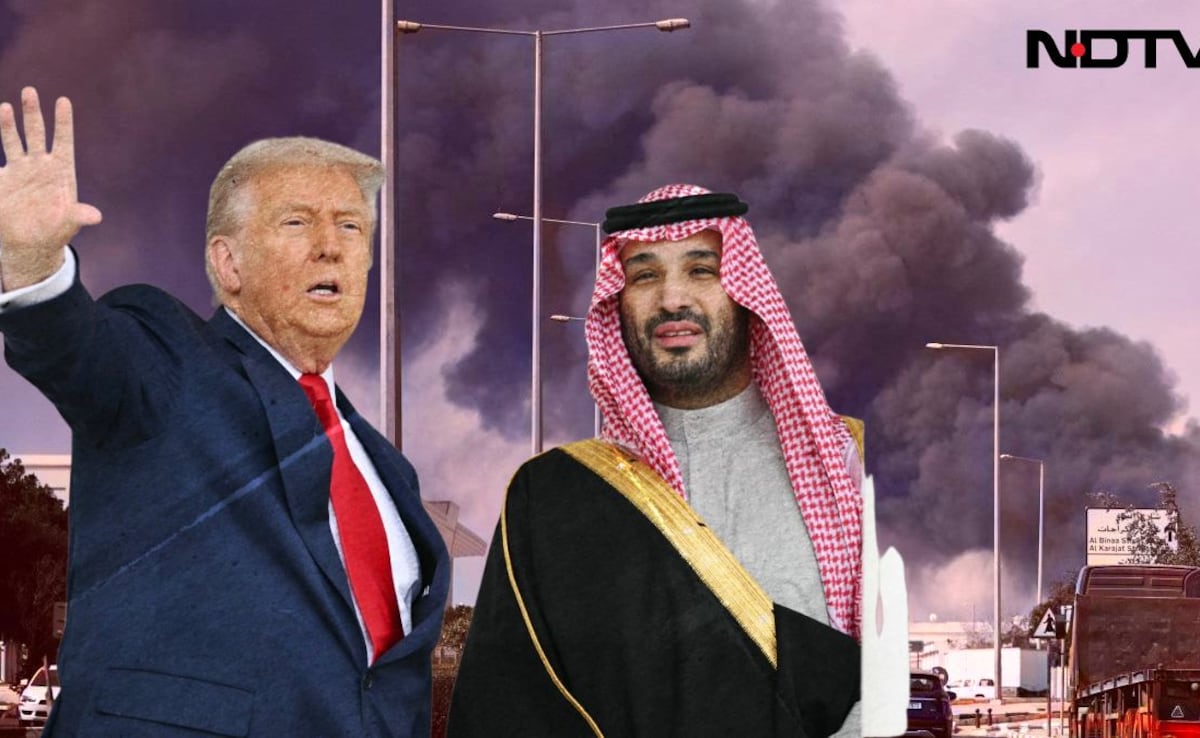
The United States hasn't moved this much hardware into the Middle East in over twenty years. If you've been watching the headlines, you've seen the numbers: thousands of Marines, advanced stealth fighters, and a naval armada that looks less like a "deterrent" and more like a pre-invasion force. But let's be real—this isn't just about a few seized oil tankers or protecting "freedom of navigation." It’s a massive gamble by the Trump administration to reset the regional balance of power after decades of perceived retreat.
Right now, the Pentagon has effectively parked a small city’s worth of combat power off the coast of Iran. Between the arrival of the USS Bataan, the USS Carter Hall, and the more recent surge of the 26th Marine Expeditionary Unit (MEU), we’re looking at the most significant buildup since the 2003 invasion of Iraq. If you think this is business as usual, you’re missing the bigger picture.
Why the Persian Gulf Is Turning Into a Powderkeg
The immediate justification for this surge is Iran’s aggressive habit of harassing commercial ships in the Strait of Hormuz. Since early 2023, Tehran has messed with nearly 20 internationally flagged vessels. They aren't just shadowing them; they’re firing on hulls and using fast-attack boats to surround tankers.
But there’s a deeper, uglier reality at play. Washington’s Arab partners—specifically the UAE and Saudi Arabia—have been feeling ghosted. When the UAE pulled out of a US-led maritime security task force in 2023, it was a massive "I told you so" to the White House. They felt the US was all talk and no muscle. This buildup is the response. It’s a loud, expensive way of saying, "We’re still here, and we’re still the biggest kid on the block."
The Marine Solution Put to the Test
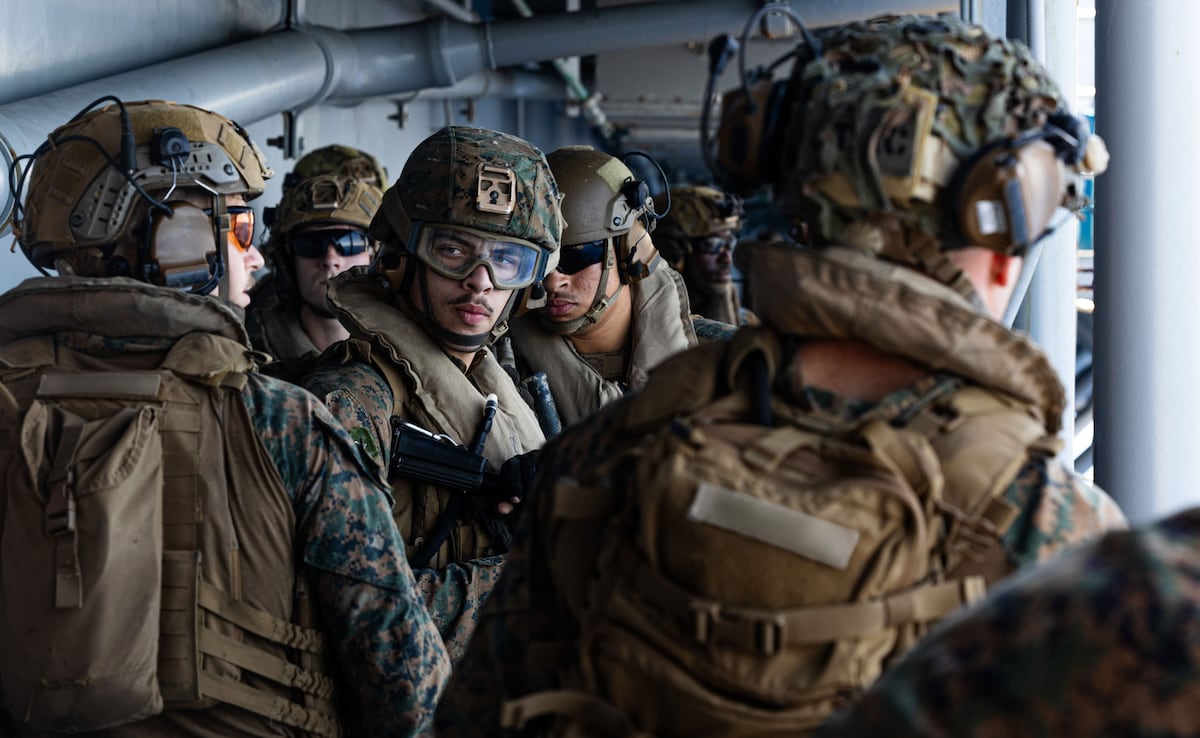
What makes this deployment different isn't just the sheer number of boots on the ground—it's what those boots are doing. For the first time in recent memory, the US has seriously floated the idea of putting armed Marines directly onto private commercial tankers.
Think about that for a second. You have 19-year-olds from North Carolina sitting on a Greek-owned oil tanker with a machine gun, waiting for an Iranian Revolutionary Guard boat to pull alongside. It’s a tactical nightmare that could turn a simple ship seizure into a shooting war in seconds.
The assets currently on station include:
- USS Bataan (LHD-5): A Wasp-class amphibious assault ship that’s basically a mini-aircraft carrier. It carries AV-8B Harriers and MV-22 Ospreys.
- USS Carter Hall: A dock landing ship designed to puke out hovercraft and Marines onto a beach at a moment's notice.
- The 26th MEU: These aren't your average infantry. They’re a "Special Operations Capable" unit trained for raids, evacuations, and "visit, board, search, and seizure" (VBSS) missions.
Strategic Overreach or Necessary Force
Critics say we're burning high-end resources to fight low-cost threats. It costs millions of dollars to keep a carrier strike group in the region, while an Iranian drone or a sea mine costs next to nothing. This is the "asymmetric" trap.
We’re seeing a shift from "presence as policy" to "presence as leverage." The Trump administration wants Iran to see the F-22s landing in Israel and the USS Gerald R. Ford heading toward the coast and feel the walls closing in. The goal is to force Tehran back to the negotiating table on terms that don't just include nukes, but also their missile programs and proxy wars in Yemen and Lebanon.
What Happens When Deterrence Fails
The risk of miscalculation is higher than it’s been in decades. With the Strait of Hormuz being only 21 miles wide at its narrowest point, there’s no room for error. If a US Marine opens fire on an Iranian fast-boat, or if an Iranian missile "accidentally" clips a US destroyer, the escalator starts moving, and it doesn't have a stop button.
We’ve already seen the fallout: oil prices have spiked above $100 a barrel because the markets are terrified of a total shutdown of the Strait. If that waterway closes, 20% of the world’s oil supply vanishes overnight. That’s why the US is willing to risk a conflict—because the alternative is a global economic meltdown.
If you’re trying to make sense of this, don't look at the individual ships. Look at the maps. The US is building a "dome" of air and sea power that stretches from the Mediterranean to the Arabian Sea. It’s an attempt to put the "Middle East" back into a box that the US can control, but in 2026, that box has a lot of holes in it.
Keep an eye on the 26th MEU's movements over the next few weeks. If they start moving from ships to small islands in the Gulf, we’re moving from "deterrence" to "active occupation" of the shipping lanes. You should also watch the price of Brent Crude; it's the only honest metric we have for how close we are to actual war. If it stays above $100, the "armada" hasn't scared anyone yet.