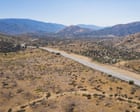
The Baker to Vegas Challenge Cup Relay is widely considered the Olympics of law enforcement. It’s a grueling 120-mile stretch of desert pavement that tests the physical limits of every officer involved. But this weekend, the celebration of camaraderie turned into a nightmare. A Los Angeles County Sheriff’s deputy collapsed during the race and later died. It’s a gut-wrenching reminder that even those trained to handle the most stressful situations on earth aren't immune to the physiological toll of extreme endurance.
Law enforcement sources confirmed that the deputy, whose name hasn't been released pending full family notification, suffered a medical emergency during their segment of the relay. Despite the immediate intervention of on-site medical teams and a quick transport to a nearby hospital, the deputy passed away. This isn't just a "medical emergency" in a vacuum. It’s a loss that vibrates through the entire LASD community and the thousands of officers from across the globe who fly in for this specific event.
Why Baker to Vegas is more dangerous than it looks
If you aren't familiar with "B2V," you might think it’s just another fun run. It’s not. It started in 1985 as a way for officers to build teamwork and promote physical fitness. Today, it involves 270 teams. That’s over 5,000 runners. The course starts in Baker, California, and ends in Las Vegas, Nevada.
The environment is the first enemy. You’re running through the Mojave Desert. Temperatures can fluctuate wildly. One stage might be under a scorching sun, while a night stage involves freezing desert winds. For a deputy who spends most of their shift in a patrol car or a station, jumping into a high-intensity sprint in these conditions is a massive shock to the cardiovascular system.
Medical experts often point out that "law enforcement fitness" is different from "endurance fitness." Police training focuses on short bursts of power—the foot pursuit, the struggle to detain a suspect. This is anaerobic work. The Baker to Vegas relay requires sustained aerobic capacity often pushed to the redline. When you combine that physical stress with the adrenaline of representing your station, people push past their breaking points. They don't want to let their team down.
The physical toll on the Los Angeles County Sheriff’s Department
The LASD is one of the largest provider of teams for this race. Each station—Century, East LA, Palmdale—usually has a massive stake in the outcome. It's about bragging rights. But the department has been under immense pressure lately. Staffing shortages mean deputies are working double shifts. They’re tired. They’re stressed.
When a body is already dealing with high cortisol levels from 60-hour work weeks, its ability to recover from a high-heat endurance event is compromised. We see this in the data regarding officer health. According to the National Strength and Conditioning Association, police officers have a significantly higher risk of cardiovascular disease than the general public. Sudden cardiac death is a leading cause of line-of-duty deaths, though it often gets less press than shootings or accidents.
In the 2024 and 2025 race cycles, we saw an increased emphasis on hydration and "cooling stations." Yet, the fundamental risk remains. You can't fully mitigate the danger of running 5 to 10 miles at a full sprint in the desert.
What happens when the alarm goes off
The response to this specific deputy's collapse was immediate. The race has a sophisticated medical network including ambulances, flight medevacs, and dozens of volunteer doctors. But even with a world-class response, some cardiac events are "electrical" issues in the heart that are nearly impossible to reverse in the field.
The Los Angeles County Sheriff’s Department released a brief statement expressing their heartbreak. Sheriff Robert Luna has been vocal about supporting his staff’s mental and physical health, but a tragedy like this usually forces a re-evaluation of how these events are sanctioned. Expect to see much stricter medical screenings for participants in the 2027 race.
The statistics of law enforcement health risks
It’s uncomfortable to talk about, but the numbers don't lie. A study by the University of Buffalo found that the life expectancy of a police officer is about 20 years shorter than that of the average citizen.
- Officers are 2.5 times more likely to die from cardiovascular disease than from the actions of a suspect.
- The average age of a first heart attack for a police officer is 46, compared to 65 for the general population.
- Shift work and sleep deprivation increase the risk of "silent" heart issues by nearly 40%.
When you put these statistics into the context of the Baker to Vegas race, the event looks less like a hobby and more like a high-risk operation. The deputy who died this weekend was likely in "good shape" by departmental standards. But "good shape" for a 30-year-old deputy might still involve underlying issues caused by the chronic stress of the job.
How the department moves forward from here
The loss of a colleague during a "fun" event is often harder to process than a loss during a high-risk call. There’s a sense of guilt that permeates the team. Did we push them too hard? Did we miss the signs? Counseling services are already being deployed to the station where the deputy was based. The LASD Peer Support Program is one of the best in the country, but it’s going to have its hands full. This isn't just about one person; it’s about the 19 other people on that relay team who watched their friend collapse.
For those looking to support the family, the ALADS (Association for Los Angeles Deputy Sheriffs) typically sets up a relief fund. If you want to help, that’s the place to start. Don't look for unofficial GoFundMe pages that pop up in the wake of these tragedies; they’re often scams.
Steps for officers training for high-heat endurance
If you're in law enforcement and you're planning on running B2V or any similar relay, you need to change your approach. You can't just run on a treadmill for three weeks and call it a day.
- Get a calcium score test. This is a specialized CT scan that looks for plaque in the coronary arteries. Standard physicals often miss this. It’s the only way to know if you have a "widowmaker" waiting to happen.
- Train in the heat. If you’re going to run in the desert, you have to acclimate. This means doing zone 2 cardio in higher temperatures to teach your body how to sweat efficiently.
- Monitor your HRV. Use a wearable to track your Heart Rate Variability. if your HRV is low, your nervous system is fried. That is the day you skip the "sprint intervals" and go for a walk instead.
- Electrolytes aren't optional. Drinking just water during a desert race leads to hyponatremia. You need magnesium, potassium, and sodium. Lots of it.
This tragedy shouldn't end the Baker to Vegas tradition, but it should end the culture of "gutting it out" when your body is screaming for help. Rest in peace to the fallen deputy. Their service ended far too soon, and the desert has claimed a debt it had no right to collect.
Go check on your partners. Make sure they’re actually healthy, not just "toughing it out."