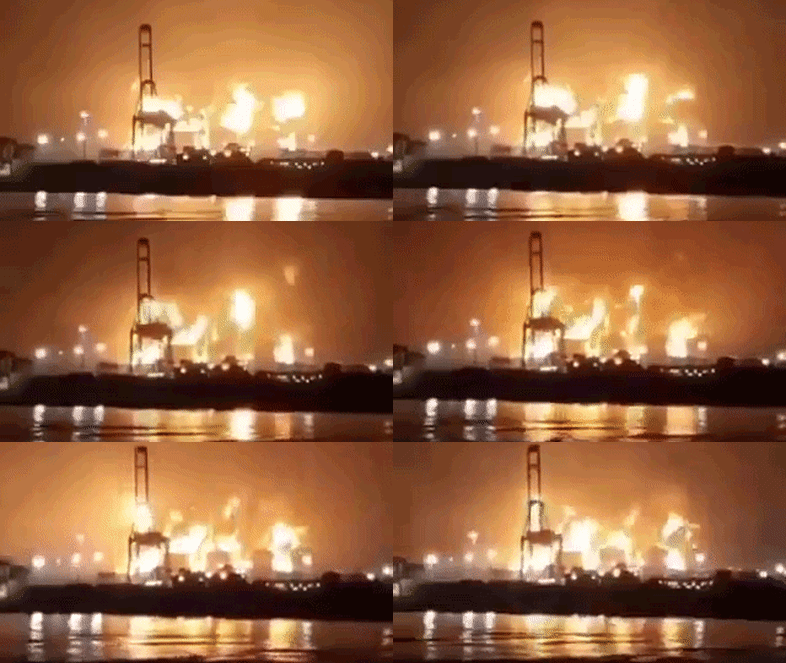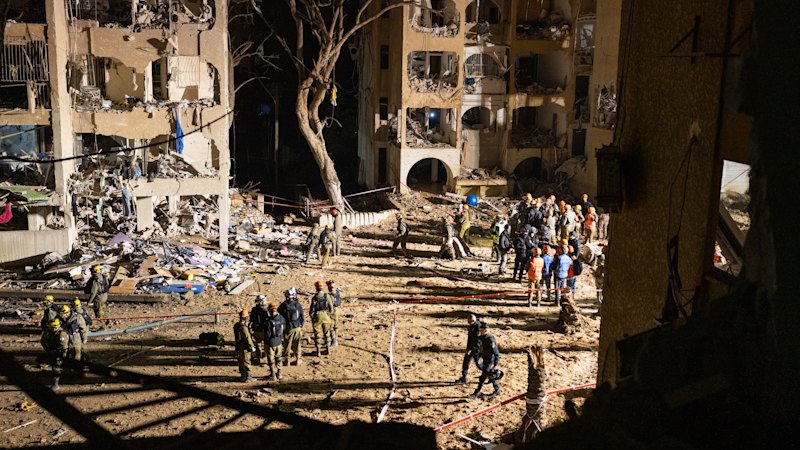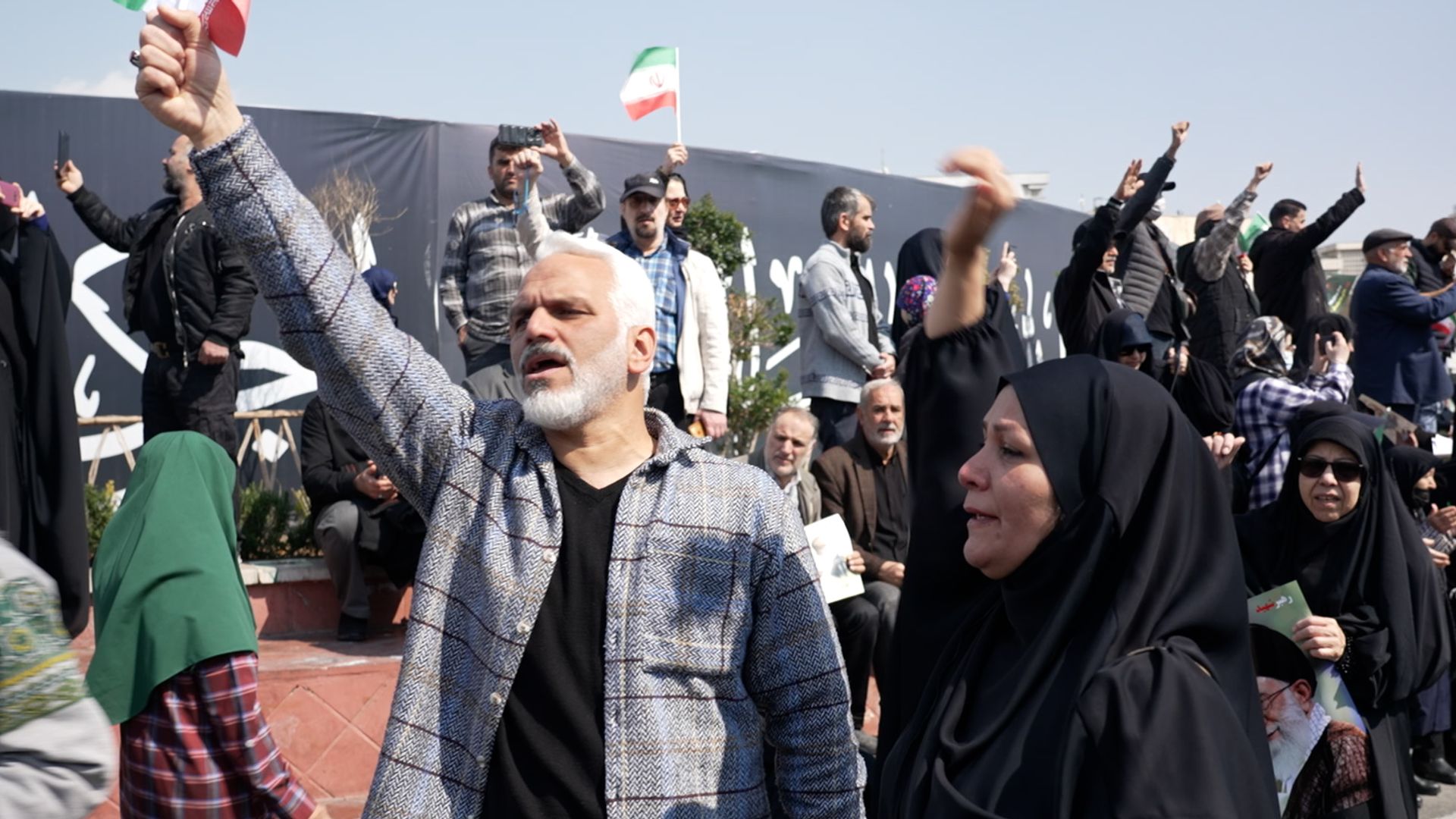
The atmosphere in Tehran is no longer defined by the sudden shock of escalation but by the grinding, mechanical exhaustion of a society that has integrated the threat of total war into its daily economy. While international headlines focus on the geometry of missile paths and the rhetoric of regional proxies, the real story lies in the calculated endurance of the Iranian civilian. They are not merely bracing for a conflict. They are living in the carcass of a peace that vanished years ago. To understand the current stability of the Iranian state, one must look past the revolutionary slogans and into the hyper-inflationary reality of the bazaar, where the price of bread and the threat of an airstrike are discussed with the same weary detachment.
The Iranian leadership has successfully transformed the country into a "resistance economy," a term that serves as a convenient euphemism for a permanent state of emergency. This is not a temporary dip in the business cycle. It is a fundamental restructuring of how eighty-five million people survive. The government survives because it has mastered the art of managing misery, ensuring that while the middle class disappears, the basic mechanisms of state control—subsidies, internal security, and shadow markets—remain functional enough to prevent a systemic collapse.
The Architecture of Uncertainty
In the upscale districts of North Tehran, the chatter in cafes isn't about if a strike will happen, but what the rial will be worth the morning after. Economic anxiety has outpaced physical fear. For the average Iranian, the immediate threat is not a drone; it is the fact that their life savings are evaporating in real-time. This financial volatility is the primary tool of social control. When people are preoccupied with the logistics of basic survival, their capacity for organized political dissent diminishes.
The Iranian state has spent decades building a literal and figurative underground infrastructure. Beneath the streets of the capital lies a sophisticated network of bunkers and military installations, but more importantly, there exists a massive shadow economy designed to bypass international sanctions. This "gray market" is the lifeblood of the regime. It relies on a complex web of front companies in the UAE, Turkey, and East Asia to move oil and import dual-use technology. This isn't just a workaround; it is the foundation of the current Iranian power structure.
The Myth of the Sudden Collapse
Western analysts often predict that a major military provocation will lead to the internal fracturing of the Iranian government. This perspective misses the historical depth of the Iranian collective memory. The scars of the eight-year war with Iraq in the 1980s are still visible in the psyche of the ruling elite and the older generation of civilians. They have seen cities leveled before. They have lived through rationing. The current "uncertainty" is, for many, a return to a familiar baseline of struggle rather than a descent into the unknown.
The regime leverages this history to frame every economic failure as an act of foreign aggression. By keeping the population in a state of perpetual high-alert, the state can justify the suppression of labor strikes and student protests under the guise of national security. It is a brutal but effective feedback loop: the threat of war justifies the police state, and the police state ensures that the threat of war remains the only permissible national conversation.
The Real Cost of the Shadow War
While the military-industrial complex of the Revolutionary Guard flourishes, the civilian infrastructure is rotting. This is where the true danger to the Iranian state lies. It is not in a spectacular explosion, but in the slow, quiet failure of the power grid, the drying up of Lake Urmia, and the brain drain that sees thousands of the country’s brightest engineers and doctors flee to Europe or North America every year.
- Infrastructure Decay: Rolling blackouts in the summer and gas shortages in the winter have become routine.
- Capital Flight: It is estimated that billions of dollars leave the country annually as those with means seek any harbor safer than the rial.
- Health Crisis: Sanctions-related shortages of specialized medicines for cancer and rare diseases have turned the healthcare system into a lottery.
These are the "quiet" casualties of the long war. The civilian population is being hollowed out from the inside. When you walk through the Grand Bazaar, you see shopkeepers who have survived three revolutions and four decades of sanctions. They are experts in the mathematics of survival, but even their legendary resilience is hitting a ceiling. They are no longer buying stock for next year; they are selling off what they have to meet next month's rent.
The Generation of the Void
The most volatile element in this equation is the youth. Unlike their parents, they have no memory of the 1979 Revolution or the "Sacred Defense" against Iraq. They are hyper-connected via VPNs to a world they are forbidden from joining. For them, the "long war" is an abstraction used to steal their future. The 2022 protests following the death of Mahsa Amini showed that the ideological grip of the state is failing, even if its security grip remains ironclad.
The government’s response to this ideological vacuum has been to double down on the narrative of the "External Enemy." By escalating tensions with regional rivals and the West, the hardliners in Tehran effectively silence the reformers. In a wartime footing, there is no room for nuance, and there is certainly no room for "Women, Life, Freedom." The threat of external conflict is the ultimate tool for internal discipline.
A Logistics of Despair
We must look at how the Iranian military prepares for the "long war" by decentralizing its command. This isn't just a tactical choice; it's a survival strategy. They have distributed their missile silos and drone manufacturing plants across the rugged terrain of the Zagros Mountains. This makes a "decapitation strike" almost impossible. The regime has prepared to fight a war of attrition where the goal isn't to win in the traditional sense, but to make the cost of victory for their opponents' unacceptable.
This same decentralization is mirrored in the way the population manages its resources. Families pool money to buy gold or hard currency. Barter systems have re-emerged in rural areas. The Iranian people have become the world’s leading experts in "anti-fragility"—the ability to get stronger or at least more adapted through chaos. But there is a limit to how much a society can adapt before it ceases to be a society and becomes merely a collection of survivalists.
The Role of the Regional Proxy
Tehran’s strategy relies heavily on the "Forward Defense" doctrine. By funding and training groups in Lebanon, Iraq, and Yemen, they ensure that any conflict begins hundreds of miles from their own borders. This gives the civilians in Tehran a false sense of security, or at least a buffer. However, the cost of maintaining this network is astronomical. As the domestic economy craters, the optics of sending millions of dollars to foreign militias become increasingly toxic for the average Iranian struggling to afford meat.
The disconnect between the revolutionary ambitions of the leadership and the material needs of the people is the widest it has been in forty years. The regime is gambling that the fear of a "Syria-style" civil war will keep the populace compliant. They point to the chaos in neighboring states and say, "We are the only thing standing between you and the abyss."
The Pivot to the East
Recognizing the limits of their endurance, Tehran is pivoting hard toward Beijing and Moscow. This is the strategic "fix" they hope will sustain them through the next decade of isolation. The 25-year cooperation agreement with China is less about immediate investment and more about creating a geopolitical lifeline. If China continues to buy discounted Iranian oil, the regime can survive indefinitely, regardless of Western pressure.
This shift has profound implications for the Iranian civilian. It means the dream of reintegration into the global West is dead for a generation. It means the internet will become more like the Chinese model—a censored, state-controlled intranet. It means the "uncertainty" is being replaced by a very certain, very grim reality of becoming a junior partner in a new authoritarian bloc.
The Iranian middle class, once the most Western-oriented in the Middle East, is the primary victim of this pivot. They are being forced to choose between a slow economic death at home or the uncertainty of life as a refugee. The "long war" for them is a battle to maintain their dignity in a system that views their aspirations as a security threat.
The False Choice of Diplomacy
There is a persistent belief in some diplomatic circles that a new nuclear deal or a grand bargain could reset the clock. This is a misunderstanding of the current power dynamics within Tehran. The hardliners have seen that they can survive "Maximum Pressure." They have built an entire political and economic ecosystem that thrives on conflict. For the Revolutionary Guard, peace is a greater threat than a limited war. Peace would require transparency, the dismantling of shadow monopolies, and a return to a civilian-led economy.
Therefore, the uncertainty that civilians feel is not an accident of history. It is a deliberate policy. As long as the "threat" is imminent, the status quo is preserved. The Iranian people are the hostages in this high-stakes game of chicken. They are bracing for a war that has, in many ways, already happened—fought in their bank accounts, their pharmacies, and their classrooms.
The resilience of the Iranian people is often romanticized by outsiders. We see them going to the movies, hiking in the Alborz mountains, and hosting underground parties as a sign of defiance. But this isn't defiance; it's a coping mechanism. It is the ritualized behavior of a population that has realized no one is coming to save them. They are not waiting for a "new day" or a "game-changer." They are simply waiting for the next crisis to see if they can survive that one, too.
Analyze the balance of payments in the Iranian shadow economy to understand why the rial remains the most accurate barometer of regional stability.