The headlines are panicking. They scream about "lasting disruptions" and "global energy paralysis" because of potential American or Israeli strikes on Iran’s Kharg Island. It is a predictable, shallow narrative. Pundits love a good map with a red circle around a terminal that handles 90% of Iran’s crude exports. They think they are looking at a kill switch.
They are looking at a ghost.
The conventional wisdom suggests that taking Kharg offline would cripple the Iranian economy and force Tehran to the table. This logic is a relic of the 1980s Tanker War. It fails to account for the modern, fragmented, and shadow-driven reality of the 2026 energy market. If you think a few missiles at a loading dock will "solve" the Iran problem, you aren't paying attention to how oil actually moves.
The Myth of the Centralized Kill Switch
Kharg Island is an easy target. It is a fixed piece of geography. It has massive storage tanks and deep-water berths. But blowing it up doesn't remove Iranian oil from the world; it just changes its state of matter.
The industry "insiders" warning of a $150 barrel are operating on a linear model that no longer exists. They assume supply is a light switch. In reality, supply is a liquid—it finds the cracks. When you hit a primary terminal, you don't stop the flow. You force it into the "dark fleet."
Iran has spent the last decade perfecting the art of Ship-to-Ship (STS) transfers. They use aging VLCCs (Very Large Crude Carriers) as floating warehouses anchored in international waters. By the time a strike hits Kharg, the oil that "matters" for the next quarter’s liquidity is already sitting on a rusty hull off the coast of Malaysia, rebranded as "Malaysian Blend."
The consensus is that Kharg is the throat. I’m telling you it’s just one of many veins.
Who Actually Profits from a Smoking Kharg?
Follow the money, not the missiles. If Kharg Island goes dark, the primary beneficiary isn't the West. It’s Moscow.
Russian Urals and Iranian Light compete for the same desperate buyers in the teapot refineries of Shandong, China. Every time a Western hawk suggests "taking out the Iranian oil industry," they are effectively writing a massive stimulus check for the Russian war chest.
- The Price Floor Paradox: A strike on Kharg creates an artificial floor for Brent.
- The Risk Premium Scam: Wall Street traders use these headlines to pump the "war premium," which harms the American consumer long before it ever hurts the Iranian Revolutionary Guard Corps (IRGC).
- The Pivot to Beijing: If Iran cannot export via Kharg, they don't stop exporting. They deepen their bartering agreements with China. They trade crude for drone components and surveillance tech directly. The "petrodollar" doesn't just lose a player; it loses a piece of the board.
The Physical Resilience the Media Ignores
I have seen how these terminals are built. These aren't fragile glass houses. They are reinforced, industrial bastions designed to survive the brutal conditions of the Persian Gulf and decades of previous conflict.
To "permanently" disable Kharg, you don't just hit a pier. You have to destroy the entire subsea pipeline infrastructure.
The Math of Modern Sabotage
Let's look at the actual physics. To stop a terminal like Kharg, an aggressor must achieve three things:
- Destruction of the Pumping Stations: These are often hardened or buried.
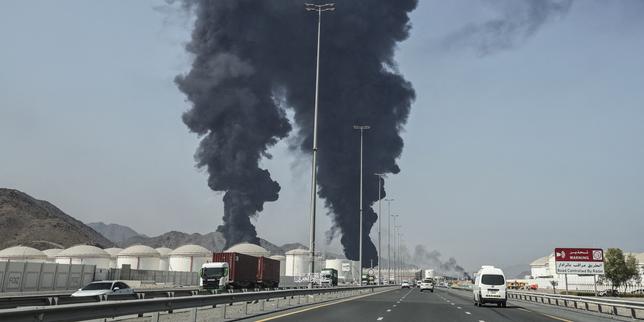
- Rupture of the Gravity-Fed Storage: A fire in a storage tank is cinematic, but it is rarely a "permanent" loss of capacity. It’s a temporary environmental disaster.
- Neutralization of the SPM (Single Point Mooring) Buoys: These are essentially big floating plugs. They are cheap to replace compared to the cost of the precision munitions used to hit them.
The cost-to-damage ratio is heavily weighted in Iran's favor. They can repair a berth faster than a carrier group can reposition. We saw this during the Iran-Iraq war. Kharg was hit hundreds of times. It never stayed down. Thinking it will be different now is tactical arrogance.
The "People Also Ask" Delusion
People often ask: "Will an attack on Kharg Island cause a global recession?"
The premise is flawed. A recession isn't triggered by the loss of Iranian oil—which is already largely sanctioned and "off-book" for the West. A recession is triggered by the overreaction of the insurance markets.
When a strike happens, Lloyds of London adjusts the war risk premiums. The cost of shipping all oil through the Strait of Hormuz skyrockets. You aren't just paying for the loss of Iranian barrels; you are paying a tax on every Saudi, Kuwaiti, and Emirati barrel too.
If you want to hurt Iran, you don't bomb their docks. You flood the market with cheap, transparent supply from elsewhere to make their "dark" discounts unprofitable. You use the drill bit, not the Tomahawk.
The Hidden Danger of Environmental Blowback
Let’s talk about the variable the "contrarians" usually miss: the ecological suicide of the Persian Gulf.
A massive spill at Kharg doesn't just stay in Iranian waters. The currents in the Gulf move in a counter-clockwise direction. A catastrophic release of crude would drift south and east.
Imagine a scenario where a strike meant to "protect global interests" ends up clogging the desalination plants of the UAE, Qatar, and Kuwait. You would be trading a temporary reduction in Iranian revenue for a permanent water crisis for your own allies.
The strategic cost of "collateral thirst" is something no one in Washington wants to put on a slide deck.
Stop Falling for the "Nervous Point" Narrative
Kharg is a symbol. It is a big, easy-to-photograph target that makes for great cable news segments. But in the world of 21st-century energy logistics, symbols are for losers.
The real power isn't in the terminal; it's in the ledger.
The IRGC doesn't keep its wealth in those oil tanks. They keep it in a web of front companies in Dubai, Istanbul, and Hong Kong. If you blow up the tanks, you just give them an excuse to declare force majeure on their debts while they continue to sell their "off-shore" reserves at a massive markup.
Striking Kharg is the equivalent of trying to delete a file by smashing the computer monitor. The data is still on the hard drive. The hard drive is in the cloud. And the cloud is currently being hosted by entities that don't care about US sanctions.
The Professional Reality Check
I've watched energy markets absorb shocks that should have been "fatal." I've seen pipelines bombed in Nigeria, terminals seized in Libya, and refineries drones-struck in Saudi Arabia. The market always has more "give" than the analysts realize.
The Kharg Island "threat" is a tool for geopolitical signaling, not a viable path to victory. If the goal is to stop Iran’s regional influence, hitting their most visible asset is the least effective way to do it. It provides the regime with a rallying cry, spikes the price of the very product they sell, and hands a strategic gift to their partners in Moscow and Beijing.
The "experts" telling you that Kharg is the "center of gravity" are reading a map from 1979. They are missing the decentralized, digital, and shadowy reality of how energy moves today.
If you want to disrupt Iran, stop looking at the island. Start looking at the banks. Start looking at the dark fleet tankers. Start looking at the insurance underwriters who look the other way.
The next time you see a "breaking news" alert about a strike on an oil terminal, don't worry about the supply. Worry about the incompetence of the people who think they can win a modern war by blowing up a 20th-century pier.