The silence was the first thing Mei noticed. Usually, the 6:00 AM air in Manila is a thick soup of diesel exhaust and the rhythmic grinding of jeepney gears. It is a loud, vibrating symphony of commerce. But on this Tuesday, the street outside her window was eerily still. The price at the pump had crossed a psychological rubicon overnight. The numbers on the digital displays had flickered, climbed, and finally settled at a height that turned the act of driving from a necessity into a luxury.
Across Asia, this same silence is settling in. From the neon-choked intersections of Tokyo to the humid sprawl of Jakarta, a fundamental shift is occurring. It isn't a slow transition fueled by environmental idealism. It is a sharp, jagged pivot forced by the brutal mathematics of oil. When Brent crude surges, the ripple effect doesn't just hit the gas tank. It hits the breakfast table. It hits the light switch. It hits the very way a continent moves.
Mei looked at her keys on the kitchen counter. For years, those keys represented freedom—the ability to navigate the city on her own terms. Now, they looked like an anchor. She calculated the cost of the commute in her head, weighing the price of a liter of fuel against the price of a gallon of milk. The milk won.
The Vertical Commute
In Bangkok, a high-rise office manager named Somchai stared at the elevator bank in his forty-story tower. Beside the call button, a new sign had been taped: Please use the stairs for journeys under four floors. It seemed like a small, almost trivial request. But multiply that by a thousand employees, across ten thousand towers, and the energy savings begin to look like a fortress against rising costs.
This is the new reality of the "vertical commute." We often think of energy crises in terms of massive power plants or international shipping lanes. We forget that every time an elevator car rises, it consumes a slice of the world's dwindling, expensive reserves. By asking citizens to walk, governments are acknowledging a hard truth: the era of effortless movement is over.
But the stairs are just the beginning. The real revolution is happening behind closed doors, in the quiet glow of laptop screens in suburban living rooms.
The Death of the Central Business District
For decades, the Asian economic miracle was built on the concept of the "hub." You lived in the periphery and traveled to the center. You sat in a cubicle, surrounded by hundreds of others, under humming air conditioners and fluorescent lights that never turned off.
When oil prices spike, the cost of maintaining that hub becomes radioactive. It isn't just the employee's gas; it’s the employer's utility bill. In India, tech giants that once demanded "butts in seats" are suddenly very interested in the carbon footprint of their office parks. They are realizing that the most efficient way to save energy is to simply not use the building.
Consider a hypothetical worker named Arjun in Bangalore. Two years ago, Arjun spent three hours a day in a car, idling in some of the world’s worst traffic, burning fossil fuels to reach a desk where he did work he could have done in his pajamas. Today, his company has embraced a "distributed" model. The office hasn't disappeared, but it has shrunk. It has become a place for monthly meetings, not daily grinds.
This isn't just a corporate policy. It is a survival strategy. By decentralizing the workforce, these nations are de-stressing their power grids and their transit systems. They are turning the "Work From Home" experiment of the pandemic into a permanent shield against energy volatility.
The Great Unplugging
The transition is messy. It is uncomfortable. It smells like sweat on a crowded public bus and feels like the burn in your calves after climbing six flights of stairs.
In Japan, the "Cool Biz" campaigns of the past—where salarymen were encouraged to ditch their jackets to save on air conditioning—have taken on a desperate new urgency. The thermostat is no longer a matter of comfort; it is a matter of national security. When a country imports nearly all of its energy, every degree of cooling is a debt paid to a foreign power.
We are witnessing the end of the "always-on" culture. In shopping malls in Vietnam, the lights are dimmed by thirty percent. In Seoul, the midnight neon that once defined the skyline is being extinguished earlier. There is a collective realization that the luxury of light and motion has a breaking point.
The Invisible Stakes
Why does this feel so personal? Because energy is the invisible thread that sews our lives together. When that thread frays, the whole garment begins to unravel.
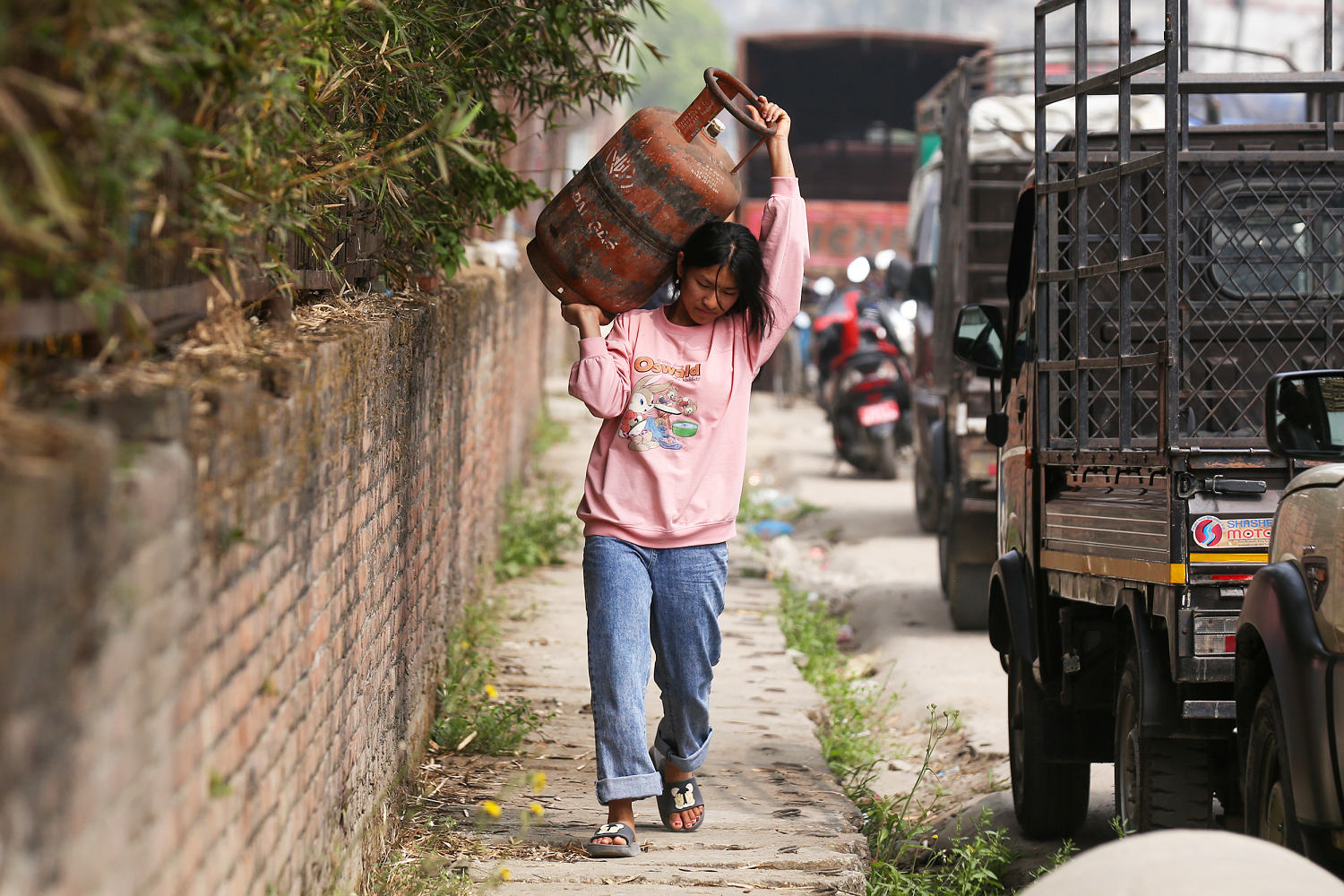
If Mei can't afford to drive to her job, her productivity drops. If the supermarket has to pay double for the truck that delivers the rice, the price of that rice doubles. This is the "energy tax" on the poor. The wealthy can absorb a thirty percent increase in fuel costs. For the family living on the edge in a Manila suburb, that same increase means one less meal a day.
This is why the push for work-from-home and stair-climbing isn't just "lifestyle advice." It is a frantic attempt to keep the economy from snapping. By reducing the baseline demand for oil, these countries are trying to lower the "boiling point" of their societies. They are trading convenience for stability.
The Ghost in the Machine
We often talk about "the market" as if it’s a sentient god, but the market is just a collection of people making choices under pressure. The current oil spike is forcing a choice that we have avoided for half a century: do we continue to build our lives around the internal combustion engine, or do we finally leave it behind?
In the suburbs of Kuala Lumpur, the bicycle—once seen as a sign of poverty—is becoming a symbol of the savvy urbanite. Electric scooters are weaving through traffic that used to be dominated by gas-guzzling sedans. The change is granular. It is one person deciding to walk to the corner store instead of driving. It is one company deciding that a Zoom call is "good enough" compared to a flight.
It is a return to a more localized existence. We are shrinking our worlds to save them.
The New Map of the Morning
Mei eventually walked to the corner. She didn't take the car. She stood at the bus stop with dozens of others who had made the same calculation. They stood in the heat, checking their watches, feeling the weight of the humidity.
As the bus arrived—packed to the windows, its engine roaring with the effort of carrying a hundred lives at once—Mei realized that the silence she noticed earlier wasn't the sound of a city dying. It was the sound of a city changing its rhythm.
The old map of the world was drawn in oil. It was a map of long distances, high speeds, and cheap movement. That map is being torn up. The new map is being drawn in shorter lines. It is being drawn in the footpaths between homes and local markets. It is being drawn in the fiber-optic cables that allow a worker in a rural village to power a global corporation.
It is a smaller world, perhaps. But it is a world that is learning how to breathe again without the constant, expensive panting of an engine.
The bus pulled away, leaving a plume of heat behind. Mei looked out the window as they passed a gas station. The prices on the sign had changed again since she woke up. They were higher. But for the first time in a long time, she didn't feel the familiar spike of panic. She was already on the move, and for today, she had found a way to leave the engine behind.
The climb up the stairs to her office would be long. Her legs would ache. The air in the hallway would be warm. But as she reached the third floor and paused to catch her breath, she looked at the elevators, sitting still and dark in their shafts. They looked like artifacts from a different century.
Would you like me to analyze the specific economic indicators that are driving these policy changes in Southeast Asia?