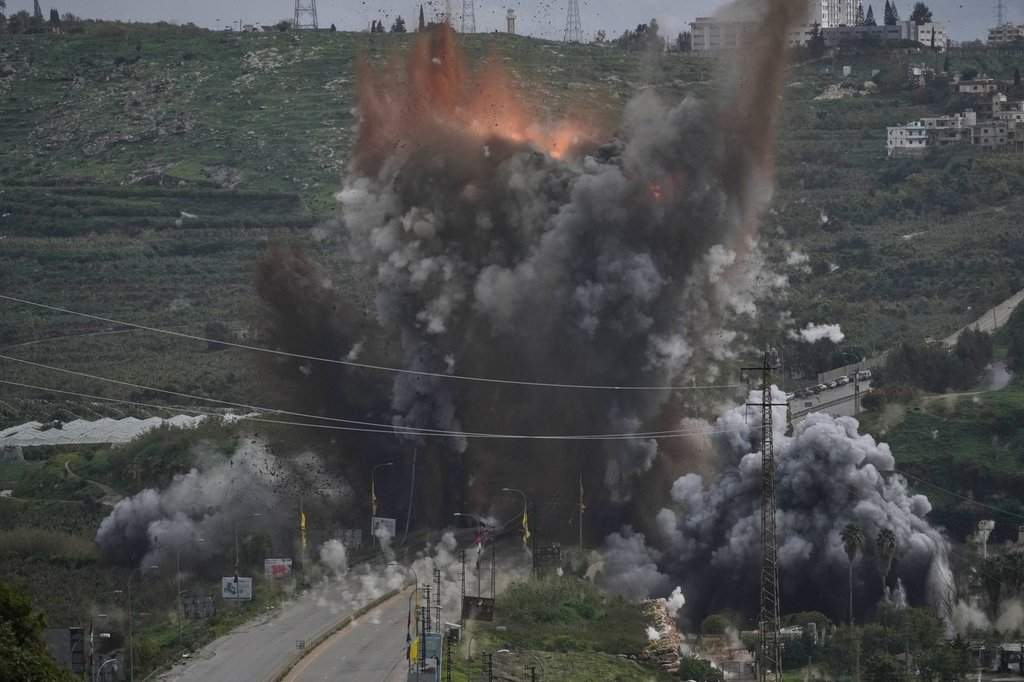
The headlines are screaming about a blackout. Following recent strikes linked to nuclear facilities, the rhetoric has shifted to the "lights out" option. The threat is simple: if Tehran doesn't blink, Washington or its allies will flip the switch on Iran’s national power grid.
It sounds decisive. It sounds modern. It sounds like the ultimate leverage.
It is also fundamentally wrong.
Most analysts treat a national power grid like a fragile glass sculpture. They assume that if you shatter the right transformer or corrupt the right SCADA (Supervisory Control and Data Acquisition) system, the entire nation collapses into a pre-industrial heap, forcing an immediate surrender. This is the "lazy consensus" of kinetic diplomacy. It ignores the physics of electrical engineering and the brutal reality of hardened infrastructure.
Targeting a power grid is not a knockout blow. It is a strategic quagmire that often strengthens the very regime it intends to topple.
The Myth of the Master Switch
Common wisdom suggests that modern states are uniquely vulnerable because of their interconnectedness. The logic follows that because Iran has modernized its grid to support industrial growth and nuclear enrichment, that grid is now a single point of failure.
This ignores the N+1 redundancy principle. Major regional powers, especially those living under the constant shadow of "maximum pressure" campaigns, do not build fragile systems. They build "islands."
When you attack a central node, a sophisticated grid doesn't just die. It fragments. In engineering terms, this is intentional islanding. The regime’s most critical assets—command and control centers, underground enrichment sites like Fordow, and IRGC hubs—are not running on the same civilian circuit as a laundromat in Isfahan. They operate on dedicated, hardened microgrids with multi-layered backup systems, including massive diesel arrays and independent gas-fired turbines.
By hitting the grid, you aren't blinding the military. You are just making life miserable for the middle class—the very people most likely to oppose the regime. You don't trigger a revolution; you trigger a humanitarian crisis that the regime then blames, quite effectively, on foreign "energy terrorism."
The Physics of Resistance
Let’s talk about hardware. The "experts" on cable news love to talk about cyber-attacks on transformers. They act as if a few lines of code can melt a 500kV transformer and that these units are irreplaceable.
I have seen industrial energy audits where "irreplaceable" components were bypassed in forty-eight hours using salvaged parts and "dirty" engineering workarounds. Iran has spent decades perfecting the art of the "black market bypass." They have a domestic manufacturing base for electrical components that most Westerners underestimate.
If you use kinetic strikes—missiles—to take out substations, you are trading million-dollar munitions for stacks of copper and steel that can be bypassed with temporary overhead lines in a matter of days.
Imagine a scenario where a strike takes out the Tavanir central dispatch center. Within hours, regional operators take manual control. The "smart grid" becomes a "dumb grid." It’s less efficient, yes. There are rolling brownouts, sure. But the lights stay on where the regime needs them to stay on. The strategic "paralysis" promised by the hawks never arrives.
The Cyber-Physical Feedback Loop
There is a dangerous obsession with the "Stuxnet" model—the idea that we can elegantly deconstruct an enemy's infrastructure with zero "mess."
But the landscape of cyber-warfare has changed since 2010. Air-gapping is no longer a luxury; it is the standard. More importantly, the Iranian technical elite is not the same group that was caught off guard fifteen years ago. They have spent the last decade launching their own sorties against regional water and power systems. They know exactly where their own vulnerabilities are because they’ve been looking for them in their neighbors.
When you attack a grid via cyber means, you provide the enemy with a free live-fire training exercise. You expose your most sophisticated exploits—"Zero Days" that cost millions to develop—only for the enemy to patch the hole and potentially reverse-engineer the logic for a counter-strike.
Is the American grid ready for a tit-for-tat exchange? While we debate the "vulnerability" of Tehran, we ignore that the U.S. grid is a patchwork of private utilities with varying levels of security. Attacking Iran’s power is an invitation for them to test the resilience of the Permian Basin’s oil operations or the PJM Interconnection. It is a game of "glass houses" where we have much more glass to lose.
The Social Contract of Darkness
The most egregious error in the current "threat" narrative is the misunderstanding of political psychology.
The "Power Grid Collapse = Regime Change" formula assumes that people blame their government for the lack of electricity. Historically, this is rarely true when the cause is an external strike.
Look at the history of strategic bombing. From the Blitz to Hanoi, the result of destroying civilian infrastructure is almost always social cohesion through shared suffering. When the lights go out because a foreign power dropped a bomb, the population doesn't march on the palace; they huddle together and hate the person who dropped the bomb.
By targeting the grid, the U.S. or its allies would be handing the Iranian propaganda machine a gift-wrapped narrative. They would transform a domestic struggle over economic mismanagement into a nationalist struggle for survival.
The Nuclear Paradox
The competitor article suggests that hitting the grid is a response to nuclear escalation. This is backwards.
Nuclear facilities are the least dependent on the national grid. These sites are designed to withstand total external power loss. If you want to stop a centrifuge, you don't cut the power to the nearby city. You have to penetrate kilometers of rock and reinforced concrete.
Targeting the civilian grid as a "warning" regarding nuclear sites is like breaking a neighbor's windows because you're worried about what he's building in his basement. It doesn't stop the work in the basement; it just ensures the neighbor will never talk to you again.
The Real Leverage
If the goal is actual disruption, you don't look at the power lines. You look at the fuel supply chain.
Iran’s power generation is heavily reliant on natural gas. The infrastructure required to move gas—compressor stations, pipelines, and processing plants—is much harder to "patch" than a transformer.
But even then, you face the same moral and strategic hazard. You are attacking the lifeblood of the civilian population.
The "unconventional" truth is that the most effective way to weaken a regime's grip on power isn't to take away their electricity, but to flood their markets with alternatives they can't control. Decentralized, off-grid energy solutions (like small-scale solar) are a greater threat to a centralized autocracy than a Tomahawk missile. Autocracies love central hubs because central hubs are easy to guard, tax, and switch off.
We are threatening to do the regime’s work for them.
Stop Thinking in Megawatts
We need to stop viewing foreign policy through the lens of a SimCity disaster toggle.
The threat to Iran’s power grid is a "feel-good" policy for hawks who want to look tough without committing to a full-scale kinetic war. It is a low-reward, high-risk strategy that ignores the technical resilience of modern industrial states and the psychological resilience of their populations.
You want to disrupt Iran? Stop trying to turn off the lights and start looking at the systems they can't simply bypass with a jumper cable.
The grid is a distraction. The physics of the matter is that you cannot bomb a country into a liberal democracy, and you certainly can’t do it by tripping a circuit breaker.
Stop asking how we can shut down their grid. Start asking why we think shutting it down would change anything at all.
Flip the switch. The regime will still be there in the dark. And they'll be much harder to find.


