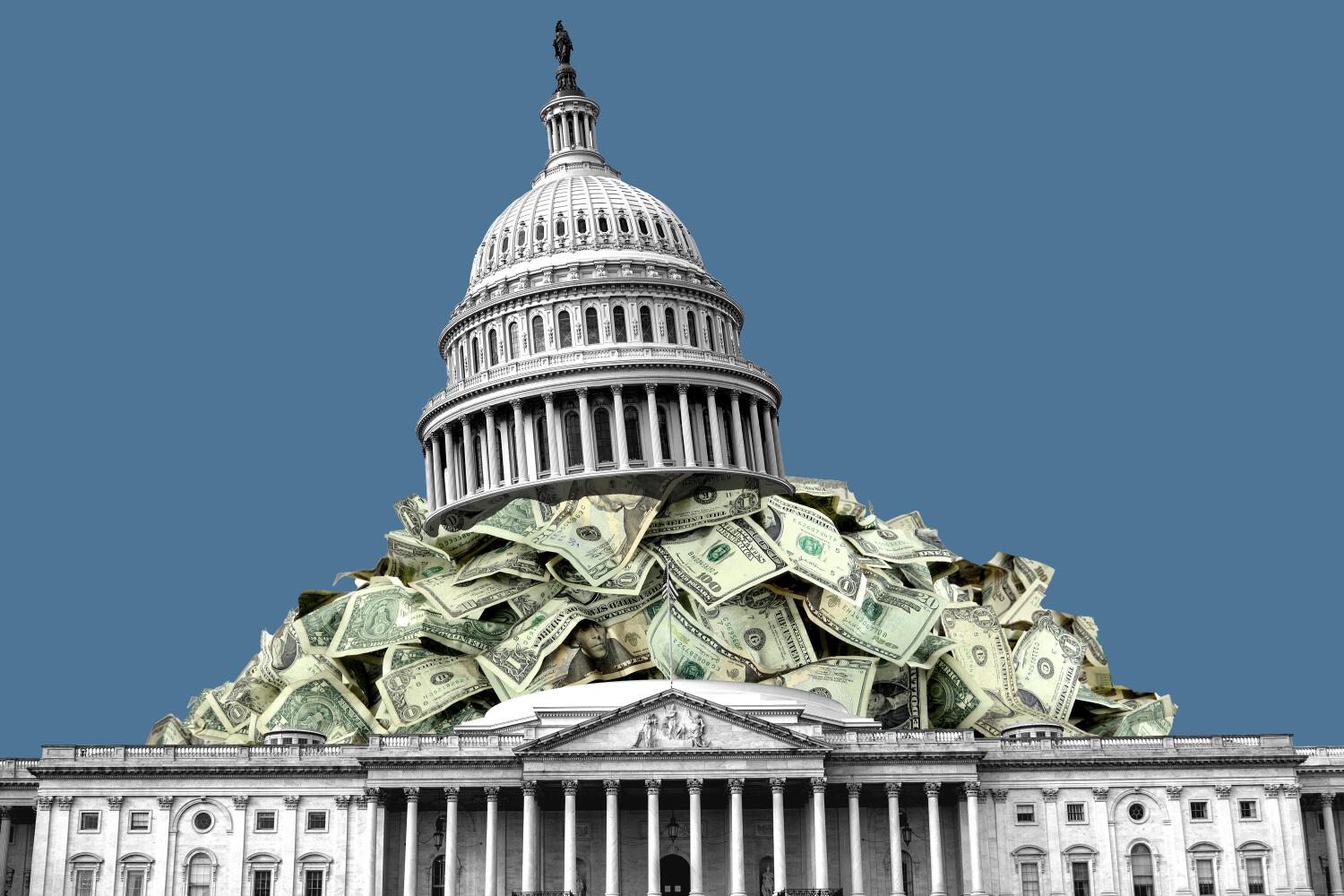
The high-stakes game of using tariffs as a personal blunt-force instrument for foreign policy just hit a massive constitutional wall. While the headlines suggest a simple slap on the wrist for the executive branch, the reality is a fundamental shift in how the United States will conduct global trade for the next decade. The Supreme Court has effectively signaled that the era of "tariff by tweet" is over, reasserting a long-dormant congressional authority that many believed had been surrendered to the White House forever.
At the heart of this shift is the realization that broad executive powers, specifically those tucked away in Section 232 of the Trade Expansion Act of 1962, were never intended to be a permanent blank check. For years, the executive branch operated under the assumption that "national security" was a magic phrase that could bypass any legislative oversight. The Court’s recent posture suggests that the definition of national security is no longer whatever a President says it is.
The Death of the National Security Blank Check
For decades, the legal community treated Section 232 as a black box. It allows a President to adjust imports if they are found to threaten national security. During the Trump administration, this was used to justify everything from steel duties to potential taxes on European cars. The logic was circular: a weak economy is a national security threat; therefore, any trade policy that "strengthens" the economy falls under the President's unilateral control.
The Supreme Court is now dismantling this circular reasoning. By demanding a more rigorous "nexus" between the imported goods and actual military or defense capabilities, the justices are forcing the executive branch back into a box. If the President wants to tax a foreign product, they must now prove a specific, tangible threat, not just a vague economic anxiety.
This creates a massive hurdle for future administrations. Consider the complexity of a modern supply chain. Under the old interpretation, a President could argue that because semiconductors are in everything, every trade dispute involving electronics is a national security issue. Under the new judicial scrutiny, that argument is likely to fail unless the specific chips in question are directly tied to defense infrastructure.
Why Congress is Suddenly Reclaiming Its Power
It is easy to blame one administration for overreach, but the truth is more systemic. Congress spent fifty years delegating its taxing authority to the President because it didn't want to deal with the political fallout of picking winners and losers in the domestic market. If a tariff hurt a local manufacturer, the Senator could point to the White House and shrug.
That cowardice has reached its expiration date. The Court’s decision essentially tells Congress that it cannot simply hand over its "Power of the Purse" and walk away. This isn't just a legal technicality; it’s a restoration of the original Constitutional design where the branch closest to the people—the one that has to run for re-election every two years—must take the heat for raising prices on consumers.
Businesses are already feeling the ripples. For a Chief Supply Chain Officer, the predictability of the last few years—where you just watched the President’s social media feed to see if your costs would spike 25%—is being replaced by a more traditional, albeit slower, legislative process.
The Looming Collision with the Commerce Clause
The Commerce Clause gives Congress the exclusive power to regulate trade with foreign nations. Over time, this power was eroded through a series of "delegation" acts. We are now seeing the judiciary signal that there are limits to how much power can be delegated before it becomes an unconstitutional abdication of duty.
This creates a specific problem for the proposed "universal baseline tariff" that has been floated in recent campaign cycles. If a President attempts to implement a blanket 10% or 20% tariff on all imports via executive order, the Supreme Court has now provided the roadmap for trade lawyers to strike it down within weeks.
The New Legal Roadmap for Importers
- Standing: Companies no longer have to wait for "irreparable harm" to challenge a tariff. The mere lack of a clear national security link is now enough to get a foot in the courthouse door.
- Fact-Finding: The Department of Commerce’s "investigations" will be subject to much stricter judicial review. They can no longer hide behind "classified information" to justify broad economic taxes.
- Retroactive Refunds: There is now a distinct possibility that billions of dollars in collected duties could be subject to clawback lawsuits if the underlying justification is found to be procedurally flawed.
The Geopolitical Fallout
Foreign capitals are watching this domestic legal drama with intense interest. For allies in the EU, Japan, and South Korea, the Supreme Court's intervention provides a layer of stability. They no longer have to negotiate with a single person who might change their mind over breakfast; they are back to negotiating with a system.
However, for adversaries, this creates a vacuum. If the U.S. President cannot move quickly to counter economic aggression from China, the American response might be slowed by months of congressional debate and judicial stays. This is the trade-off. We are trading the speed of a "trade commander-in-chief" for the stability of a constitutional republic.
The irony is that the very people who pushed for aggressive executive action on trade have inadvertently triggered the judicial mechanism that will prevent it in the future. By pushing the boundaries of Section 232 so far, they forced the Court to finally define where those boundaries are. And they are much tighter than anyone expected.
The Economic Reality of the New Tariff Era
Tariffs are, at their core, a tax on domestic consumers. When a 25% duty is placed on imported aluminum, the foreign company doesn't pay it; the American company importing the metal does. They then pass that cost down to the person buying a soda or a car.
By making it harder for a President to impose these taxes unilaterally, the Supreme Court is effectively acting as an inflation-control mechanism. It forces a public debate on whether a specific trade protection is worth the increased cost to the American family. This debate is messy, loud, and often partisan—exactly as the founders intended.
We are entering a period where trade policy will be decided in courtrooms and committee hearings rather than through executive fiat. This shift will frustrate those who want quick "wins" in the global marketplace, but it protects the long-term integrity of the American economy from the whims of a single individual.
The next time a candidate promises a sweeping, across-the-board tariff on all foreign goods, don't look at their poll numbers. Look at the Supreme Court's docket. The legal infrastructure to stop that promise from ever becoming reality is already being built, brick by brick.
Would you like me to analyze the specific impact of these legal shifts on the automotive or semiconductor industries?