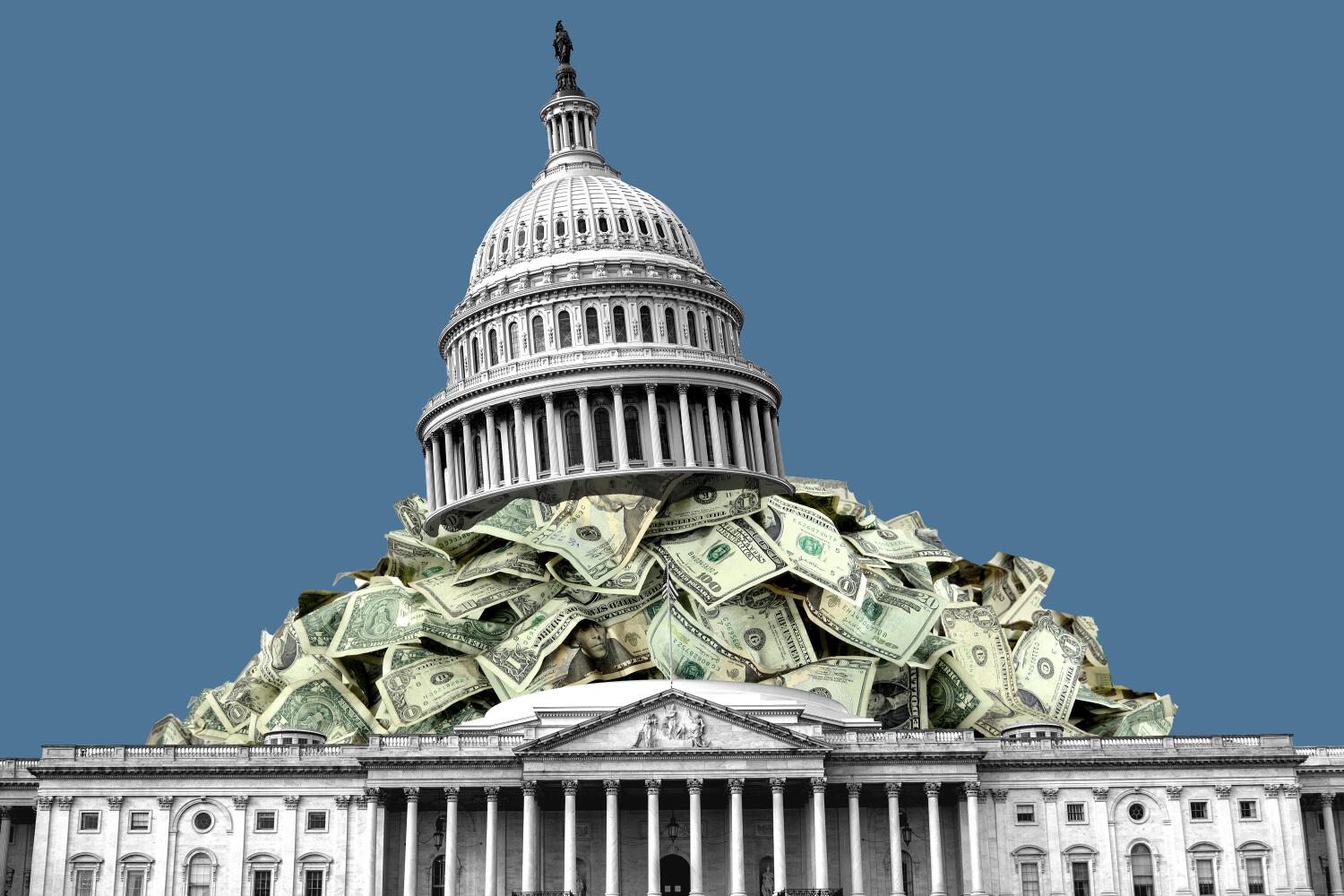
The United States is currently attempting to run a 21st-century superpower on a fiscal engine designed for the mid-1900s. We are staring at a structural deficit that is no longer a seasonal headache but a chronic, wasting disease. The core premise of current economic debate—that we can simply choose between "tax reform" and "disorder"—is a polite fiction. In reality, we are already living through the disorder. It shows up in crumbling bridges, a thinning middle class, and a national debt that grows by a trillion dollars every few months.
To understand the stakes, you have to look past the partisan shouting matches. The fundamental problem is a massive disconnect between what Americans expect from their government and what they are willing to pay for. We want a global military presence, a safety net for an aging population, and modern infrastructure. Yet, the tax code is a swiss-cheese mess of exemptions and legacy loopholes that fail to capture the actual wealth being generated in a modern economy.
The Architecture of a Failing Treasury
The current tax system is not just inefficient. It is obsolete. Most of our revenue relies on taxing labor—the wages people earn from showing up to work. But in the modern economy, the real money isn't in wages. It is in capital gains, intellectual property, and complex financial instruments that move across borders at the speed of light.
When the tax base is tied to the physical worker while the wealth is concentrated in the digital or globalized ether, the math stops working. This creates a "revenue gap" that politicians fill with debt.
The federal government now spends significantly more on interest payments than it does on many core departments. This is the "crowding out" effect in real-time. Every dollar that goes to servicing the debt of the past is a dollar that cannot be spent on the technology or education of the future. This isn't a theoretical risk. It is a mathematical certainty that leads to the very "total disorder" that pundits claim to fear.
The Myth of the Easy Fix
Both sides of the aisle offer solutions that are essentially fairy tales. One side claims that cutting taxes will "pay for itself" by triggering a massive wave of growth. History has shown this is rarely the case. While tax cuts can provide a short-term jolt, they almost never generate enough new revenue to offset the initial loss.
The other side argues that we can simply "tax the rich" to solve every problem. While there is plenty of room to adjust top-tier rates and close loopholes, the sheer scale of the US deficit requires a much broader solution. You could seize the entire net worth of every billionaire in the country, and it would only fund the federal government for a few months.
True reform requires looking at things that are politically radioactive:
- The VAT Alternative: Most developed nations use a Value Added Tax. It is efficient and hard to avoid, yet it remains a non-starter in American politics.
- Entitlement Reality: Social Security and Medicare are the primary drivers of future debt. Without adjusting age requirements or benefit structures, no amount of tax reform can balance the books.
- Carbon Pricing: Taxing externalities like pollution could provide a massive revenue stream while driving innovation, but the lobbying power of the energy sector keeps it off the table.
Why Disorder is the Default Setting
If we do not fix the revenue engine, disorder becomes the governing principle. We see it in the way the government handles crises. Instead of having a "rainy day fund" or a flexible budget, we lurch from one emergency spending bill to the next. This creates a climate of extreme uncertainty for businesses.
When a company doesn't know what the tax code will look like in three years, it stops making long-term investments. It hoards cash or buys back its own stock. This behavior further slows down the economy, which reduces tax revenue, which increases the deficit. It is a self-reinforcing loop of decay.
The disorder also manifests as social friction. When the public perceives that the "system is rigged"—that a hedge fund manager pays a lower effective rate than a nurse—trust in institutions evaporates. That loss of trust is the fuel for populism and civil unrest. Tax reform is often discussed as a technical accounting exercise, but it is actually a social contract. When the contract is broken, the society starts to fray at the edges.
The Hidden Cost of Complexity
The US tax code is now so long and complex that it acts as a hidden tax on the entire economy. Small businesses spend billions of man-hours and dollars just trying to comply with regulations that large corporations hire armies of accountants to circumvent.
This complexity is a feature, not a bug, for the special interest groups that lobby for specific line items. Every "incentive" or "deduction" is a targeted bribe designed to move behavior, but in the aggregate, they create a landscape where the most successful entities are those best at navigating the bureaucracy, not those providing the best products.
The Capital Flight Bogeyman
Whenever serious reform is mentioned, the threat of capital flight is raised. Critics argue that if we raise taxes on corporations or high-earners, they will simply leave. While this is a concern in a globalized world, it is often overstated. People and companies stay in the US for the rule of law, the deep talent pool, and the massive consumer market.
However, we are currently seeing a different kind of flight: the flight of opportunity. When the government is forced to cut R&D, education, and infrastructure to pay for debt, the next generation of "unicorns" is born elsewhere. We aren't losing the money we have today; we are losing the wealth we should have had tomorrow.
The Hard Truth of the Matter
Real tax reform is not about finding a "one weird trick" to balance the budget. It is about a fundamental shift in how we value different types of economic activity. It requires a move toward simplicity and transparency, even if that means removing cherished deductions like the mortgage interest credit or state and local tax offsets.
The choice is not between a perfect tax system and disorder. The choice is between a painful, managed transition to a sustainable fiscal model or a chaotic, unmanaged collapse of the current one. The longer we wait, the more "painful" the transition becomes.
We are currently choosing the path of maximum friction. We are keeping an old, broken system on life support because the political cost of fixing it is too high. But the economic cost of ignoring it is higher. Eventually, the bond market or a currency crisis will force the issue. At that point, the "choice" will be gone.
Stop looking for a candidate who promises you can have everything for nothing. Look for the one who tells you exactly what we have to give up to keep the country solvent. If they aren't talking about the structural gap between our 18% of GDP revenue and our 24% of GDP spending, they are lying to you.
Demand a tax code that prioritizes production over speculation. Demand the removal of loopholes that serve no purpose other than to line the pockets of the politically connected. If we cannot find the collective will to do this, then the "total disorder" we see on the horizon isn't a threat; it's our future.