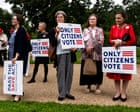
The House Oversight Committee has officially moved to subpoena Pam Bondi, the former Florida Attorney General and current high-profile political figure, regarding the long-delayed release of records related to Jeffrey Epstein. This move marks a significant escalation in a multi-year tug-of-war over transparency, legal privilege, and the secrets buried within Florida’s investigative archives. The committee is specifically seeking internal communications and documents that might explain why certain files from the 2006 state-level investigation into Epstein remained shielded from public view during her tenure.
Bondi finds herself at the center of a storm that blends cold legal procedure with hot political theater. The core of the dispute involves the 2006 grand jury proceedings in Palm Beach County, an investigation that many critics argue was the first major failure of the justice system to hold Epstein accountable. By the time Bondi took office in 2011, the case was technically closed, but the pressure to unseal the records never dissipated. The current congressional inquiry wants to know if there was active resistance to transparency or if the legal barriers cited by her office were merely standard procedure.
The Palm Beach Origins of a National Scandal
To understand why a subpoena is landing now, one has to look back at the original failure in Florida. In 2006, the Palm Beach Police Department built what appeared to be a massive case against Epstein, involving dozens of victims and a mountain of digital evidence. However, the subsequent grand jury only indicted him on a single count of soliciting a prostitute. This led to the infamous non-prosecution agreement (NPA) orchestrated by federal prosecutors, which effectively shut down a broader FBI probe.
Bondi inherited the aftermath of this deal. For years, survivors and journalists filed motions to have the grand jury records unsealed. Grand jury proceedings are traditionally secret in Florida, protected by strict statutes intended to shield the innocent and encourage witness cooperation. However, the House committee is now questioning whether those protections were used as a convenient rug under which to sweep institutional failures. The subpoena demands a paper trail showing how Bondi’s office handled these requests and whether any outside influence dictated the state's rigid stance against disclosure.
The Legal Shield of Grand Jury Secrecy
Florida law is notoriously protective of grand jury testimony. Under most circumstances, these records are permanent secrets unless a judge finds a compelling "furtherance of justice" reason to break the seal. During her time as Attorney General, Bondi’s office consistently maintained that the law left them little room to maneuver. This wasn't a unique position; her predecessors and successors generally followed the same script.
The investigative shift occurred when it became clear that the 2006 grand jury might have been steered away from more serious charges. If the House committee finds evidence that the state's legal defense of "secrecy" was actually a coordinated effort to prevent the public from seeing how the case was handled, the political fallout will be immense. This isn't just about what Epstein did; it’s about how the machinery of the state responded to him.
Power Dynamics and Political Timing
The timing of this subpoena cannot be separated from the broader political environment. Bondi has remained a prominent figure in national politics, often serving as a key surrogate and legal advisor to the highest levels of the Republican Party. Her opponents see the subpoena as a necessary tool to extract the truth from a gatekeeper of the Epstein era. Her supporters, meanwhile, view it as a weaponized use of congressional power designed to damage a political operative during an election cycle.
Regardless of the motivation, the mechanics of the subpoena are clear. The committee wants the emails. They want the memos. They want to see the names of people who called the Attorney General’s office to discuss the Epstein file between 2011 and 2019. If those records show a standard adherence to Florida statute, the inquiry may fizzle. If they show a pattern of avoidance or interference, Bondi will be facing more than just a document request.
The Pressure from Survivors
Behind the legal filings are the women who were teenagers when Epstein’s operation was running at full tilt in Palm Beach. For them, the "Epstein Files" aren't a political talking point; they are a record of their own trauma and the state’s refusal to acknowledge it fully. Many of these survivors have spent over a decade arguing that the state of Florida failed them twice: once when it didn't prosecute Epstein to the full extent of the law, and again when it fought to keep the details of that failure hidden.
The House committee is leveraging this moral weight. By framing the subpoena as an act of "oversight" on behalf of the victims, they are making it difficult for the recipients to ignore the demand without appearing to protect a predator. This puts Bondi in a difficult spot. Fighting the subpoena on the grounds of executive or attorney-client privilege is a standard legal move, but in the court of public opinion, it looks like more of the same stonewalling that has defined this case for twenty years.
What the Documents Might Actually Reveal
If the House Oversight Committee successfully forces a document dump, we are unlikely to find a "smoking gun" that proves a direct conspiracy. Real-world institutional failures are rarely that tidy. Instead, we are likely to see the banality of legal bureaucracy. We will see how a state office weighs the political risk of a high-profile scandal against the safety of following established precedent.
The real value of these records lies in the communication logs. Who was the Florida Attorney General’s office talking to when the Miami Herald began its "Perversion of Justice" series? Was there a concerted effort to prepare a defense of the 2006 grand jury? These are the questions that keep the investigation alive. The committee isn't just looking for Epstein's secrets; they are looking for the fingerprints of the people who kept those secrets safe.
The Precedent of Congressional Oversight
This move by the House also tests the limits of federal oversight of state-level law enforcement. Usually, Congress stays out of state grand jury business. However, the Epstein case has been classified as a matter of national interest due to the failure of federal prosecutors and the potential involvement of international figures. This gives the committee the jurisdictional "hook" it needs to dig into Florida’s files.
Bondi’s legal team will almost certainly challenge the subpoena's validity. They will argue that a federal committee has no business rummaging through the internal deliberations of a former state official regarding state-level records. This legal battle could drag on for months, potentially outlasting the current session of Congress. But the mere act of issuing the subpoena changes the narrative. It moves the conversation from "why won't Florida release the files" to "what is Pam Bondi hiding."
The Shadow of the 2006 Deal
Everything comes back to 2006. The House committee is obsessed with that year because it represents the moment the justice system broke. If the records show that subsequent administrations, including Bondi’s, were aware of the flaws in that original investigation but chose to protect the "sanctity of the process" over the rights of the victims, the implications for the Florida Department of Legal Affairs are staggering.
The subpoena also touches on the role of Florida’s current leadership. While the focus is on Bondi’s tenure, the records she holds could implicate a wider network of Florida power players. The Epstein saga has always been a web, not a straight line. Pulling on one thread—even one from ten years ago—threatens to unravel the whole structure.
Practical Implications for the Epstein Investigation
While the public waits for the "black book" or more names of associates, the investigative reality is often found in boring places like office calendars and metadata. The House committee is looking for inconsistencies. If Bondi or her staff made public statements about the Epstein records that are contradicted by their internal emails, that creates a "perjury trap" or at least a massive credibility gap.
The committee has already signaled that they are not satisfied with the voluntary cooperation they’ve received thus far. In their view, the time for polite requests has passed. By moving to a subpoena, they are effectively telling Bondi that they no longer trust her version of events. This is a high-stakes gamble for the committee; if they get the documents and find nothing, they’ve wasted significant political capital. But if they find even a hint of a cover-up, they will have the biggest story in the country.
The Resilience of Secret Files
The Epstein files have a strange way of staying hidden despite constant legal pressure. From the Southern District of New York to the courts of the Virgin Islands, every attempt to bring the full truth to light has been met with procedural roadblocks. The Bondi subpoena is just the latest attempt to break through that wall.
Florida’s government has a "Sunshine Law" that is supposed to make it one of the most transparent states in the union. Yet, the Epstein case has remained a dark spot in that transparency. The House committee is now betting that federal authority can succeed where local journalists and victim advocates have struggled. They are looking for the gap between what the law required Bondi to do and what she chose to do.
The next step for the House Oversight Committee is to set a firm deadline for the production of these documents. If the deadline passes without compliance, the committee could move to hold Bondi in contempt. This would initiate a high-profile legal standoff that would dominate the news cycle and force a definitive ruling on the reach of congressional oversight.
Demand the specific logs of all communications between the Florida Attorney General’s office and the Department of Justice regarding the Epstein non-prosecution agreement. This is the only way to determine if the state was acting as an independent voice for justice or a silent partner in a federal whitewash.