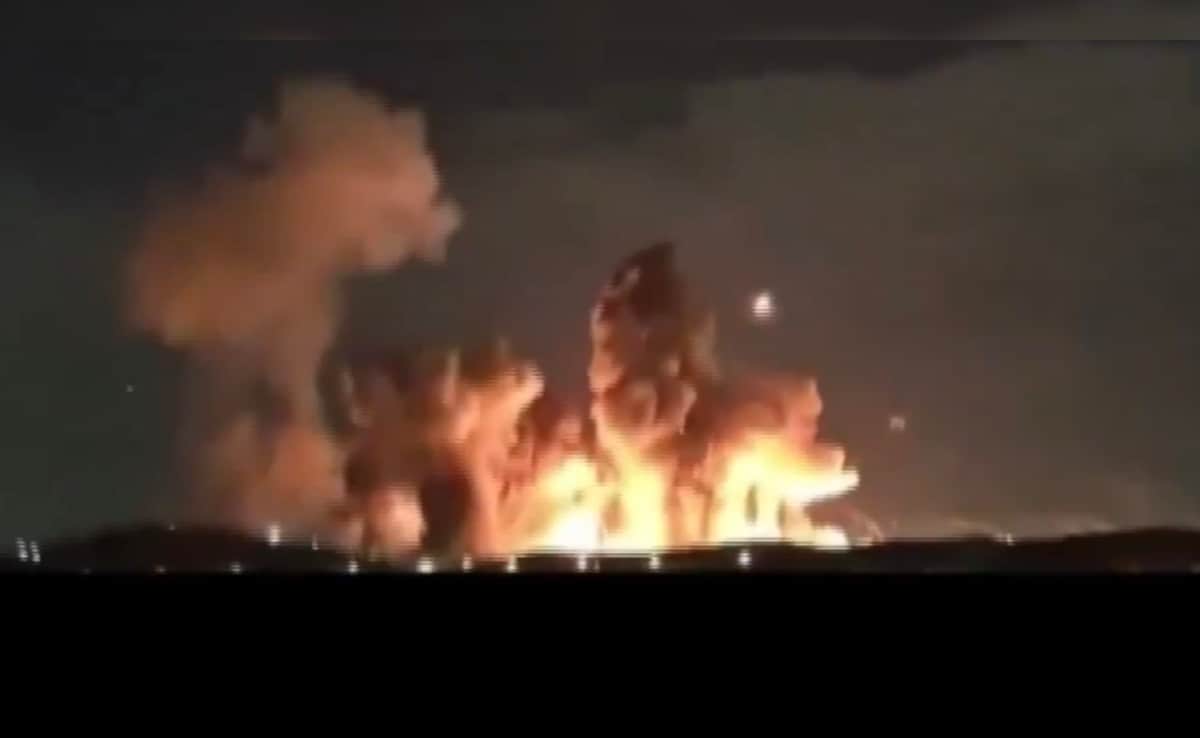
The immediate trajectory of Iranian-American hostilities is governed by a measurable decay in traditional deterrence, moving toward a binary outcome of kinetic containment or state-level collapse. While media narratives focus on rhetorical warnings, the actual strategic calculus rests on the Asymmetric Friction Gradient: the point where the cost of Iranian proxy interference exceeds the political cost of a direct conventional strike by the United States. We are currently observing a compression of the "decision window," a timeframe where tactical movements on the ground force a strategic choice before the situation de-volves into an unmanaged regional conflagration.
The Triad of Deterrence Erosion
Deterrence is not a static state but a functional equation where $D = P \times C$ ($D$ is deterrence, $P$ is the perceived probability of action, and $C$ is the projected cost to the adversary). When $P$ or $C$ approaches zero, the system fails.
- Credibility Gaps in Kinetic Signaling: For deterrence to hold, the adversary must believe that specific "red lines" trigger automatic responses. When thresholds—such as the targeting of US personnel or the enrichment of uranium to 60%—are crossed without a proportional kinetic reset, the adversary recalibrates their risk tolerance upward.
- The Proxy Buffer Paradox: Iran utilizes the "Axis of Resistance" to exert force while maintaining plausible deniability. This creates a buffer that complicates the US targeting cycle. If the US targets the proxy, Iran views it as a low-cost loss. If the US targets the Iranian interior, it risks an all-out war. The current "decisive" window exists because this buffer is thinning; the frequency of proxy attacks has reached a volume that necessitates striking the source of the supply chain rather than the end-user.
- Economic Exhaustion vs. Strategic Patience: Sanctions act as a slow-acting poison, but they do not provide the immediate "stop" signal required in a high-tension standoff. Tehran’s current strategy relies on the belief that the US is politically averse to a new Middle Eastern front, allowing Iran to advance its nuclear and regional objectives under the cover of diplomatic stalling.
Mechanics of the 72-Hour Decision Loop
In modern warfare, the "decisive days" mentioned by analysts refer to the OODA Loop (Observe, Orient, Decide, Act) of the respective command structures. Within a 72-hour window, several physical and digital indicators determine if a conflict will transition from "gray zone" operations to high-intensity combat.
The first indicator is Force Posturing and Logistics. The movement of carrier strike groups, the positioning of tanker aircraft for mid-air refueling, and the surge of Patriot missile batteries are lead indicators of intent. These are not merely "shows of force" but the prerequisite assembly of a kill chain. If these assets are moved into striking range, the window for a diplomatic off-ramp closes because the "First-Mover Advantage" becomes too valuable to ignore.
The second indicator involves Cyber-Kinetic Integration. Any major conventional strike will likely be preceded by a massive offensive cyber operation (OCO) aimed at the adversary’s Integrated Air Defense System (IADS). A sudden drop in Iranian civilian infrastructure connectivity or localized power outages in military districts would be the functional starting gun for an aerial campaign.
The third indicator is the Nuclear Breakout Clock. If intelligence suggests Iran has moved toward 90% enrichment (weapons-grade), the decision-making window is no longer measured in weeks, but in hours. This creates a "Use It or Lose It" dilemma for Western powers who view a nuclear-armed Iran as a non-starter for regional stability.
The Cost Function of Iranian Internal Instability
A critical variable often ignored in standard military analysis is the Internal Pressure Valve. The Iranian leadership is managing two simultaneous wars: a cold war with the West and a latent domestic insurgency fueled by economic mismanagement.
- Regime Survival as the Primary Directive: Every action taken by the Islamic Revolutionary Guard Corps (IRGC) is filtered through the lens of regime preservation. If an external conflict can be framed as a "Holy Defense," it may temporarily consolidate power. However, if the conflict leads to the destruction of critical infrastructure (oil terminals, power grids), the resulting economic collapse could trigger internal revolt.
- The Resource Drain of Proxy Maintenance: Funding Hezbollah, the Houthis, and various militias in Iraq requires a constant flow of liquid capital. Direct conflict with the US threatens the maritime routes and financial nodes required to sustain these groups. Once the "paychecks" to proxies stop, Iran loses its external defense depth, leaving the mainland vulnerable.
Tactical Bottlenecks and Geographic Constraints
Any decisive movement in the coming days must account for the physical geography of the Persian Gulf. The Strait of Hormuz remains the ultimate leverage point.
The Iranian "Swarm" strategy—utilizing hundreds of Fast Inshore Attack Craft (FIAC) armed with anti-ship missiles—is designed to overwhelm the Aegis Combat Systems of US destroyers through sheer volume. This is a mathematical problem: a ship has $X$ interceptors and faces $Y$ incoming targets. If $Y > X$, the ship is hit.
The US counter to this is Distributed Maritime Operations (DMO), which spreads out assets to avoid a single point of failure. The decisiveness of the next few days depends on whether Iran believes it can successfully close the Strait without incurring a total retaliatory strike that de-bases its entire naval capacity.
The Asymmetry of Strategic Objectives
There is a fundamental misalignment in what both sides define as "victory," which makes traditional negotiation difficult.
For the United States and its allies, victory is defined as Behavior Modification: the cessation of nuclear enrichment, the halting of ballistic missile development, and the end of proxy funding. These are high-bar demands that require a fundamental shift in the Iranian state's identity.
For Iran, victory is defined as Endurance: outlasting the political will of the US administration and maintaining the status quo until sanctions relief or a nuclear fait accompli is achieved.
This creates a "War of Attrition" vs. a "War of Precision." The US wants a quick, surgical resolution; Iran wants a long, messy, and expensive entanglement that drains American resources and political capital.
Quantifying the "Point of No Return"
To determine if the next few days are truly decisive, we must track the Escalation Parity.
- Direct Attrition: If US forces kill high-ranking IRGC officers on Iranian soil, the threshold has shifted from "containment" to "decapitation."
- Infrastructure Neutralization: The shift from hitting desert warehouses to hitting "Dual-Use" infrastructure (ports, refineries) indicates a move toward total economic warfare.
- Regional Synchronization: If the conflict expands to include a simultaneous northern front (Hezbollah vs. Israel) and southern front (Houthis vs. Red Sea shipping), the capacity for localized de-escalation vanishes.
The current strategic environment is characterized by a "Compressed Deterrence" model. Each minor provocation that goes unanswered decreases the cost of the next provocation. We are nearing the terminal velocity of this cycle. When the US warns of "decisive days," it is signaling that the OODA loop has moved beyond the "Observe" phase. The military infrastructure is "Oriented." The "Decision" has likely been codified in contingency plans. All that remains is the "Act."
The logical endpoint for Tehran is a realization that their asymmetric advantages—proxy distance, geographic bottlenecks, and political hesitation—are being neutralized by a shift in US posture toward "Full-Spectrum Accountability." If the IRGC continues to value its nuclear breakout more than its domestic infrastructure, a kinetic collision is not just possible, but mathematically inevitable. The strategic play is no longer about preventing a spark, but about determining which side has the capacity to absorb the inevitable fire. At this stage, the US has the superior structural depth, but Iran has the higher tolerance for chaos. The decisive factor will be which of these two variables breaks first under the pressure of a 72-hour high-intensity engagement window.