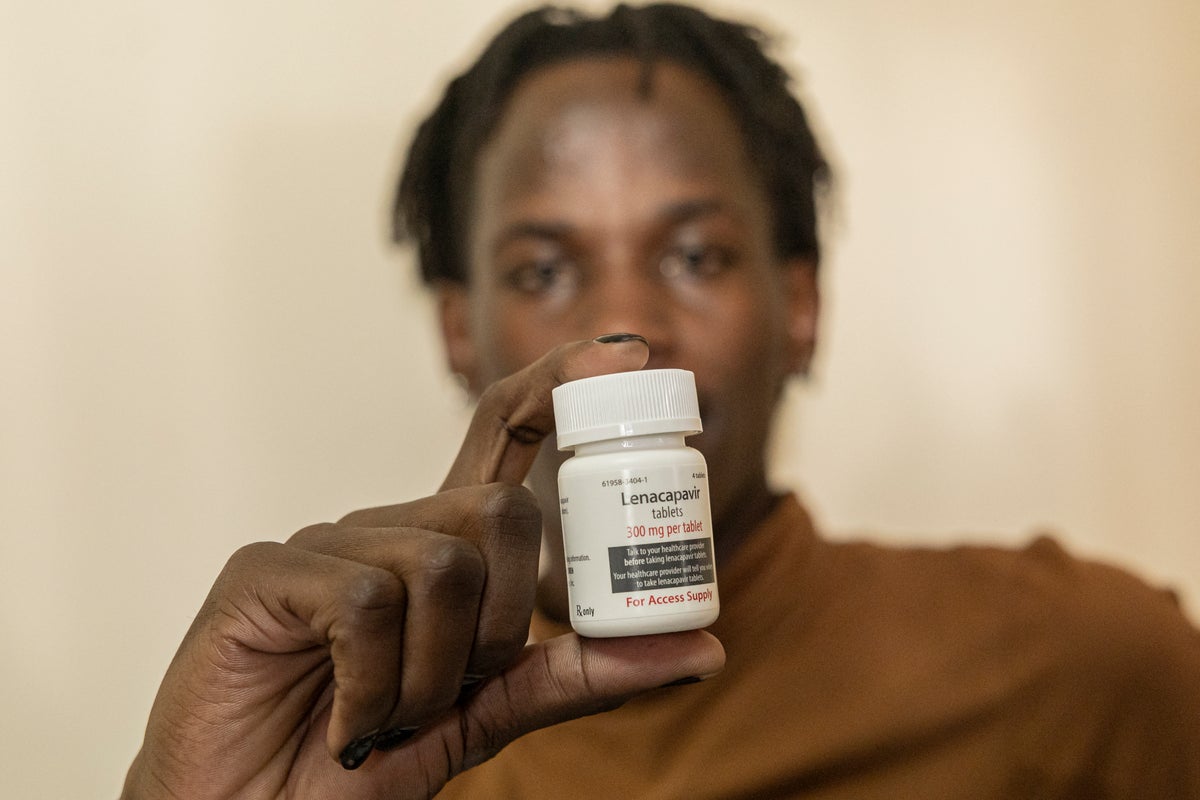
The deployment of Long-Acting Cabotegravir (CAB-LA) in Kenya represents a shift from behavioral-dependent HIV prevention to a structural biomedical intervention. While oral Pre-Exposure Prophylaxis (PrEP) requires a high degree of daily adherence, CAB-LA—administered via intramuscular injection every eight weeks—decouples prevention from the daily routine of the user. However, the current rollout strategy faces a critical bottleneck: the misalignment between the drug’s pharmacological efficacy and the logistical accessibility for the demographics most vulnerable to infection.
The Triad of Implementation Friction
To analyze the failure points in the initial rollout, we must categorize the barriers into three distinct operational domains.
1. The Supply Chain and Cost Function
CAB-LA is significantly more expensive to manufacture and distribute than generic oral PrEP. The "cost-per-infection-averted" is the primary metric used by the Kenyan Ministry of Health and international donors like PEPFAR. When the unit price of the injectable exceeds the budgetary threshold for mass distribution, the system defaults to a "scarcity-based allocation model." This model inherently favors established urban clinics with cold-chain storage capabilities, effectively disenfranchising rural populations and those in informal settlements.
2. Clinical Integration and Human Capital
Unlike a pill, which can be distributed by community health workers or through pharmacy refill programs, CAB-LA requires a trained clinician for deep-muscle injection. This creates a "service-delivery bottleneck." In Kenya’s public health sector, the ratio of clinicians to patients is already strained. Adding an eight-week injection cycle for a preventative—rather than curative—treatment increases the workload on an overburdened system. If the clinical capacity is not expanded, the "time-cost" for the patient increases, leading to higher attrition rates.
3. The Eligibility and Risk Paradox
Public health data indicates that adolescent girls and young women (AGYW) and sex workers in regions like Homa Bay and Kisumu carry the highest burden of new infections. Yet, these groups are the least likely to navigate formal hospital settings due to social stigma and economic displacement. The "paradox of reach" occurs when the most effective technology is housed in the most inaccessible environments.
Quantifying the Efficacy Gap
The transition from oral emtricitabine/tenofovir (TDF/FTC) to CAB-LA is not merely a change in medium; it is a change in the probability of "protection failure."
In clinical trials like HPTN 084, CAB-LA demonstrated a 90% reduction in HIV acquisition compared to oral PrEP. This isn't necessarily because the drug is 90% more powerful at a molecular level, but because it eliminates the "human error variable" of missed doses. We can model the effective protection ($P_e$) of a prevention method using the following logic:
$$P_e = E_m \times A$$
Where:
- $E_m$ is the biological efficacy of the molecule.
- $A$ is the adherence rate of the user.
For oral PrEP, $A$ fluctuates significantly based on life stability, housing, and mental health. For CAB-LA, once the injection is administered, $A$ becomes 1.0 for the subsequent 60 days. The risk, therefore, shifts from "daily adherence" to "cycle retention"—the ability of the patient to return for the next shot.
Geographic and Socioeconomic Stratification
The Kenyan rollout is currently hitting a "geographic wall." Mapping the distribution of HIV-prevention centers against the heat maps of new infections reveals a stark lack of overlap.
The Urban-Centric Bias
Logistical infrastructure in Nairobi and Mombasa allows for the rapid deployment of new medical technologies. However, the transmission rates are often higher in transit corridors and rural agricultural hubs. The "last-mile" delivery of a cold-chain dependent injectable is significantly more complex than distributing shelf-stable tablets. This creates a tiered health system where the "breakthrough" is a reality for the urban middle class but a theoretical concept for the rural poor.
Demographic Filtering
Economic barriers to access include more than just the price of the drug. They include:
- Opportunity Cost of Time: A sex worker losing a night’s income to wait in a public clinic for four hours.
- Transportation Ratios: When the cost of the bus fare to the clinic exceeds the daily caloric budget of the household.
- Information Asymmetry: The lack of targeted, non-stigmatizing communication regarding the availability of the jab.
The Risk of Resistance and the Tail Phase
A critical technical concern often sidelined in general discourse is the "pharmacokinetic tail." After a CAB-LA injection, the drug remains in the system at sub-therapeutic levels for months, or even years, after the last dose.
If a patient misses their eight-week follow-up and subsequently contracts HIV while the drug levels are low, there is a heightened risk of developing resistance to integrase inhibitors—a primary class of HIV treatment drugs. This means that a failed prevention strategy doesn't just result in an infection; it results in a "hard-to-treat" infection.
The logistical system must therefore prioritize "retention infrastructure" over "initial uptake." Without a robust digital tracking or community-led reminder system, the rollout could inadvertently create a localized epidemic of drug-resistant HIV strains.
Resource Allocation and Strategy Adjustment
To bridge the gap between "breakthrough" and "benefit," the strategy must pivot from a centralized hospital model to a decentralized community model.
Decentralized Injection Sites
Utilizing mobile clinics and "pop-up" health tents in high-traffic areas (markets, transport hubs) reduces the friction of distance. These sites must be equipped with basic refrigeration and staffed by roving clinical teams rather than stationary hospital personnel.
The Role of Private-Sector Subsidies
The Kenyan government can utilize "Advanced Market Commitments" (AMCs) to guarantee a specific volume of purchase from manufacturers in exchange for lower unit prices. This stabilizes the supply chain and allows for a more predictable rollout schedule. Simultaneously, integrating CAB-LA into private pharmacy networks—where many Kenyans already seek basic healthcare—could offload the burden from the public sector.
Data-Driven Micro-Targeting
Instead of a nationwide rollout, the focus should be on "hotspot saturation." By concentrating resources in the 10 counties that contribute to 60% of new infections, the public health impact is maximized per dollar spent. This requires a transition from "equality" in distribution (giving everyone a little) to "equity" in distribution (giving the most to those at highest risk).
The long-term viability of CAB-LA in Kenya depends on moving beyond the "novelty" phase. The technology is proven; the delivery system is the variable currently underperforming. Success will be measured not by the number of vials landed at Jomo Kenyatta International Airport, but by the percentage of high-risk individuals who complete their fourth consecutive injection cycle.
The immediate strategic priority must be the establishment of a "Patient Retention Guarantee." This involves the deployment of community-based peer navigators who are incentivized based on the successful follow-up of their assigned cohort. By shifting the focus from "drug delivery" to "cycle management," the healthcare system can mitigate the risks of the pharmacokinetic tail and ensure that the most vulnerable populations are not merely observers of medical progress, but active beneficiaries of it.