The collapse of operations at Dubai International Airport (DXB) following record-breaking precipitation is not a weather story; it is a case study in the catastrophic failure of "just-in-time" global transit models when faced with environmental black swans. When a hub that processes 87 million passengers annually ceases to function, the resulting entropy is not linear. It is an exponential decay of system trust and logistical coherence. The primary bottleneck in Dubai was not merely the volume of water, but the rigid optimization of the airport’s infrastructure for a high-heat, low-moisture climate, which left no margin for hydraulic or operational redundancy.
The Triad of Systemic Failure
To understand why thousands of travelers remained stranded days after the storm passed, one must deconstruct the crisis into three distinct layers of failure: physical infrastructure, labor-logistical constraints, and information asymmetry. If you liked this article, you should check out: this related article.
1. Hydraulic Limits and Surface Saturation
Dubai’s urban planning prioritizes rapid expansion and heat mitigation. The drainage systems are designed for a mean annual precipitation of approximately 95mm. When more than double that amount fell within 24 hours, the drainage coefficient became irrelevant. The airport turned into a closed basin.
The immediate result was the grounding of ground handling equipment. Electric tugs, fuel tankers, and baggage loaders cannot operate in standing water without risking catastrophic electrical short circuits or engine ingestion. This created a forced stasis. Even if a runway is technically clear, an aircraft cannot be serviced if the ground support equipment (GSE) is immobilized. The "recovery" phase mentioned in many reports is often delayed not by the weather itself, but by the time required to inspect and recertify submerged equipment for safety. For another angle on this development, check out the latest coverage from Travel + Leisure.
2. The Pilot and Crew Duty Clock
Aviation operates on a strictly regulated "Cost of Fatigue" function. Under international civil aviation standards, flight crews have mandatory rest periods and maximum duty hours. When the initial storm hit, hundreds of crews were displaced—some stuck in hotels they could not leave, others stranded on diverted aircraft at outstations like Al Maktoum (DWC) or Muscat.
The bottleneck here is mathematical. For every flight canceled, the airline loses a "set" of crew. To restart a hub, you need the right crew with the right certifications in the right physical location with enough legal "duty time" left to fly. Because Dubai serves as a massive connecting node, the crews are as fragmented as the passengers. You cannot fly a Boeing 777 with a crew rated only for an Airbus A380. The mismatch between available personnel and scheduled hulls creates a scheduling deadlock that takes days to resolve, even after the sun comes out.
3. Logistical Backpressure
The "hub and spoke" model is efficient because it aggregates demand. However, in a crisis, it suffers from severe backpressure. When DXB closed, the "spoke" airports (London, Mumbai, New York) continued to hold passengers destined for Dubai. This created a massive, invisible queue.
- Inbound Pressure: Thousands of passengers at origin airports demanding to board the next available flight.
- Outbound Stasis: Thousands of passengers at DXB unable to leave because their connecting aircraft never arrived.
- Terminal Density: A physical limit on how many human beings a terminal can hold before safety protocols (fire codes, crowd control) require the total stoppage of check-ins.
The Information Void and the Death of Brand Equity
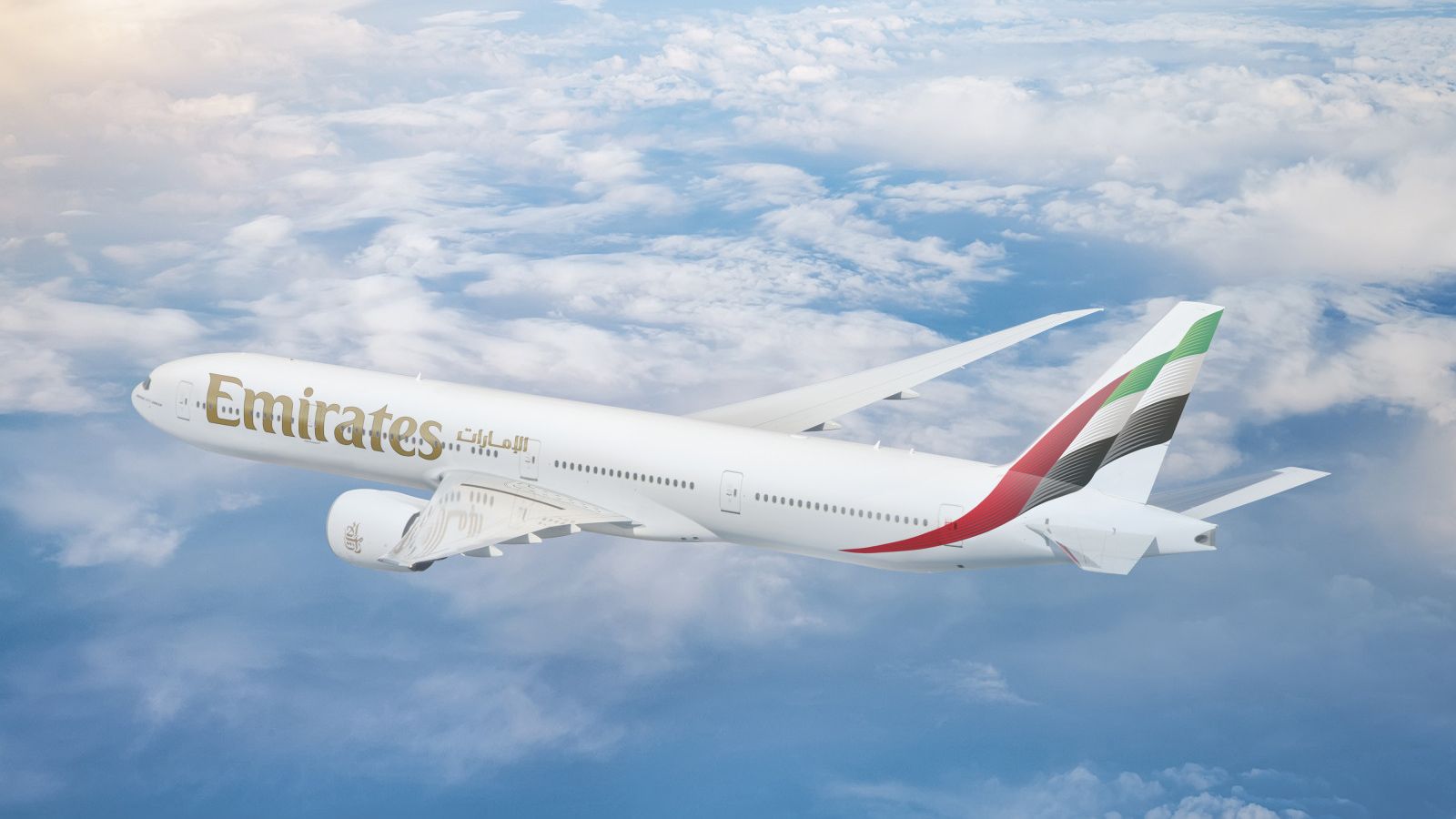
The most significant failure in the Dubai incident was the breakdown of the Customer Information Loop. In high-stress logistical environments, the value of information is inversely proportional to its age. As Emirates and flydubai struggled to rebook passengers, their automated systems began to provide conflicting data.
The "desperate traveler" trope seen in mainstream media is actually a symptom of asymmetric information. When an airline's app says a flight is "On Time" while the passenger is looking at a flooded runway, the psychological contract is broken. This creates a secondary crisis: a surge of physical inquiries at desks that are already understaffed.
The labor force at a major hub is partitioned into specialized roles. A gate agent cannot perform the duties of a rebooking specialist or a baggage handler. When the system is overwhelmed, these silos become barriers. The inability to pivot staff from "boarding" roles to "crisis management" roles reflects a lack of cross-functional training—a common trade-off in highly optimized, low-cost labor models.
The Mathematical Impossibility of Rapid Recovery
Recovery in a global hub is not a matter of "starting the engines." It is a problem of Buffer Depletion.
Imagine the airport capacity as a variable $C$. Under normal conditions, $C$ operates at 95% utilization. When a 24-hour closure occurs, the system loses 100% of its throughput for that window. To clear the backlog, the airport must operate at $C + \Delta$, where $\Delta$ is the excess capacity.
The problem is that $\Delta$ in modern aviation is nearly zero. Every gate is booked, every takeoff slot is assigned. To clear a one-day backlog, you must find "empty" seats on existing flights. If flights are already 90% full, it takes ten days of perfectly executed operations to clear the backlog of a single day.
- Priority 1: Stranded passengers at the hub (clearing terminal density).
- Priority 2: Stranded passengers at outstations (repatriating hulls and crews).
- Priority 3: New ticket holders (revenue protection).
Airlines often prioritize Priority 3 because these passengers have not yet entered the system and represent "clean" logistics, whereas Priority 1 and 2 involve complex baggage reconciliation and hotel vouchers. This creates the optics of "abandoning" those currently in the terminal.
Structural Vulnerabilities in Desert Hubs
The Dubai event exposes a specific vulnerability in Middle Eastern transit nodes: The Single-Point-of-Failure Geography.
Unlike Europe or North America, where a closure at Heathrow can be mitigated by rerouting through Paris or Frankfurt via rail or short-haul bus, Dubai has no terrestrial equivalent for international transit. If DXB closes, the options are limited to DWC (which lacks the same scale of ground handling) or neighboring countries like Oman or Qatar, which require visa arrangements and additional international coordination.
The Role of Baggage Entropy
One of the most underestimated factors in the DXB gridlock was baggage reconciliation. When a flight is canceled, the bags are often already in the subterranean belly of the terminal's automated handling system. Retrieving a specific bag for a passenger who decides to cancel their trip or switch to a different airline is a manual, labor-intensive process. During the floods, these automated systems faced power outages and water ingress. The result was a "mountains of luggage" scenario, which is not just an eyesore but a physical barrier to moving equipment and people through the back-of-house areas.
The Strategic Pivot for Global Transit Nodes
The events in Dubai suggest that the current model of hyper-efficiency is unsustainable in an era of climatic volatility. For a hub to maintain its "Premier" status, it must shift from Performance Optimization to Resiliency Engineering.
Implementation of Hydraulic Redundancy
Future expansion at DXB and the upcoming DWC phases must incorporate "Sponge City" architecture. This includes permeable runway shoulders and massive underground cisterns capable of holding 48 hours of peak rainfall. The cost of this infrastructure is high, but the cost of a 72-hour total system collapse—estimated in the hundreds of millions in lost revenue and brand damage—is higher.
Decentralized Rebooking Protocols
Airlines must move away from centralized desk-based rebooking. The failure of the app-based systems during the flood indicates a need for an "Offline-First" crisis mode. This involves pre-downloaded contingency protocols for passengers and the use of mesh networks or localized servers within the terminal to handle rebooking when the main data centers or external networks are throttled.
The Buffer Strategy
Aviation regulators and hub operators must reconsider the 95% utilization target. Building "Cold Standby" capacity—gates and terminal space that are only activated during disruptions—provides a pressure valve. While this appears as "wasted" capital on a balance sheet, it acts as an insurance policy against the total loss of hub integrity.
The recovery from this event will be measured in weeks, not days, as the "Baggage Entropy" and "Crew Fatigue" cycles work their way through the global network. The lesson for the industry is clear: the more connected we are, the more we are at the mercy of the weakest link in the physical chain. Resilience is no longer a luxury; it is the fundamental requirement for the next generation of global transit.
To mitigate future risk, operators should move to decouple ground handling systems from the main power grid and implement modular, mobile pumping units that can be deployed to gate areas within sixty minutes of a flash flood warning. This shift from static to active defense is the only way to prevent a localized weather event from becoming a global logistical catastrophe.