The suitcase sat open on the bed, half-filled with linen shirts and a brand-new bottle of reef-safe sunscreen. It was supposed to be the reward. Five years of overtime, missed dinners, and saved pennies for a week in the Mexican sun. But then the phone buzzed. A news alert. Then another. Suddenly, the vibrant turquoise of the Caribbean began to look a lot more like a warning sign.
Governments don't issue travel alerts because they want to ruin your vacation. They do it because the math of safety has changed. In the last forty-eight hours, the diplomatic offices of India, the United States, and Canada all hit the same alarm bell at once. It wasn't a coordinated prank. It was a reaction to the ground shifting beneath the feet of one of the world’s most beloved travel destinations.
When cartel violence erupts, it doesn't always stay in the shadows or the mountains. It spills. It reaches into the places where people go to forget their troubles, and that is where the tragedy lies.
The Invisible Border of the All-Inclusive
Think of a high-end resort as a bubble. Inside, the hibiscus is trimmed, the margaritas are cold, and the staff is trained to ensure you never hear a loud noise that isn't a firework. But that bubble is translucent. It sits on land governed by complex, often invisible power structures.
Recently, those structures have fractured. In states like Sinaloa, Sonora, and even the usually tranquil pockets of the Riviera Maya, the quiet understanding between rival groups has dissolved. When these groups fight for "plaza" control—the right to move goods through a specific territory—the collateral damage doesn't check for a tourist visa.
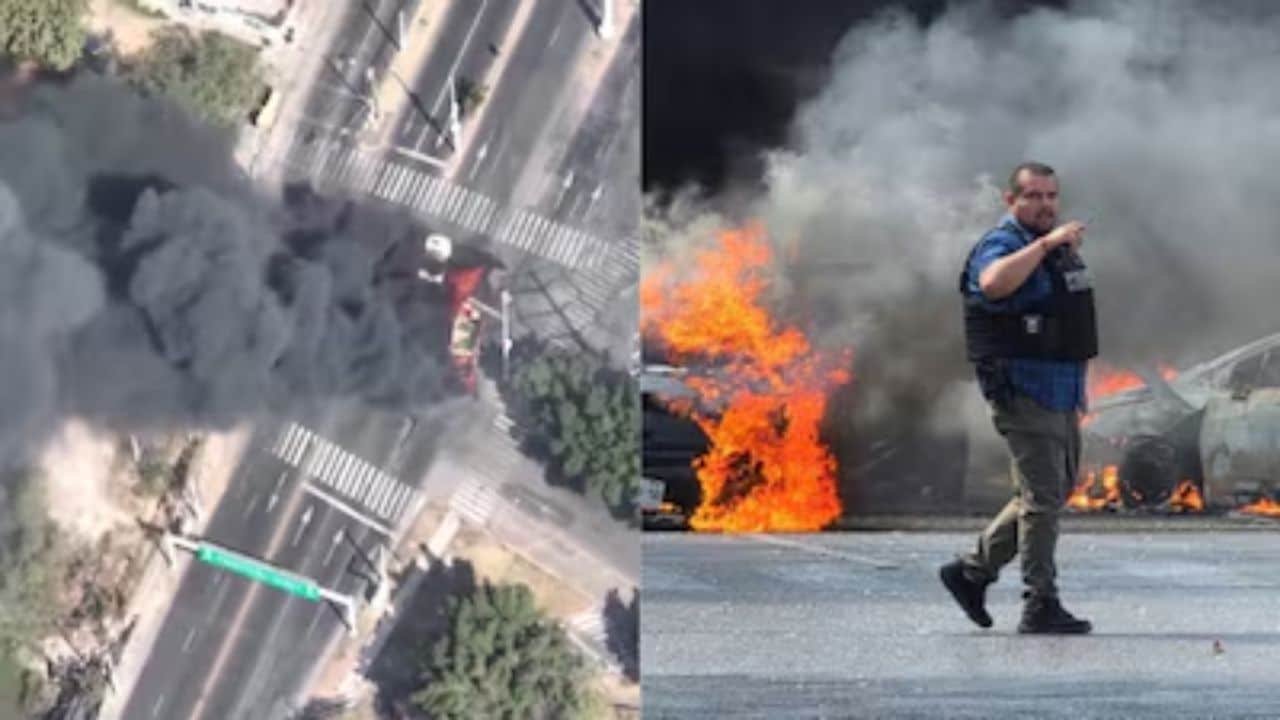
The alerts issued by Ottawa, Washington, and New Delhi weren't just about general crime. They were specific responses to a surge in roadblocks, vehicle thefts, and "enfrentamientos"—armed confrontations. Imagine driving a rental car down a coastal highway, windows down, feeling the salt air, only to round a bend and find a string of burning trucks blocking the path. It isn't a scene from a movie. For several travelers last week, it was a Tuesday afternoon.
Why Three Nations Spoke at Once
The timing is what caught the world’s attention. Usually, these alerts trickle out. But when three major global powers synchronize their warnings, it suggests the intelligence reports are screaming.
India’s warning was particularly notable. While the U.S. and Canada have long-standing ties and high-volume travel to Mexico, India’s alert signaled a concern for its growing diaspora and business travelers. It highlighted a grim reality: the risk is no longer confined to those looking for trouble. You don't have to be buying drugs or visiting dark alleys to find yourself in the middle of a power struggle.
Canada’s "exercise a high degree of caution" and the U.S. State Department’s "Level 4: Do Not Travel" designations for specific states are the diplomatic equivalent of a shout. These aren't suggestions. They are legal and logistical markers that can void travel insurance policies and leave citizens stranded without the usual consular safety nets if things go south.
The Human Cost of a Canceled Dream
Consider a hypothetical traveler named Elena. She’s a teacher from Toronto. She hasn't seen her sister in three years, and they planned to meet in Mazatlán. She’s reading the same headlines you are.
For Elena, this isn't about geopolitics or "plaza" control. It’s about the $2,000 she won't get back from the hotel. It’s about the crushing anxiety of wondering if a taxi ride from the airport is a gamble with her life. The tragedy of these travel alerts is that they punish the people who rely on tourism the most—the waitstaff, the tour guides, and the local artisans who have nothing to do with the cartels but are the first to feel the economic strangulation when the planes stop coming.
Violence creates a vacuum. When the tourists leave, the economy dips. When the economy dips, the desperate become easier to recruit. It’s a cycle that feeds itself, and the travel alert is the first gust of the coming storm.
Reading Between the Lines of the Bureaucracy
Government websites are masterpieces of dry, sterilized language. They use words like "unpredictable" and "security situation."
What they mean is that the local police may be outgunned. They mean that if you are caught in a crossfire at a beach club, the hospital might be hours away through territory that isn't safe to traverse. They mean that the "safety" of a resort is only as strong as the road that leads to it.
The alerts specifically mentioned the use of "monstruos"—improvised armored vehicles—and the use of drones in conflict. This is a leap in the sophistication of the violence. We aren't talking about pickpockets or petty scams. We are talking about a militarized conflict where the front lines are mobile and the combatants don't wear uniforms.
The Choice We Make at the Departure Gate
So, what do you do with that open suitcase?
Risk is a personal calculation. Some will look at the statistics and decide that the odds of being in the wrong place at the wrong time are still statistically low. They will go. They will stay behind the gates of their resort. They will have a lovely time, and they will return home saying, "I didn't see any of that."
But others will realize that travel is, at its heart, an exchange of energy and presence. If you spend your entire trip looking over your shoulder, if you feel a pang of guilt every time you see a heavily armed federal officer patrolling the sand where children play, the vacation has already failed.
The alerts from India, the U.S., and Canada are a reminder that the world is small and our safety is intertwined with the stability of our neighbors. They are a call to respect the reality of a country in pain, rather than viewing it merely as a backdrop for our leisure.
The sunscreen is still on the bed. The shirts are folded. But the map has changed. For now, the most important journey might be the one where we stay home and wait for the sun to rise again on a country that deserves peace more than any of us deserve a holiday.