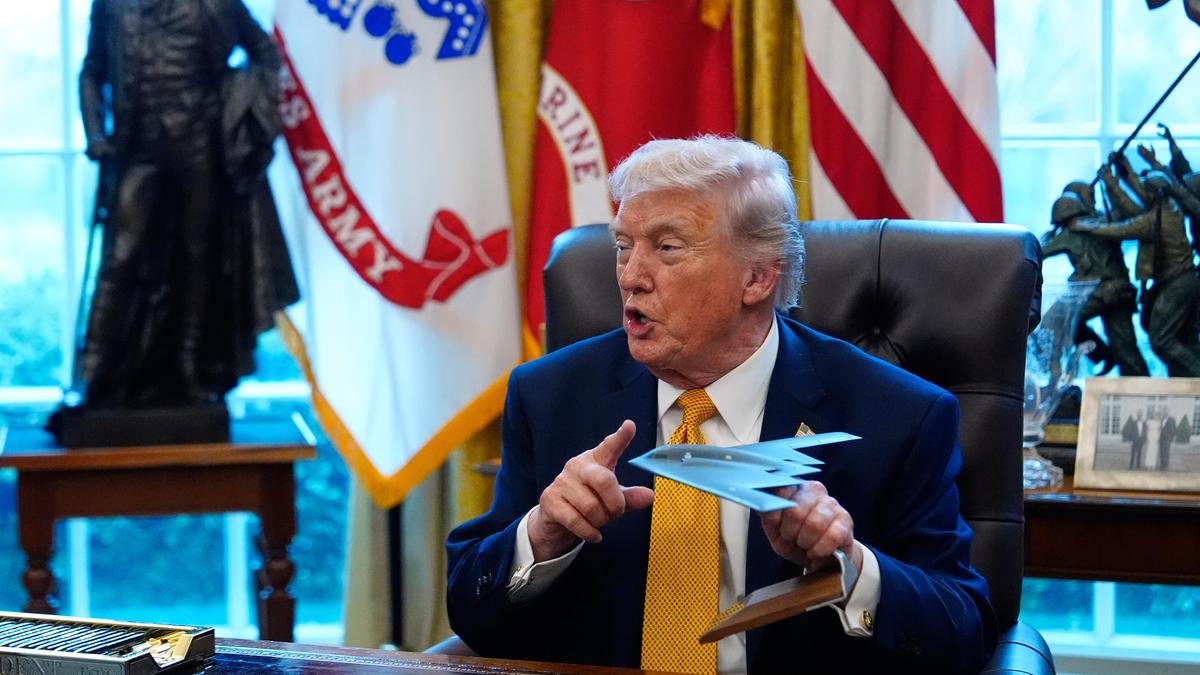
The current administration’s claim that Iranian kinetic strikes against Gulf Cooperation Council (GCC) states were "unexpected" contradicts established intelligence frameworks regarding Iranian defensive doctrine. On March 16, 2026, the White House characterized the bombardment of Qatar, Saudi Arabia, the UAE, Bahrain, and Kuwait as a strategic surprise. However, internal intelligence assessments provided prior to the February 28 initiation of hostilities explicitly categorized regional retaliation as a high-probability contingency. The disconnect between executive rhetoric and pre-war intelligence suggests a failure not of information gathering, but of strategic integration.
The Architecture of Iranian Deterrence
Iran’s military posture is built on a "Forward Defense" model, which relies on the ability to project threat onto high-value economic and military targets within its immediate proximity. By targeting GCC infrastructure, Tehran aims to achieve three specific strategic effects:
- Cost Redistribution: Forcing the United States to weigh the military objectives of its campaign against the economic solvency of its primary energy partners.
- Coalition Fragility: Exploiting the divergent risk tolerances between Washington and regional capitals like Abu Dhabi and Riyadh, which face direct physical exposure.
- Logistical Attrition: Complicating the U.S. Navy’s freedom of maneuver by transforming the Persian Gulf into a contested "kill web" of drones and shore-to-ship missiles.
The administration’s "shock" at these developments ignores the fundamental reality that for Tehran, attacking a neighbor is not an irrational escalation; it is a calculated effort to force a ceasefire by holding the global energy supply hostage.
The Strait of Hormuz Chokepoint Dynamics
The suspension of nearly all shipping through the Strait of Hormuz—a transit point for 20% of global oil and 30% of seaborne LNG—represents the activation of Iran’s most potent economic lever. Intelligence reports briefed to the executive branch specifically warned of "swarm" tactics involving one-way attack drones and shore-to-ship ballistic missiles.
The efficacy of this blockade is rooted in the asymmetric cost of defense. While the U.S. and its allies deploy interceptors costing millions of dollars per unit, Iran utilizes low-cost munitions to achieve "mission kills" on commercial tankers. Even a 90% interception rate is insufficient for maritime insurance markets; a single successful strike on a VLCC (Very Large Crude Carrier) effectively closes the waterway by driving insurance premiums to prohibitive levels.
The Asymmetry of Regional Risk
While the Pentagon reports hitting over 7,000 targets across Iran, including missile sites and command centers, the political cost for GCC states is mounting. The March 14 strike on the Fujairah oil industry zone in the UAE serves as a proof of concept for Iranian retaliation.
- Infrastructure Vulnerability: Unlike the U.S. mainland, GCC infrastructure is concentrated in high-density coastal strips easily reached by short-range ballistic missiles (SRBMs).
- Depletion of Interceptors: Regional air defense systems (Patriot, THAAD) are facing rapid depletion of interceptor stockpiles, creating a "window of vulnerability" that Iran can exploit with high-volume, low-tech drone waves.
- Economic Reputation: For hubs like Dubai and Doha, the perception of insecurity is as damaging as physical destruction, threatening the tourism and investment models that underpin their "Vision" programs.
Strategic Divergence: The Ally Dilemma
A significant intelligence gap has emerged between the U.S. objective of "decisive resolution" and the GCC requirement for "stability preservation." Sources indicate that Gulf allies were not provided with sufficient lead time to harden civilian infrastructure prior to the February 28 strikes. This lack of coordination has led to a fractured regional response:
- The Hardliners: Saudi Arabia and the UAE are now urging the U.S. not to cease operations until Iran’s missile production capacity is permanently neutralized, fearing that a premature exit would leave them exposed to a wounded but still capable adversary.
- The Neutralists: Qatar and Kuwait are attempting to balance their role as hosts to U.S. military assets with the need to mitigate direct Iranian ire.
The administration’s claim of surprise serves as a political shield against domestic criticism regarding rising energy prices, but it undermines the credibility of the U.S. security umbrella. If the retaliation was truly "unexpected," it suggests a catastrophic misreading of Iranian military manuals. If it was expected but ignored, it represents a calculated sacrifice of ally security for the sake of a specific tactical window.
The Escalation Ladder and Energy Markets
Market volatility remains tied to the duration of the Hormuz closure. In a scenario where Iranian forces successfully mine the Strait or sustain a drone presence, Brent crude is projected to breach $130 per barrel. The "tail-risk" here is not just an energy spike but a fundamental shift in the global shipping architecture.
The U.S. strategy currently relies on "Operation Epic Fury" to suppress Iranian launch capabilities. However, the decentralized nature of the Islamic Revolutionary Guard Corps’ (IRGC) missile units—using mobile launchers and underground "missile cities"—makes a total neutralization of the threat nearly impossible through airpower alone.
The immediate strategic requirement is the establishment of a "Protected Transit Corridor" in the Gulf. This requires more than naval escorts; it demands a real-time, integrated regional air defense network that treats the security of GCC civilian infrastructure as inseparable from U.S. military assets. Until the administration aligns its rhetoric with the tactical realities documented in its own intelligence briefings, the rift between Washington and its Gulf partners will continue to widen, granting Tehran exactly the "Coalition Fragility" it seeks to exploit.
Would you like me to analyze the specific impact of the Hormuz closure on East Asian energy dependencies?