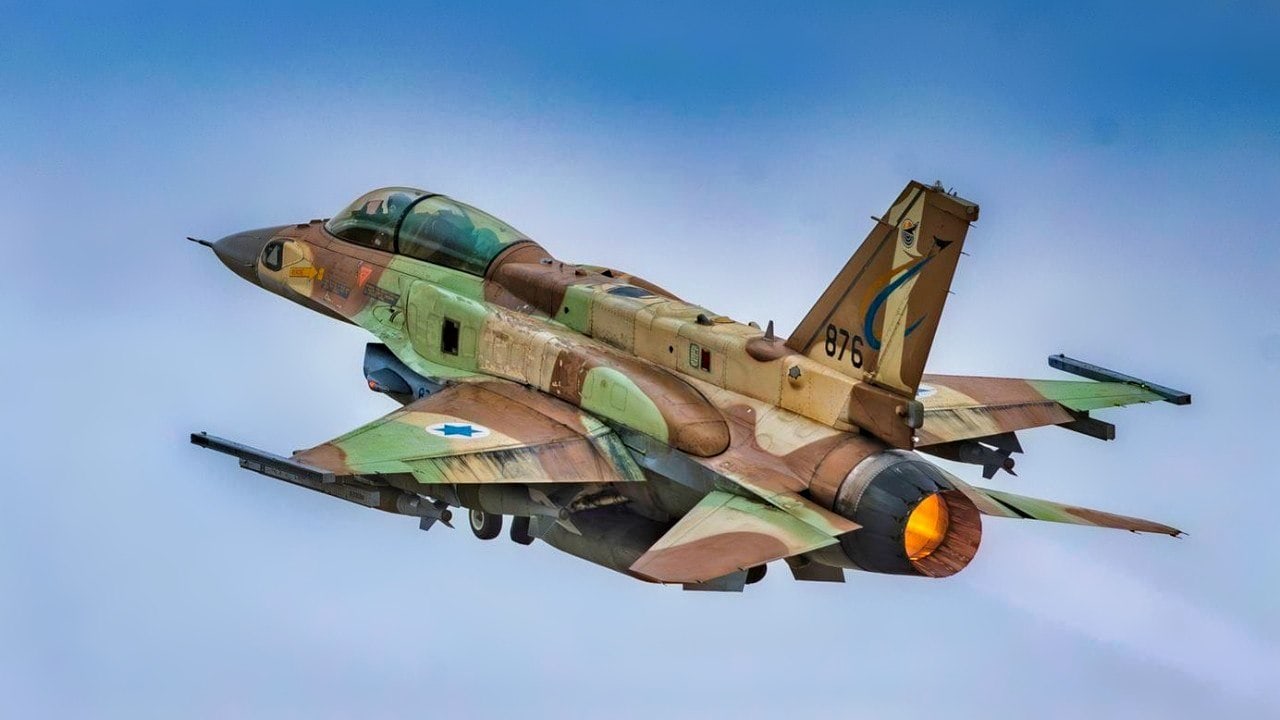
The assumption that a sustained aerial campaign can facilitate regime collapse in Tehran ignores the structural resilience of the Islamic Republic’s security apparatus and the specific physics of authoritarian survival. While tactical successes—such as the degradation of air defense systems or the elimination of high-value targets—provide temporary operational freedom, they do not translate linearly into political transformation. The disconnect between military output and political outcome stems from three distinct insulating layers: institutional redundancy, economic insulation from external shocks, and the psychological consolidation of the security elite.
The Institutional Redundancy of the IRGC
The primary barrier to regime change via military pressure is the dual-military structure of the Iranian state. By maintaining both a traditional military (Artesh) and a specialized ideological vanguard (Islamic Revolutionary Guard Corps or IRGC), the state ensures that a strike damaging conventional capabilities does not leave the political center vulnerable.
- Internal Security Mandate: Unlike the Artesh, which focuses on territorial integrity, the IRGC is optimized for domestic stability. Its command structure is decentralized, meaning the destruction of central headquarters in Tehran does not paralyze provincial units tasked with suppressing domestic dissent.
- Economic Integration: The IRGC functions as a conglomerate as much as a militia. It controls significant portions of the construction, telecommunications, and energy sectors. This "Bonyad" system creates a self-sustaining ecosystem where the security elite's personal wealth is tied directly to the regime's survival. Military strikes on industrial targets often inadvertently consolidate the IRGC’s power by eliminating private-sector competition and forcing the population to rely on state-controlled black markets.
- The Martyrdom Loop: In a highly ideological framework, kinetic attrition often serves as a recruitment tool. The loss of high-ranking officers is framed not as a failure of intelligence or defense, but as a necessary sacrifice that validates the regime’s narrative of resistance against "The Zionist Entity."
The Cost Function of Regime Collapse
Analyzing the probability of regime change requires a clear definition of the "Collapse Threshold." This is the point where the cost of maintaining loyalty exceeds the benefits of state affiliation for the middle and lower echelons of the security services.
Israeli military planners face a fundamental math problem: the Loyalty-to-Risk Ratio. For a regime to topple, the rank-and-file must believe that the current system is more dangerous to their personal safety than a chaotic transition. However, external strikes—particularly those that damage civilian infrastructure or national pride—historically trigger a "Rally 'Round the Flag" effect. This psychological mechanism reduces the likelihood of internal coups by framing the regime as the only protector against foreign aggression.
The Three Pillars of Iranian Resilience
The state’s ability to withstand external pressure rests on three distinct pillars:
- Pillar 1: Strategic Depth and Proxy Dispersion. The "Ring of Fire" strategy ensures that any direct threat to Tehran can be met with asymmetric responses from Lebanon, Yemen, Iraq, and Syria. This forces the adversary to divert resources toward managing secondary theaters, diluting the pressure on the Iranian core.
- Pillar 2: Sanction-Hardened Logistics. After decades of isolation, the Iranian economy has developed a high tolerance for supply chain disruptions. The "Resistance Economy" is built on smuggling networks and localized manufacturing that are difficult to disrupt via standard precision-guided munitions.
- Pillar 3: Ideological Cohesion of the Core. The ruling clerical class and the upper tier of the IRGC share a symbiotic relationship. There is no "moderate" faction within the decision-making circle that is powerful enough to leverage external military pressure into a negotiated transition.
The Limitation of the "Airstrike-to-Revolution" Theory
The theory that a population will rise up once their government is shown to be weak in the face of foreign airpower is a recurring fallacy in 21st-century warfare. The mechanism of revolution requires a "Precipitating Event" combined with a "Security Defection."
External military action provides the precipitating event but simultaneously prevents the security defection. When a nation is under attack, the security forces perceive a defection as an act of treason that will lead to their execution by the invading force or a vengeful populace. Consequently, they fight harder to maintain the status quo.
The kinetic degradation of Iran’s S-300 and S-400 batteries, while a feat of electronic warfare and pilot skill, does not impact the IRGC’s Basij paramilitary forces. These forces use low-tech methods—motorcycles, batons, and small arms—to maintain domestic control. An F-35 cannot loiter over every street corner in Isfahan to prevent a crackdown.
The Nuclear Paradox
A significant variable in the Israeli military's assessment is the "Nuclear Breakout" timeline. The logic suggests that as the regime feels its conventional grip slipping, the incentive to cross the nuclear threshold increases.
- Escalation Dominance: If the regime believes its survival is at stake, it will use its most potent deterrent.
- The Survival Gambit: A nuclear-armed Iran, even with a single warhead, changes the cost-benefit analysis of any external attempt at regime change, similar to the North Korean model.
Therefore, aggressive military action intended to topple the regime might inadvertently trigger the very outcome—a nuclear Iran—that the military action was designed to prevent. This creates a "Strategic Bottleneck" where the intensity of the strikes must be high enough to hurt the regime but low enough to avoid triggering a desperate nuclear dash.
Quantifying the Vulnerabilities
Despite the resilience of the central government, the state is not a monolith. Its vulnerabilities are not found in its missile silos, but in its Systemic Friction Points:
- Succession Risk: The transition of power from the current Supreme Leader to a successor represents the highest point of systemic fragility. Military pressure during this window could theoretically exacerbate internal fissures, but the timing is currently outside the control of external actors.
- Resource Depletion: The cost of maintaining proxies is rising. While the regime will prioritize the IRGC over the general population, there is a limit to how much the economy can be squeezed before the "Social Contract of Silence" breaks down completely.
- Intelligence Infiltration: The high-profile assassinations of nuclear scientists and military commanders suggest a deep-seated rot within the Iranian intelligence community. This suggests that the regime is more vulnerable to internal subversion than external kinetic force.
Strategic Realignment
The objective of removing the Iranian regime through military force is currently a strategic impossibility without a full-scale ground invasion and subsequent occupation—an option that is not on the table for Israel or its allies.
Instead of pursuing the "Regime Collapse" mirage, the focus must shift to Containment and Selective Degradation. This involves:
- Targeted Technological Decapitation: Focusing exclusively on the R&D hubs and logistics chains of the drone and missile programs.
- Cognitive Warfare: Exploiting the existing distrust between the Artesh and the IRGC to encourage friction within the security apparatus.
- Economic Interdiction: Moving beyond broad sanctions to "Micro-Targeting" the specific front companies used by the IRGC to fund their operations.
The goal is not to force the regime to fall, but to make the cost of its regional expansion so high that it is forced to retrench. Attempting to accelerate a collapse through airpower alone likely strengthens the very bonds that keep the IRGC in power, ensuring that the regime survives the storm by becoming more insular, more paranoid, and more dangerous.
The most effective strategy is the systematic removal of the regime's "External Utility." By neutralizing proxies and preventing nuclear breakout, the Iranian state is forced to face its internal contradictions without the distraction of a foreign war. The collapse of the Islamic Republic, when it occurs, will be a domestic event driven by the failure of the central government to provide basic services and security, not the result of a foreign bomb.
Current intelligence indicates that the regime is most afraid of a "Long-Term Grinding Stagnation" rather than a sudden kinetic shock. Israel should therefore pivot its doctrine toward a "War of a Thousand Cuts" that prioritizes intelligence-led sabotage over high-visibility aerial campaigns. This approach preserves international legitimacy while placing the burden of failure squarely on the shoulders of the clerical leadership.