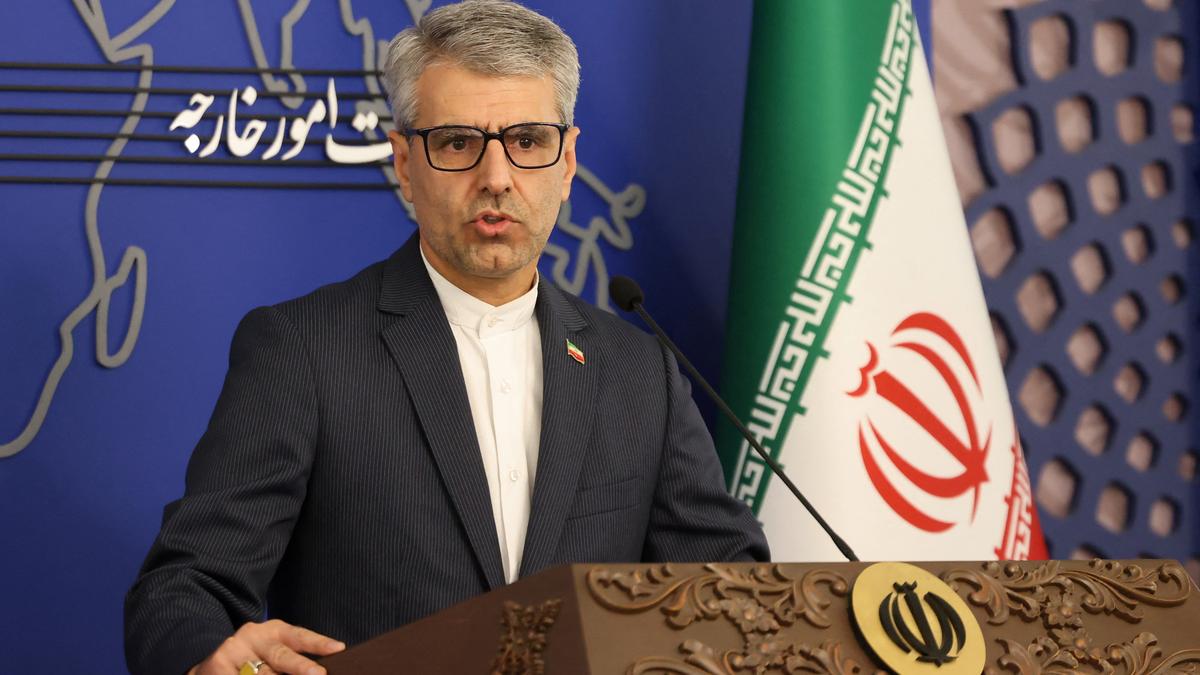
The friction between Iranian ballistic development and Western containment strategies is not a simple diplomatic disagreement; it is a structural conflict between two irreconcilable security architectures. While Western intelligence frameworks categorize Iran’s missile program as a breach of non-proliferation norms, Tehran views the same infrastructure as a non-negotiable component of its conventional deterrence, designed to offset a profound deficit in traditional air power. This gap between "proliferation" and "deterrence" creates a binary where every diplomatic assertion is met with a categorical denial, categorized by Tehran as "big lies" to preserve the internal logic of their defense posture.
The Three Pillars of Iranian Deterrence
The Iranian missile program functions through three distinct operational mandates that dictate its R&D trajectory and its diplomatic responses.
- Strategic Depth via Proxy Displacement: By developing mobile, liquid-fuel and solid-fuel systems, Iran can distribute strike capabilities across a "Resistance Axis." This decentralization renders preemptive strikes by adversaries mathematically difficult and high-cost.
- The Conventional Gap Compensation: Iran’s Air Force (IRIAF) relies on airframes from the 1970s. In modern kinetic warfare, these assets are obsolete against fifth-generation fighters. Ballistic missiles serve as a "poor man's air force," providing a strike capability that does not require air superiority.
- Technological Sovereignty: The rejection of U.S. claims is anchored in a domestic narrative of "Self-Sufficiency" (Jihad-e Khod-Kafayi). Admitting to illicit procurement or a nuclear-capable design intent would dismantle the domestic political utility of the program as a symbol of national resilience.
The Cost Function of Regional Containment
The U.S. strategy of "Integrated Deterrence" relies on a network of sensors and interceptors (THAAD, Patriot, Aegis) to raise the cost of an Iranian launch. However, the cost-exchange ratio heavily favors the offense. A single interceptor missile often costs between $2 million and $4 million, whereas the Iranian "Fateh" or "Zolfaghar" class missiles are produced at a fraction of that cost.
This economic asymmetry dictates the rhetoric. When Washington claims a missile test violates UN Resolution 2231, they are attempting to impose a legal cost on a technical advancement. Iran’s dismissal of these claims as "lies" is a tactical maneuver to maintain the legality of its "Export-Ready" status, signaling to potential buyers and regional allies that its systems remain outside the reach of international sanctions regimes.
Technical Thresholds and the Nuclear Intent Calculus
A primary point of contention involves the "Nuclear-Capable" designation. Under the Missile Technology Control Regime (MTCR), a system is generally flagged if it can carry a 500kg payload over 300km. Iran’s technical defense rests on the distinction between "intent" and "capability."
- The Payload-Range Trade-Off: Tehran claims its focus is on precision-guided munitions (PGMs). Increasing the accuracy of a conventional warhead (CEP < 10m) allows for a smaller explosive charge to achieve the same lethality.
- The Re-entry Vehicle (RV) Problem: Re-entry technology for intercontinental-range missiles requires heat shielding capable of withstanding extreme thermal loads. To date, Iran has focused on medium-range (MRBM) systems. Admitting to any development beyond 2,000km would trigger an immediate European shift toward more aggressive sanctions.
Strategic Escalation and the Credibility Void
The "Big Lie" rhetoric serves as a signaling mechanism. It tells the West that the missile program is decoupled from the JCPOA (Joint Comprehensive Plan of Action). This separation is the Iranian strategic "Red Line."
If Washington successfully links the missile program to the nuclear deal, Iran loses its only leverage for conventional defense. This leads to a systemic stalemate. The U.S. views the missiles as the "delivery system" for an eventual nuclear breakout. Iran views the missiles as the "defensive wall" that prevents a conventional invasion. These two views are mutually exclusive and prevent any diplomatic middle ground.
Institutional Inertia and the Logic of Deniability
The Iranian defense industrial base (MODAFL) and the Islamic Revolutionary Guard Corps (IRGC) Aerospace Force operate as quasi-independent entities. Their budget is tied to the success of the missile program as a national pride project.
- The Sanctions Paradox: Sanctions on parts and technology have forced Iran into a "Copy-and-Modify" (C&M) engineering model. This model thrives on denial; if Iran admitted to using foreign-sourced components, it would expose its global procurement networks (STF – Sanctions Task Force) to more granular targeting.
- The Space Launch Vehicle (SLV) Pretext: The "Simorgh" and "Zuljanah" SLV programs are technically dual-use. They allow for the testing of staging and propulsion technologies under the guise of civilian space exploration. Labeling Western concerns as "lies" provides the political cover necessary to continue this dual-path development.
The strategic play for any actor engaging with this environment is to accept that rhetoric is a component of the kinetic arsenal. To move beyond the cycle of "claims and denials," an analytical focus must shift from "what they say" to "what they build." The increasing precision of the "Fateh-110" and its variants demonstrates a pivot toward regional tactical dominance rather than global strategic overreach. The objective of any future security architecture must be to address the Iranian "Conventional Gap" as the primary driver of missile proliferation. Until Tehran perceives its conventional air defense and strike capabilities as sufficient, the missile program will remain an existential priority, and Western claims will continue to be categorized as "Big Lies" to protect the only viable deterrent they possess.