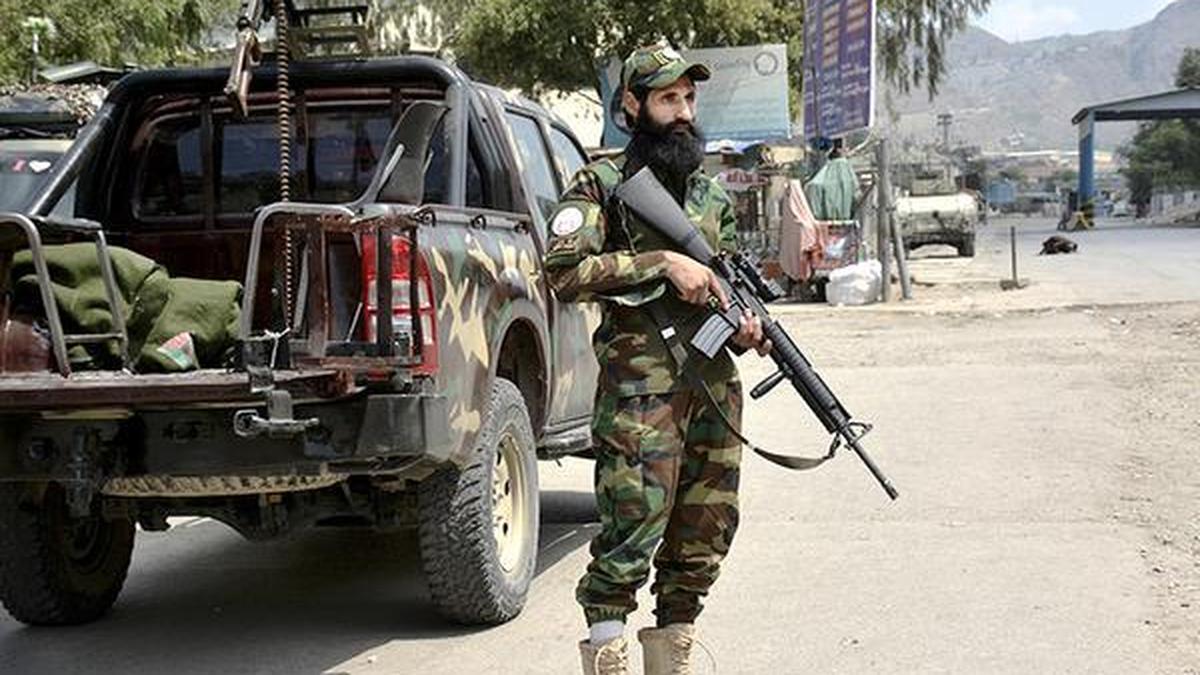
The security architecture of South Asia has shifted from a state-actor deterrent model to a fragmented, non-linear conflict cycle. Pakistan's recent kinetic operations inside Afghan territory—targeting Tehrik-i-Taliban Pakistan (TTP) safe havens—do not represent a terminal solution to cross-border militancy. Instead, these strikes trigger a predictable feedback loop of asymmetric retaliation. The core problem is not the lack of military capability, but the existence of a geographic and ideological "sanctuary paradox" that renders conventional borders porous to unconventional threats.
The Mechanics of Asymmetric Escalation
Military intervention against non-state actors operating within a third-party sovereign state creates three distinct friction points that Pakistan must now navigate.
1. The Proximity Feedback Loop
When a state utilizes air power to strike targets across a border, it assumes a high-altitude tactical advantage. However, this advantage is inverted on the ground. The TTP and its affiliates operate on a "distributed network" model. Unlike a traditional army, they do not require centralized supply lines to function. Following air strikes, these groups typically transition from holding territory to "penetrative strikes"—small-cell operations targeting urban centers or security outposts within Pakistan.
The mechanism is simple: the air strike degrades the group’s infrastructure, but the subsequent vacuum is filled by a shift in the group’s operational focus from Afghan base-building to Pakistani destabilization.
2. The Taliban’s Sovereignty Constraint
The de facto government in Kabul faces a dual-pressure system. If they restrain the TTP at Pakistan's behest, they risk internal fracturing and the defection of hardline fighters to more radical elements like IS-K (Islamic State Khorasan). If they allow the TTP free rein, they face international isolation and further kinetic violations of their airspace.
Pakistan’s strikes force the Afghan Taliban to prioritize their domestic "jihadi" legitimacy over diplomatic stability. This results in a hardening of the border, not through official policy, but through the tacit approval of "revenge" operations by proxy groups.
3. The Urban-Rural Intelligence Gap
Pakistan’s security apparatus is optimized for conventional defense and frontier patrolling. Militant groups, however, exploit the "density delta" between the sparsely populated tribal districts and the high-density urban corridors of Peshawar, Quetta, and Islamabad. Intelligence gathered in the mountains of Khost or Paktika rarely translates into actionable data for preventing a suicide vest detonation in a city center. The strike in Afghanistan might neutralize a commander, but it simultaneously activates sleeper cells that have already integrated into the Pakistani domestic fabric.
The Three Pillars of Cross-Border Instability
To quantify the current threat level, one must examine the variables that dictate the frequency and lethality of militant responses.
I. Resource Attrition and Recruitment
Militant groups utilize "martyrdom narratives" to solve their recruitment shortages. Kinetic strikes provide the visual and emotional capital necessary to drive local recruitment. For every TTP fighter killed in an air strike, the resulting collateral damage—real or perceived—serves as a marketing tool for ten new recruits. This is the Cost-Benefit Inversion: the more a state spends on high-tech munitions, the lower the "cost of entry" becomes for the insurgent.
II. Technological Asymmetry
The TTP has increasingly adopted "commercial off-the-shelf" (COTS) technologies. While Pakistan employs sophisticated drones and jets, militants have optimized the use of encrypted communication apps and thermal imaging captured from former Western stockpiles in Afghanistan.
- Encrypted Coordination: Using platforms that evade traditional signal intelligence (SIGINT).
- Night-Vision Superiority: Small-unit tactics at night against border posts that lack ubiquitous thermal coverage.
- IED Innovation: Moving from pressure-plate devices to remote-detonated, sophisticated electronics.
III. Economic Destabilization as a Weapon
Security concerns directly correlate with the flight of capital. By maintaining a constant "threat of attack," militants achieve a strategic objective without firing a shot: the degradation of Pakistan’s investment climate. The uncertainty surrounding border security disrupts the Torkham and Chaman trade routes, which are vital for Pakistan’s struggling economy. The militant strategy is not to defeat the Pakistani army, but to make the cost of maintaining security higher than the state’s fiscal capacity.
Logistical Bottlenecks in Border Management
The construction of the border fence was intended to be a definitive barrier. In practice, it has become a "static asset" in a dynamic environment.
- Maintenance vs. Penetration: A fence is only as effective as the response time of the nearest patrol. In the rugged terrain of the Hindu Kush, a breach can be made and utilized hours before a response team arrives.
- The "Dual-Use" Tunnels: Historical smuggling routes have been repurposed for insurgent transit. These subterranean paths bypass both aerial surveillance and ground fencing.
- The Refugee Variable: Genuine humanitarian movement provides the perfect camouflage for "low-signature" militant transit. Separating a combatant from a civilian in a high-flow border environment is a statistical impossibility without intrusive, slow, and expensive biometric vetting at every point of contact.
The Logic of the "Long-War" Attrition
Pakistan is currently trapped in a reactive posture. The decision to strike targets in Afghanistan is a tactical "flush"—an attempt to clear immediate threats—but it lacks a long-term strategic "seal."
The TTP’s current structure allows it to absorb losses. The group has shifted from a centralized command to a "franchise model." Different chapters (Wilayats) operate with significant autonomy. If the "North Wazirstan" leadership is hit, the "Dera Ismail Khan" cell can continue operations independently. This modularity means that decapitation strikes (killing top leaders) have diminishing returns.
Furthermore, the ideological overlap between various groups in the region creates a "force multiplier" effect. Even if the TTP is under pressure, IS-K or various splinter factions can provide the logistical support needed to carry out a retaliatory strike, ensuring that the pressure on the Pakistani state remains constant.
Strategic Forecast: The Shift to Hybrid Containment
The traditional reliance on "kinetic-only" solutions has reached a point of exhaustion. To mitigate the inevitable blowback from the Afghan air strikes, the strategic focus must pivot toward Integrated Border Intelligence (IBI) and Fiscal Fortification.
The military must transition from broad-area bombing to "micro-targeting" combined with aggressive domestic counter-intelligence. However, the limitation of this strategy is the "intelligence lag"—the time it takes to verify a cross-border target often exceeds the window of opportunity, leading to the use of broader, more destructive force that fuels the insurgent narrative.
Pakistan’s immediate risk is not a full-scale invasion, but a "thousand-cut" strategy where frequent, mid-level attacks exhaust the national psyche and the treasury. The current posture suggests a period of heightened urban vigilance. Security forces will likely prioritize the protection of "High-Value Targets" (CPEC infrastructure, military installations) while conceding that total prevention in the periphery is unachievable.
The ultimate strategic play is the decoupling of the TTP from its Afghan hosts. This cannot be done through bombs alone. It requires a high-stakes diplomatic maneuver that offers the Afghan Taliban enough economic incentive to treat the TTP as a liability rather than an asset. Until the "cost of hosting" exceeds the "benefit of brotherhood" for Kabul, the Pakistani border will remain a theater of perpetual kinetic friction.
Operational priority must now shift to the "Internal Perimeter." Every strike conducted in Khost or Kunar requires a simultaneous, three-fold increase in domestic police readiness in the Khyber Pakhtunkhwa and Balochistan provinces. The battle is no longer at the border; it is in the ability of the state to manage the consequences of its own cross-border assertions.