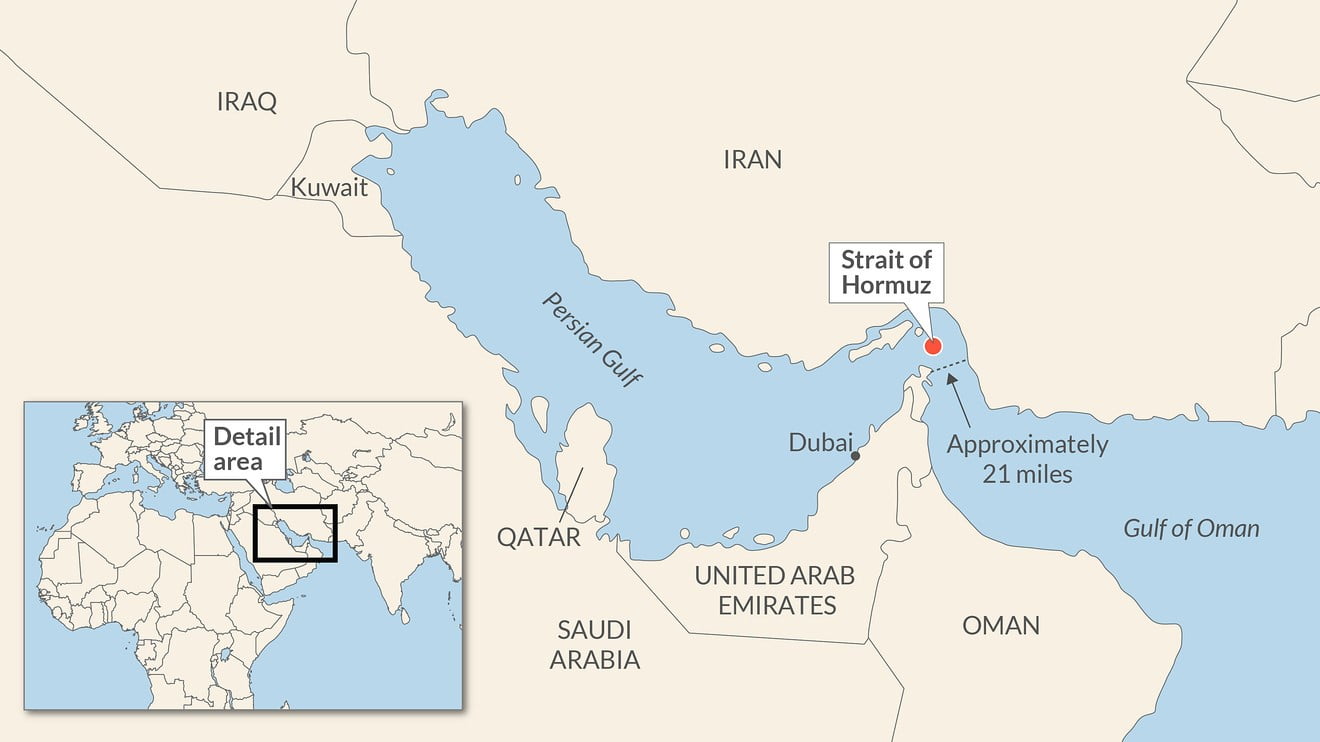
Geopolitics is stuck in 1974. Every time a shot is fired in West Asia, the same tired troupe of analysts drags out a map, circles the Straits of Hormuz, and screams about a global energy heart attack. They want you to believe that a few Iranian patrol boats and some Omani diplomats hold the world’s jugular.
They are wrong.
The recent "discussions" between Muscat and Tehran about "opening" or securing the channel are a theatrical performance. It’s diplomatic kabuki designed to maintain the illusion of leverage. If you are watching the Straits for the next oil shock, you are looking at a rearview mirror while the car is flying off a cliff. The reality of 2026 is that the chokepoint is no longer a kill switch; it’s a distraction.
The Myth of the Global Kill Switch
The conventional wisdom says that because roughly 20% of the world’s petroleum liquids pass through this 21-mile-wide gap, any disruption leads to $200-a-barrel oil and the collapse of Western civilization. This logic ignores three brutal realities of modern energy logistics and warfare.
First, the physical closure of the Straits is a tactical nightmare that would hurt Iran far more than its targets. Tehran’s economy is a fragile creature held together by shadows and back-door oil sales to China. If the Straits close, those ships stop moving. The regime isn't looking to commit economic suicide to spite the West; they are looking to keep the toll booth open on their own terms.
Second, the "closure" scenario assumes we are still in a world of static supply. We aren't. Between the Permian Basin’s relentless output and the expansion of the East-West Pipeline (Petroline) in Saudi Arabia, the world has built-in bypass surgery. Saudi Arabia can already divert millions of barrels per day to the Red Sea, bypassing Hormuz entirely. The UAE’s Habshan-Fujairah pipeline does the same, dumping crude directly into the Gulf of Oman.
The bottleneck has been widened. The "chokepoint" is now more of a "mild congestion zone."
Drones Don't Care About Shipping Lanes
The obsession with "opening" or "securing" the Straits misses the shift in kinetic reality. In the old days, you needed a navy to block a trade route. Today, you need a $20,000 drone and a guy with a laptop.
While diplomats in Muscat talk about maritime security, the actual threat has moved to the infrastructure. Why bother sinking a tanker in the Straits—a move that invites a massive carrier strike group response—when you can send a swarm of loitering munitions into a processing plant in Abqaiq?
The "Straits of Hormuz" is a geographical term for an obsolete worry. The real threat is the vulnerability of the "nodes"—the pumps, the refineries, and the desalination plants. You can keep the water open all you want; if the loading terminal is a smoking ruin, the water is just empty space.
Oman The Great Mediator Or The Great Enabler
Oman has built its entire brand on being the "Switzerland of the Middle East." They sit in the middle, talk to everyone, and look dignified. But let’s be honest: Oman’s mediation is often just a sophisticated way of managing the status quo so they don't get caught in the crossfire.
By "discussing" the opening of the Straits with Iran, Oman is acknowledging that the rules of the sea are now dictated by non-state actors and IRGC proxies rather than international law. This isn't a victory for diplomacy; it’s a surrender to the reality that the UN Convention on the Law of the Sea (UNCLOS) is a dead letter in these waters.
I’ve watched energy traders lose billions betting on "Hormuz risk premiums" that never materialize because they overestimate the technical ability of any power to actually "close" the strait for more than 72 hours. The U.S. Fifth Fleet doesn't even need to stay inside the Gulf anymore to project power; the reach of modern precision munitions makes the geography of the Strait secondary to the range of the missiles.
Why China Is Actually The One Sweating
Here is the twist that the mainstream press refuses to touch: The West isn't the primary victim of a Hormuz flare-up anymore. The United States is a net exporter of energy. Europe is pivoting, painfully but surely, toward renewables and North African gas.
The entity that actually dies if the Straits of Hormuz "close" is the Chinese manufacturing machine.
Beijing’s "Belt and Road" is a desperate attempt to find land-based alternatives to this very chokepoint. When Iran and Oman talk about maritime security, they are essentially negotiating the price of China’s survival. If you want to understand why these talks matter, stop looking at the price of gas in London and start looking at the industrial power requirements in Shenzhen.
The Infrastructure Trap
We treat the Straits like a gate. It’s not a gate; it’s a fragile ecosystem of insurance premiums and satellite tracking. The moment a single hull is breached, Lloyd’s of London raises rates to the point where the Straits are "closed" by accountants, not by mines.
Discussion of "opening" the Straits is a farce because the Straits never "close" physically—they close financially. If Oman and Iran want to be "contrarian" and actually solve something, they should be discussing a regional insurance pool that bypasses Western financial markets. But they won't. They’ll talk about "cooperation" and "stability" while the real power shifts to the drone operators and the pipeline engineers.
The Strategy of Irrelevance
The smart money isn't betting on the Straits staying open. The smart money is betting on making the Straits unnecessary.
- Hydrogen Transition: The GCC is dumping hundreds of billions into green and blue hydrogen. You don't move hydrogen through the Straits in the same way you move crude.
- The Israeli Link: Keep an eye on the proposed "Land Bridge" connecting the UAE and Saudi Arabia to Israeli ports on the Mediterranean. It’s the ultimate middle finger to the Hormuz obsession.
- Deep-Sea Mining: The shift toward battery minerals means the 20th-century obsession with "oil routes" is being replaced by a 21st-century obsession with "mineral chains."
If you are a CEO or a policy maker still briefed on "Hormuz Risk," fire your consultant. They are selling you a 1980s thriller script.
Stop Asking If It Will Close
The question isn't "What happens if Iran closes the Straits?"
The question is "Who cares if they try?"
By the time any regional power manages to successfully block transit, the world’s energy map will have already routed around them. We are witnessing the slow-motion death of geographical leverage. The talks between Oman and Iran are the equivalent of two blacksmiths discussing the future of the horseshoe while the Ford Model T rolls off the assembly line.
The Straits of Hormuz are a psychological weapon, not a tactical one. As soon as you stop fearing the "closure," the leverage disappears. The West Asia conflict is horrifying, but the idea that it can hold the global economy hostage through a single 21-mile stretch of water is a ghost story we tell ourselves because we’re too lazy to map the new reality.
The Straits are open. They’ll stay open. And even if they don't, the world has moved on.
Buy a better map. Better yet, buy a new calendar.