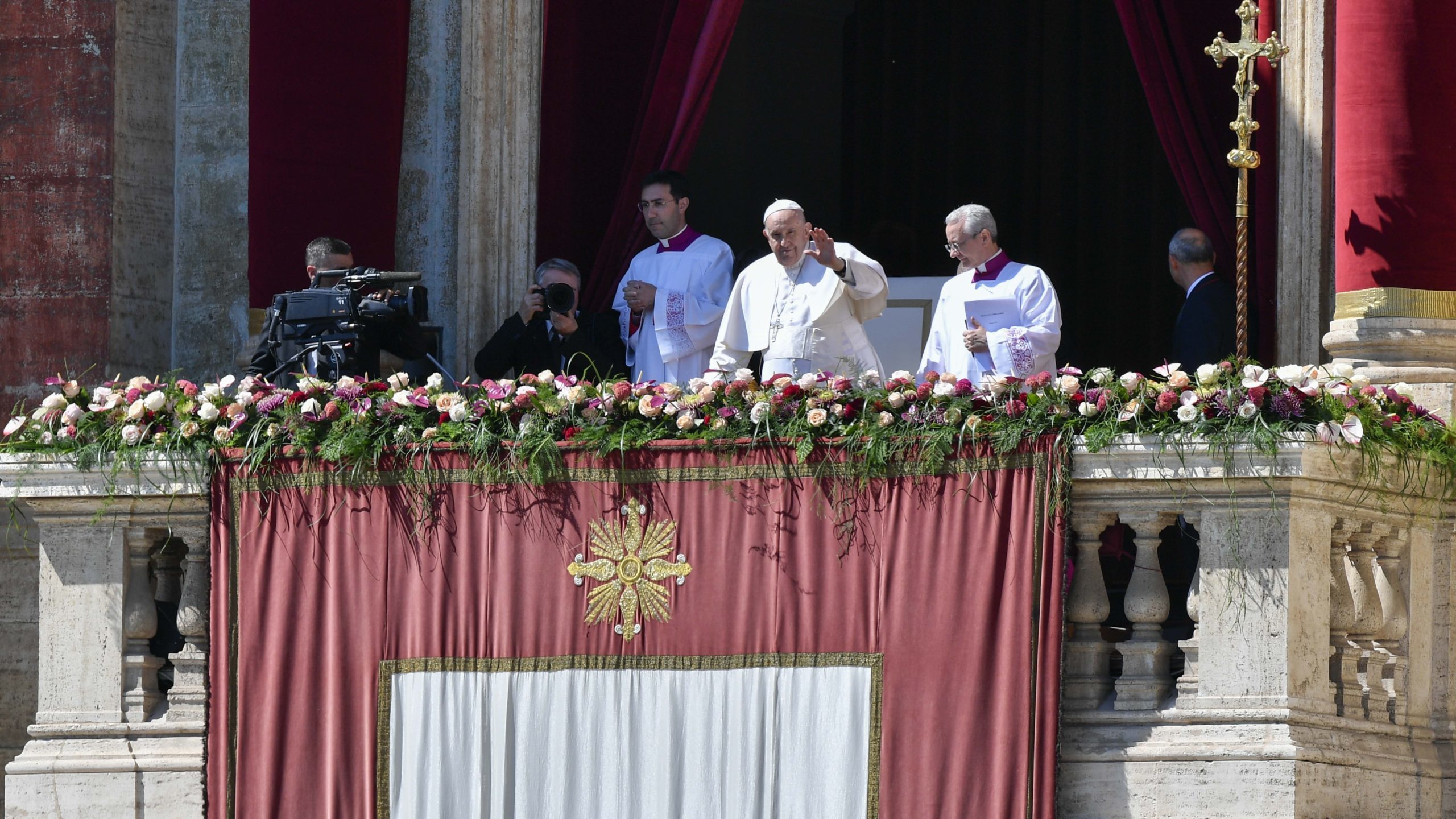
Papal Easter addresses are the ultimate exercise in geopolitical theater. Every year, we watch a man in white robes stand before a crowd and beg for peace, as if conflict were a simple misunderstanding that could be solved with a bit of "hope" and a stern reminder of the Golden Rule. Pope Leo’s first Easter message followed the script to the letter. He lamented the bloodshed in Gaza, the grinding attrition in Ukraine, and the forgotten wars of Africa. He called for ceasefires. He called for humanitarian aid.
The media ate it up. They called it "poignant." They called it "a moral compass for a lost world."
They are wrong.
The "lazy consensus" here is that the Vatican remains a neutral, effective mediator whose voice can actually move the needle of history. I have spent decades watching the intersection of religion and hard power, and here is the brutal truth: The Papacy has traded its actual leverage for a soft-power seat at the table of irrelevance. By framing peace as a moral choice rather than a logistical and economic inevitability, the Church ensures it remains a spectator in the very conflicts it claims to influence.
The Fallacy of the Moral Ceasefire
War is not a moral failing. War is an allocation of resources.
When Pope Leo calls for a ceasefire in Ukraine, he is speaking to the soul. But the tanks aren't fueled by souls; they are fueled by the industrial-military complex and the cold calculations of sovereign debt. To suggest that a religious plea for "hope" can disrupt the territorial ambitions of a nuclear power is more than just optimistic—it is dangerously naive.
Modern conflict operates on the principle of asymmetric incentives. In Ukraine, the incentive for Russia is domestic stability through territorial expansion. In Gaza, the incentive for the combatants is existential survival versus ideological dominance. Neither side cares about an Easter blessing. By focusing on "hope," the Vatican ignores the Game Theory mechanics at play.
- Player A (The Aggressor): Gains nothing from a ceasefire unless they have reached their strategic objective.
- Player B (The Defender): Cannot stop until the threat is eliminated.
A moral plea is a zero-cost signal. It costs the Pope nothing to ask for peace, and it costs the combatants nothing to ignore him. Real diplomacy requires "skin in the game"—something the Vatican, in its current state of curated neutrality, refuses to provide.
The Vatican Bank and the Ghost of Influence
We talk about the Pope as a "global leader," but a leader without an army or an economy is just an influencer with a better wardrobe.
Historically, the Church was a powerhouse because it controlled the flow of capital and the legitimacy of kings. If a Pope excommunicated you in 1200, your trade routes dried up and your peasants revolted. You listened. Today, the Vatican Bank (IOR) manages roughly $5 billion in assets. In the world of global finance, that is a rounding error. BlackRock manages $10 trillion.
If the Church actually wanted to stop a war, it would stop issuing press releases and start using its financial network to squeeze the supply chains of the aggressors. But it won't. It prefers the safety of the pulpit. It prefers the "hope" narrative because "hope" doesn't require a balance sheet or a risk assessment.
I’ve seen NGOs and international bodies spend billions on "dialogue" and "peacebuilding workshops" that result in exactly zero lives saved. The Vatican’s Easter address is the theological version of a corporate CSR report. It looks great in the annual review, but it doesn't change the fact that the factory is still dumping chemicals into the river.
Why "Hope" is the Enemy of Peace
The most offensive part of the competitor’s coverage is the glorification of "hope."
Hope is a sedative. It suggests that if we just wait long enough and stay "positive," the arc of the moral universe will bend toward justice. It won’t. The arc of the moral universe bends toward whoever has the strongest grip.
By telling the victims of conflict to "have hope," the religious establishment shifts the burden of endurance onto the oppressed while letting the oppressors off the hook. Real change comes from leverage, not longing. It comes from the tactical application of pressure—economic, political, and physical.
Imagine a scenario where the Vatican didn’t just pray for peace but actively brokered a debt-forgiveness program for nations willing to sign verifiable disarmament treaties. That would be a disruption. Instead, we get a Sunday morning speech that satisfies the desire for a "feel-good" story without actually doing the hard work of dismantling the structures of violence.
Dismantling the "People Also Ask" Delusions
People often ask: "Can the Pope actually stop a war?"
The honest answer is no. Not since the Peace of Westphalia in 1648, which effectively removed the Papacy from the center of international law. The belief that he can is a hangover from a world that no longer exists.
Another common query: "Why is the Vatican neutral?"
Because neutrality is the ultimate shield against accountability. If you take a side, you might lose. If you stand in the middle and talk about "humanity," you can never be proven wrong. It is the most cowardly position a "global leader" can take.
The High Cost of Soft Power
There is a downside to my contrarian view. If we stop believing in the moral authority of the Pope, we are left with a world of raw, unvarnished realism. It is a cold, hard place where only power matters. That is terrifying for most people. They want the white robes. They want the Easter bells. They want to believe that someone, somewhere, is looking out for the "soul" of the world.
But believing a lie doesn't make you safer. It just makes you a victim who didn't see the blow coming.
The Vatican's current strategy is a race to the bottom of the attention economy. In a world of 24-hour news cycles and viral outrage, a call for peace is white noise. It is the elevator music of geopolitics. To become relevant again, the Church would have to risk its tax-exempt status, its diplomatic immunity, and its reputation. It would have to stop being a "moral compass" and start being a moral combatant.
The Hard Truth About Easter Sunday
Pope Leo’s message wasn't for the soldiers in the trenches or the families in the bomb shelters. It was for the viewers at home who wanted to feel a fleeting sense of connection to a "higher purpose" before they went back to their brunch.
If you want to actually impact global conflict, stop waiting for a blessing from a balcony. Study the flow of arms. Look at the sovereign wealth funds that bankroll the dictators. Understand the logistics of the mineral trades that fuel the drones.
Peace isn't a miracle. It's a deal. And until the Vatican is willing to get its hands dirty in the mechanics of that deal, it should stop pretending that its words have the power to stop bullets.
Burn the script. Stop praying for peace and start paying for it. Stop hoping and start hacking at the roots of the incentive structures that make war profitable. Anything else is just performance art for the pious.
The bells are ringing, but nobody who matters is listening.