The global energy market is currently held hostage by a narrow strip of water and the conflicting ambitions of three superpowers. While the public focus often lingers on the immediate threat of naval skirmishes, the real story lies in how China and the United States are fundamentally rewriting the rules of Middle Eastern engagement. Beijing is no longer a silent partner buying discounted crude. It is now the primary architect of a regional security architecture that aims to bypass Western influence entirely.
Washington’s traditional role as the "guarantor of the Gulf" is rotting from the inside. For decades, the U.S. Fifth Fleet provided the muscle that kept the Strait of Hormuz open, effectively subsidizing the energy security of its rivals, including China. That era is ending. With the U.S. pivot toward domestic shale and a strategic obsession with the Pacific, the White House is questioning why American taxpayers should foot the bill for protecting oil tankers destined for Shanghai.
The China Iran Axis and the Death of Sanctions
The 25-year strategic pact between Beijing and Tehran is not just a trade deal. It is a middle finger to the Western financial system. By integrating Iran into the Belt and Road Initiative, China has created a "closed-loop" economy where oil flows in exchange for infrastructure, surveillance technology, and military hardware. This barter-style arrangement happens outside the reach of the SWIFT banking system.
China’s strategy revolves around strategic depth. They are building pipelines and rail links that connect Central Asia to the Persian Gulf, specifically designed to function even if the U.S. Navy blocks the sea lanes. They aren't just preparing for a war. They are making the war irrelevant before it starts. If China can move energy overland, the "Malacca Dilemma"—their fear of a naval blockade—evaporates.
Iran, meanwhile, uses this Chinese patronage as a shield. With a guaranteed buyer for its oil, Tehran has little incentive to return to the negotiating table regarding its nuclear program or its regional proxies. They have realized that the "maximum pressure" campaign of the previous decade only works if the target is isolated. With Beijing’s checkbook open, Iran is anything but isolated.
The Hormuz Ask and the Price of Protection
Donald Trump’s repeated assertions that Gulf nations should pay for their own protection or that China should escort its own tankers sent shockwaves through the diplomatic corps. While critics labeled it isolationism, it was actually a cold-blooded assessment of geopolitical ROI. The U.S. is now a net exporter of oil. The strategic necessity of the Middle East has shifted from "survival" to "stability."
This creates a vacuum. If the U.S. pulls back, who steps in? The assumption was that the Saudis or Emiratis would build up their navies. Instead, we see them hedging their bets. They are increasingly looking to the East, inviting Chinese investment into their ports and telecommunications. They see the writing on the wall. If the U.S. won't provide an unconditional security guarantee, the Gulf states will find someone who will—even if that someone comes with a very different set of strings attached.
The Hidden Cost of Naval Escorts
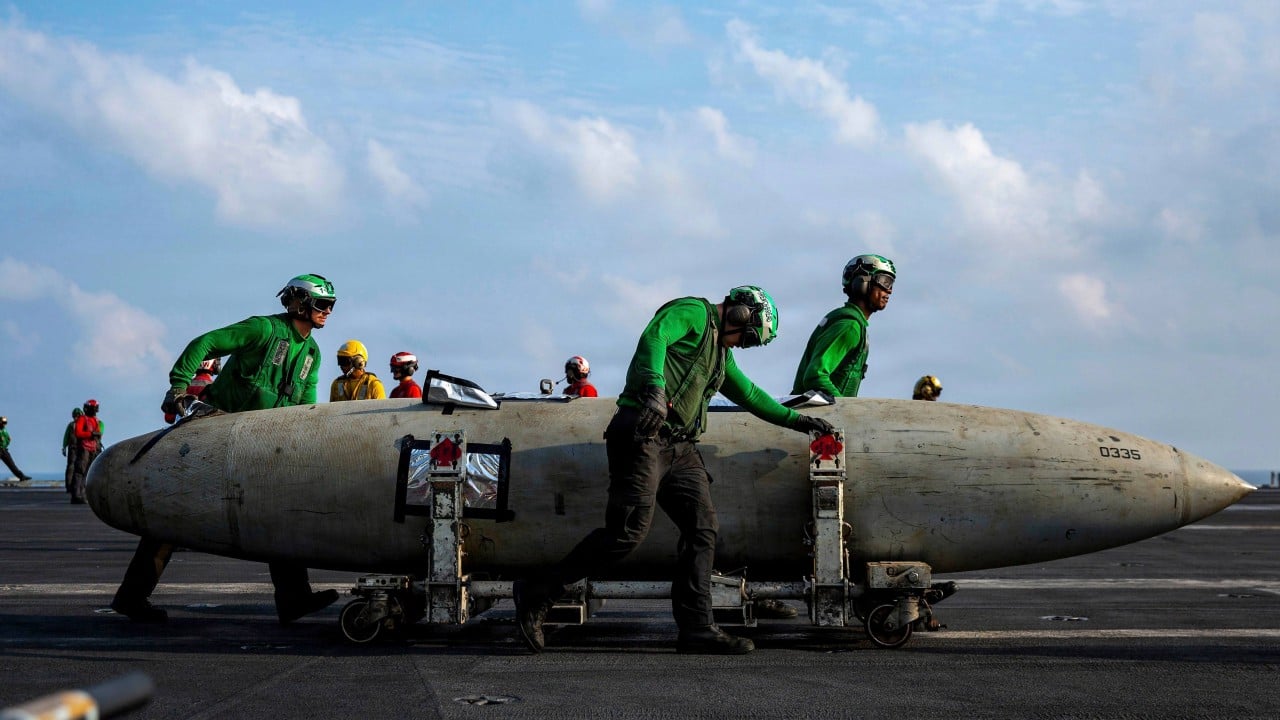
Operating a carrier strike group in the Persian Gulf costs millions of dollars per day. When a president asks, "Why are we doing this for free?" they are highlighting a fundamental shift in the American psyche. The American public has lost the appetite for "forever wars" and the expensive patrolling of global commons. This fatigue is a strategic asset for China.
Beijing operates on a much longer timeline. They don't need to win a naval battle in the Strait of Hormuz. They only need to wait for the U.S. to decide it’s too expensive to stay. Once the U.S. presence thins out, the regional power balance shifts instantly.
Energy Hegemony in the Age of Silicon
The battle for the Middle East is no longer just about the oil under the sand. It is about the data flowing through the cables on the seabed. China’s "Digital Silk Road" is quietly laying the groundwork for a technological monopoly in the region. By installing 5G networks and smart-city infrastructure across the Gulf, Beijing is ensuring that the next generation of Middle Eastern leaders will be dependent on Chinese software, not American hardware.
This is a structural dependency. If your entire government runs on Chinese servers, you aren't going to side with Washington during a conflict. The U.S. is fighting a 20th-century war of tanks and tankers, while China is winning a 21st-century war of bits and bytes. The oil is just the fuel for the machines that will eventually run the entire region.
The Drone Proliferation Factor
One of the most overlooked aspects of the current tension is the democratization of high-end military technology. Ten years ago, only a few nations could deploy precision-guided munitions. Today, Iranian-designed drones are being used to shut down airports and strike oil refineries with terrifying accuracy.
These drones are cheap. They are expendable. And they are extremely difficult to defend against using traditional billion-dollar air defense systems. This "asymmetric" threat has flipped the script on naval power. You don't need a massive navy to close the Strait of Hormuz; you just need a few hundred "suicide drones" launched from a hidden garage. This reality makes the U.S. carrier groups look like prehistoric giants—powerful, but increasingly vulnerable to a swarm of insects.
The Real Winner in a Global Recession
There is a dark irony in the current economic climate. As the West battles inflation and the threat of recession, the high cost of energy—driven by Middle East instability—actually benefits the primary actors involved in the chaos. Russia gains more revenue for its war machine. Iran finds more willing buyers on the black market. And China, through its long-term fixed-price contracts, secures its energy future while its competitors scramble for scraps.
The U.S. is caught in a policy contradiction. It wants to pivot to Asia to counter China, but it cannot leave the Middle East because doing so would give China a clear path to regional dominance. It wants to lower gas prices, but it also wants to sanction the world's major oil producers. You cannot have it both ways.
The Petroyuan vs the Petrodollar
The ultimate prize in this struggle is the status of the U.S. dollar as the world’s reserve currency. For fifty years, the "Petrodollar" system ensured that every barrel of oil sold globally was priced in USD. This gave the U.S. Treasury incredible leverage.
That system is cracking. Saudi Arabia and China are actively discussing pricing oil in Yuan. If the oil market de-dollars, the U.S. loses its most powerful non-military weapon: the ability to print the world's currency. This isn't just about trade; it’s about the survival of the American financial empire.
The Brinkmanship of the No Mans Land
We are entering a period of extreme volatility where no one is truly in charge. The old rules of engagement are gone. The U.S. is half-out, China is half-in, and regional players like Iran and Israel are acting with increasing autonomy. This is a recipe for a miscalculation that could trigger a global catastrophe.
The Strait of Hormuz is the world's carotid artery. Any blockage, even a temporary one, sends a shock to the global heart. But the real danger isn't a sudden closure. It’s the slow, steady shift of influence from West to East. By the time the U.S. realizes it has lost the Middle East, there won't be a single shot fired. The region will simply have moved on, plugged into a different grid, and trading in a different currency.
The strategic "ask" regarding Hormuz wasn't just a tweet or a campaign slogan. It was a recognition that the cost of empire is becoming unsustainable. If the U.S. continues to protect a global order that its rivals are actively dismantling, it isn't being a leader. It’s being a volunteer for its own obsolescence.
The next time a tanker is seized or a drone hits a refinery, don't look at the fire. Look at who is holding the fire extinguisher and what they are asking for in exchange for putting it out. That is where the real power lies.
Build the pipelines. Secure the cables. Control the currency. The war for the Strait of Hormuz is already being won by the side that isn't fighting.