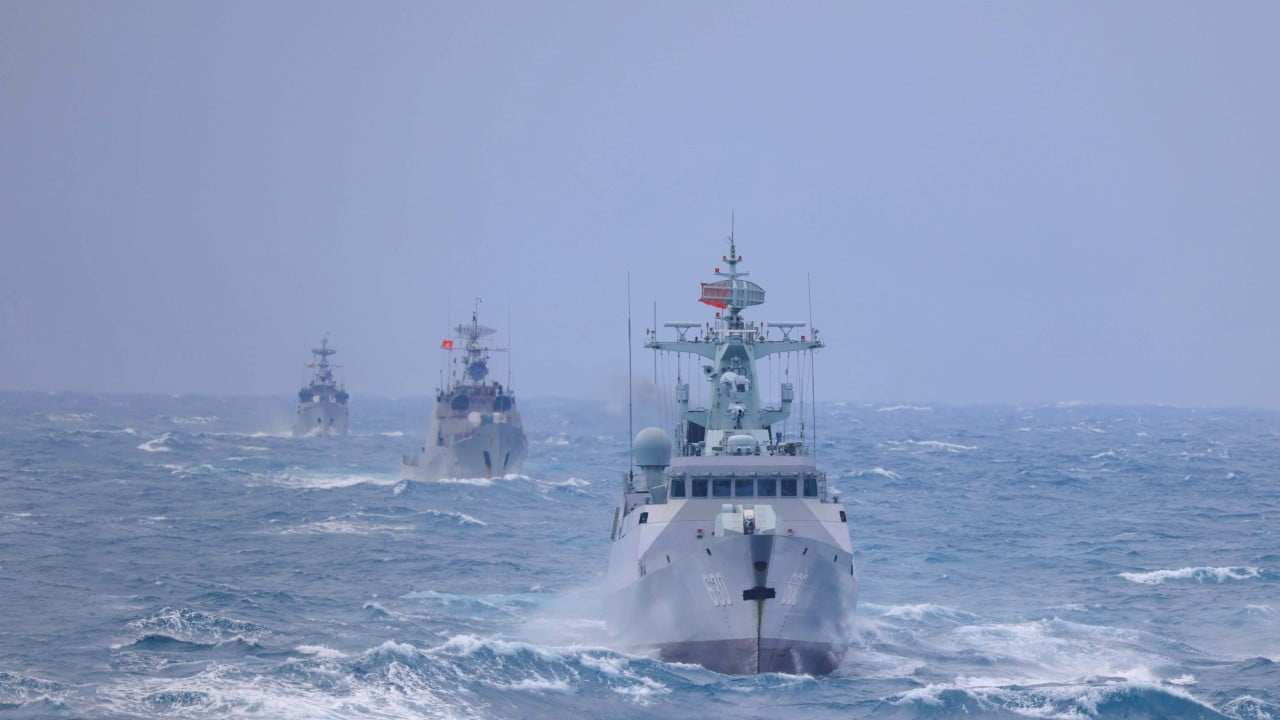
The Strait of Hormuz is a narrow stretch of water that keeps the global economy breathing. If you look at a map, it’s a tiny choke point where the Persian Gulf meets the Gulf of Oman. But for military strategists in Tehran, it’s not just a shipping lane. It’s a fortress. Iran has spent decades turning its scattered islands—Qeshm, Kish, Sirri, and the Abu Musa trio—into what military analysts call unsinkable aircraft carriers. These aren’t just patches of sand with palm trees. They’re hardened, bristling military hubs that make a traditional naval confrontation in these waters look like a nightmare scenario for Western powers.
Recent escalations have brought the strategic value of these islands back into the spotlight. There’s a lot of chatter about how the UK or the US might intervene if things get ugly. But here’s the reality. Any outside navy trying to "police" the Strait is walking into a kill zone. These islands allow Iran to project power without needing a massive, expensive fleet of destroyers. They use geography as a weapon. If you’re a British sailor or an American commander, you aren’t just worried about the Iranian Navy. You’re worried about the very ground beneath the horizon.
The unsinkable advantage of Iranian island geography
An actual aircraft carrier is a marvel of engineering, but it has one massive flaw. It can sink. A well-placed torpedo or a swarm of cruise missiles can send billions of dollars and thousands of lives to the bottom of the ocean. You can’t sink Qeshm. You can’t torpedo Greater Tunb.
Iran understands this asymmetry perfectly. By placing long-range radar, anti-ship missile batteries, and fast-attack craft on these islands, they’ve created a permanent, overlapping field of fire. These islands are essentially stationary platforms that never need to refuel and can be packed with enough concrete and steel to survive heavy bombardment.
Take a look at the location of Abu Musa and the Tunbs. They sit right in the middle of the deepest shipping lanes. This gives Iran "line-of-sight" dominance over every single oil tanker passing through. We’re talking about 20% of the world’s petroleum. If Iran decides to flip the switch, these islands become the primary triggers for a global economic cardiac arrest.
Why UK involvement is seen as a suicide mission
There’s been some tough talk from London about supporting allies in the region. But many military experts are waving red flags. They call UK help in a potential Strait of Hormuz conflict "suicidal," and they aren’t just being dramatic. The Royal Navy is a shadow of its former self in terms of sheer hull numbers. Sending a Type 45 destroyer into a narrow channel where it can be targeted by land-based missiles from three different directions is a massive gamble.
The tactical problem is "saturation." Iran doesn’t need to be more technologically advanced than the UK. They just need to be more numerous. From these islands, they can launch hundreds of cheap, explosive-laden drones and fast boats simultaneously. Even the best air defense system in the world has a limit. Once you run out of interceptors, the next drone hits. For a navy like the UK’s, losing even one major ship would be a national catastrophe.
It’s not just about the ships, either. It’s about the geography of the Strait itself. At its narrowest, it’s only about 21 miles wide. That’s nothing. A missile fired from an island silo can reach a target in seconds. There’s no time to react. No room to maneuver. It’s a boxing match held inside a telephone booth, and Iran has the brass knuckles.
Hidden bunkers and the underground war
What most people miss is what’s happening beneath the surface of these islands. Iran’s Islamic Revolutionary Guard Corps (IRGC) has spent years digging. They’ve built "missile cities" deep underground. These are vast networks of tunnels and bunkers designed to withstand bunker-buster bombs.
You can’t just fly a few sorties and "neutralize" the threat. Even if you crater the runways or hit the visible radar dishes, the real sting stays hidden. They can roll missile launchers out of a cave, fire, and disappear back into the mountain before a satellite can even track them. This creates a permanent state of uncertainty. You never know where the next strike is coming from.
This subterranean strategy makes the islands much more than just "bases." They’re self-sustaining nodes of resistance. Even if the mainland were attacked, these island garrisons could theoretically keep operating independently, harassing shipping and keeping the Strait closed for weeks.
The psychological game of the Persian Gulf
Warfare isn't just about blowing things up. It’s about making the other guy too scared to move. Iran uses its islands to play a constant psychological game. By conducting frequent drills and "swarming" exercises near the islands, they remind the world who holds the keys to the gate.
When you hear about an Iranian drone buzzing a Western ship, it’s usually launched from one of these offshore sites. It’s a show of proximity. They’re telling the West: "We are already here. You are the ones far from home." For the crews on those ships, the stress is constant. You’re staring at a coastline that looks like a holiday destination, knowing that behind those cliffs are enough missiles to ruin your day.
How the world reacts to the island fortress
The international response has been a mix of sanctions and naval coalitions, like the International Maritime Security Construct. But these are diplomatic band-aids on a structural wound. The islands aren't going anywhere. Sovereignty over Abu Musa and the Tunbs is even a point of contention with the UAE, but Iran has effectively settled the debate with boots on the ground and missiles in the soil.
China and Russia watch this closely. They see how a mid-sized power can hold a global superpower at bay using nothing but smart geography and cheap tech. It’s a blueprint for modern asymmetric warfare. If you can’t outspend your enemy, out-position them.
Watching the horizon for what comes next
If you're tracking the stability of global markets, you have to watch these islands. Forget the big political speeches in Tehran or Washington for a second. Look at the construction on Qeshm. Look at the new piers on Kish. That’s where the real story is written.
The next move for anyone involved in the region isn't a bigger boat. It’s better intelligence and a realistic understanding of the risks. If the UK or any other power thinks they can simply sail through a conflict here, they're ignoring forty years of Iranian military preparation.
Keep an eye on maritime insurance rates and the deployment of "loitering munitions" in the Gulf. Those are your real-world indicators of how hot the situation is getting. If you’re looking to understand the true balance of power, stop looking at the water and start looking at the islands. They are the fixed points in a moving world, and right now, they hold all the cards. Move carefully, because in the Strait of Hormuz, the land has eyes.