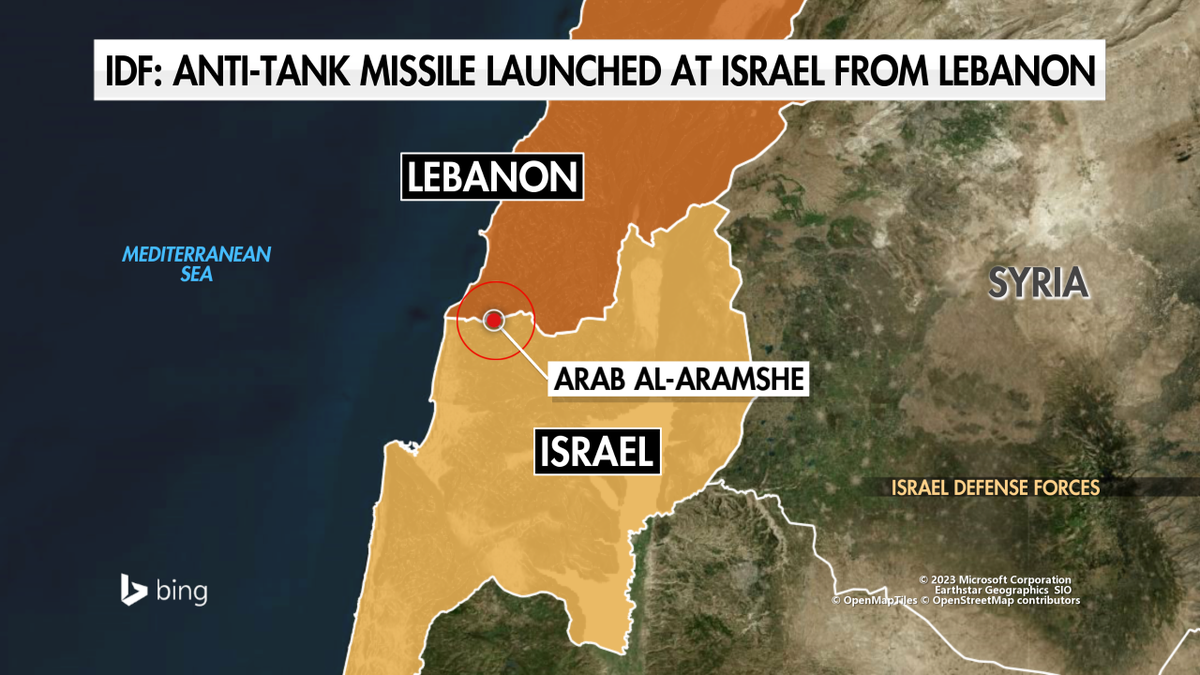
A direct hit from a heavy rocket launched from Lebanon just turned a residential building in northern Israel into a skeleton of charred concrete and twisted metal. It’s not just one building. This is the reality of a border that’s been bleeding for months, yet the world often looks away until the smoke gets too thick to ignore. If you’re trying to understand why this specific escalation matters more than the daily back-and-forth, you have to look at the sheer precision and weight of the ordnance now being used.
The sirens in the Galilee aren't just background noise anymore. They’re the sound of a deepening war that’s displacing tens of thousands of people on both sides. When a rocket hits a multi-story structure, it doesn’t just break windows. It shatters the sense of security for an entire city. This latest strike proves that the "buffer zone" everyone talks about is effectively gone.
The Reality of the Northern Front
We often hear about "exchanges of fire," but that’s a sanitized term for what’s actually happening on the ground. Hezbollah has moved from launching simple Katyusha rockets to using Al-Mas f-guided missiles and Burkan rockets with massive warheads. When one of these hits a building, the thermal effect is devastating. Fires start instantly.
Local fire crews in places like Kiryat Shmona and Metula are working under constant threat of "double-tap" strikes—where a second rocket is fired at the same spot to hit first responders. It’s a brutal tactic. Honestly, it’s a miracle the death tolls aren't higher, given the frequency of these attacks. The Iron Dome is world-class, but it’s not a magic shield. It struggles with low-altitude drones and short-range heavy mortars that have very little flight time.
The displacement is the quiet tragedy here. About 60,000 Israelis have been out of their homes for over a year. On the Lebanese side, the numbers are even higher. You’ve got entire ghost towns. Farmers can’t reach their orchards. Businesses are shuttered. This isn’t a temporary skirmish. It’s a slow-motion collapse of civilian life along the Blue Line.
Why the Iron Dome Isn't Enough Anymore
People ask why a sophisticated system like the Iron Dome lets these rockets through. The math is simple and terrifying. If you fire enough projectiles at once, you saturate the system. But more importantly, the topography of northern Israel—the hills and valleys—allows low-flying drones to hide from radar until they’re right on top of their target.
- Short flight times: Some rockets are fired from just a few kilometers away. You have maybe 15 seconds to get to a shelter.
- Topographical interference: Mountains block radar line-of-sight.
- Heavy payloads: New Iranian-designed missiles used by Hezbollah carry hundreds of kilograms of explosives. They don't need a direct hit to bring down a house.
If you’re living in a northern town, your life is dictated by the "Red Color" alert. You don't go to the shower without planning your exit route. You don't let your kids play in the yard. The psychological toll is just as heavy as the physical destruction of the buildings.
The Geopolitical Stakes are Sky High
This isn't just about a border dispute. It’s a proxy war with global implications. Iran supports Hezbollah with a sophisticated supply chain that runs through Syria. Israel, meanwhile, is trying to push Hezbollah forces back north of the Litani River, as per UN Resolution 1701. That resolution has been a dead letter for years.
The United States and France are trying to broker a diplomatic solution, but let’s be real. Neither side wants to back down first. For Israel, returning residents to the north is a political necessity. For Hezbollah, maintaining a "support front" for Gaza is a core part of their identity.
The risk of a full-scale ground invasion of Lebanon grows with every building that burns. If a rocket kills a large number of civilians in a single strike, the Israeli government won't have a choice. They’ll have to move in. That means a regional war that could pull in the entire Middle East.
Practical Safety and Observation
If you’re following this conflict, stop looking at just the headlines. Look at the types of weapons being used. Watch the satellite imagery of the fires. Organizations like the Alma Research and Education Center provide deep dives into the specific units operating in southern Lebanon. They track the Radwan Force, Hezbollah’s elite commandos, who are the real players in this escalation.
For those in the region, the advice is grim but necessary.
- Hardened rooms are mandatory: If your home doesn't have a Mamad (reinforced room), you need to be in a public shelter.
- Stockpiling is basic sense: Water, batteries, and non-perishables for at least 72 hours.
- Information hygiene: Don't share the exact locations of rocket impacts on social media. It helps the attackers correct their aim for the next round.
The smoke over the Galilee isn't going away anytime soon. It’s a stark reminder that peace is a fragile thing, easily shattered by a single piece of flying metal. Keep your eyes on the diplomacy, but prepare for the reality that the situation on the ground is moving much faster than the politicians. Stay informed by following local reporters who are actually standing in the rubble, not just those sitting in studios in Tel Aviv or Beirut.