The press release was predictable. The UK Ministry of Defence is deploying autonomous underwater vehicles (AUVs) to the Strait of Hormuz to "counter the mining threat." It sounds like progress. It looks like a high-tech solution to a primitive problem. It is, in reality, a multi-million-pound exercise in digital vanity that ignores the basic physics of naval warfare and the brutal reality of the Persian Gulf.
We are being told that these sleek, yellow torpedo-shaped drones will "ensure the free flow of global trade" by mapping the seabed and identifying Iranian-laid mines. This is a fairy tale for taxpayers. The Royal Navy is attempting to solve a kinetic, high-stakes geopolitical standoff with the maritime equivalent of a Roomba. It won't work, and the reasons why are exactly what the defense contractors aren't telling the Cabinet.
The False Promise of Autonomous Mine Hunting
The "lazy consensus" in naval circles is that we can simply replace the aging Sandown and Hunt-class mine countermeasures (MCM) vessels with a "system of systems." The idea is that you keep the expensive mother ship and the human crew out of the danger zone while drones do the dirty work.
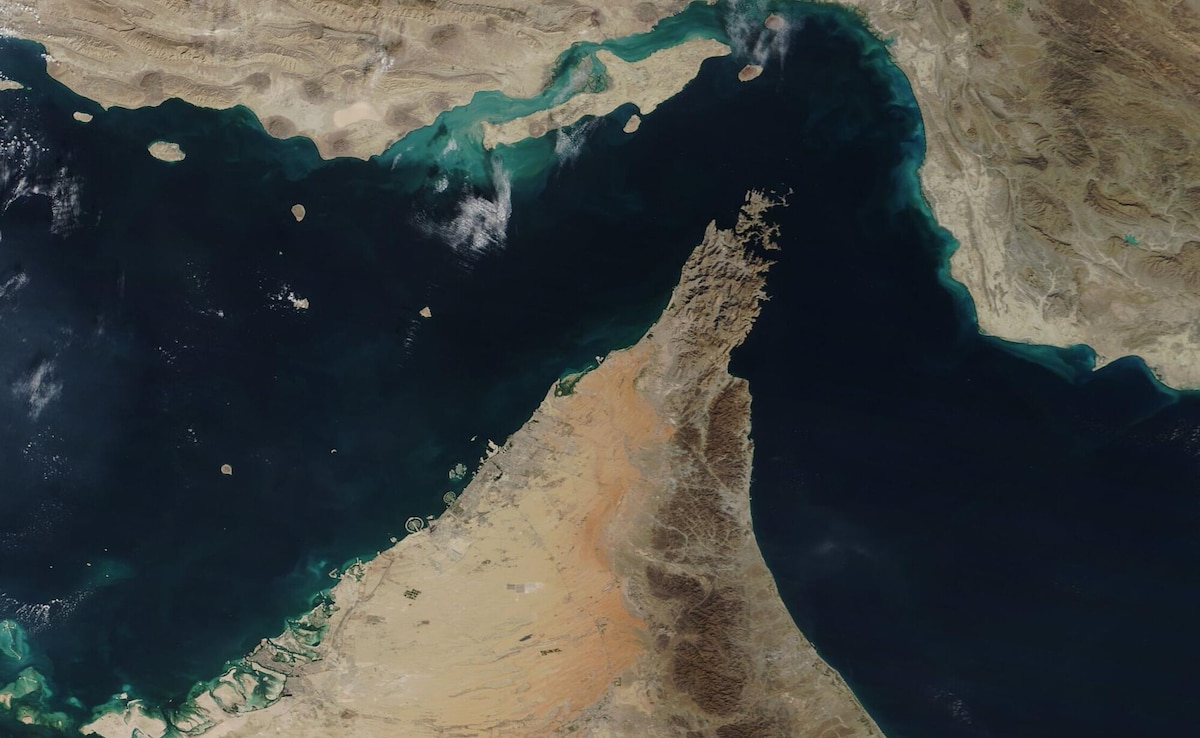
Here is the problem: the Strait of Hormuz is not a calm, clear swimming pool. It is one of the most cluttered, acoustically noisy, and hydrographically complex bodies of water on Earth. It is a shallow, narrow bottleneck with shifting sands, intense thermal layers, and a seafloor littered with decades of junk, shipwrecks, and discarded containers.
When you drop a $5 million AUV into that environment, you aren't "securing the lanes." You are playing a high-stakes game of "Where's Waldo" against an adversary—the Islamic Revolutionary Guard Corps (IRGC)—who knows every rock on that seabed.
Sonar is Not a Magic Wand
Standard MCM drones rely on Side-Scan Sonar (SSS) or Synthetic Aperture Sonar (SAS). In theory, these systems create a high-resolution map of the bottom. In practice, the "probability of detection" drops through the floor the moment the environment gets messy.
- The False Alarm Rate (FAR): In a cluttered environment like the Strait, an AUV will flag every piece of scrap metal and every strangely shaped rock as a potential Mine-Like Object (MLO).
- The Verification Bottleneck: A drone can find an object, but it struggles to tell you if it’s a 1970s Soviet-era contact mine or an old oil drum.
- The Data Latency: Most of these "autonomous" systems still require the drone to be recovered so its data can be analyzed by a human operator. In a live conflict, waiting six hours for a data dump is a lifetime. By the time you confirm the mine, the tanker has already hit it.
I have watched teams spend weeks trying to clear a single square kilometer of "dirty" seabed in exercises. In the Strait of Hormuz, we are talking about thousands of square kilometers. The math doesn't add up. We are buying a scalpel to clear a forest.
The Asymmetry Trap
The IRGC doesn't need to match the UK’s technology. They just need to make the UK’s technology too expensive and slow to matter.
A sea mine is a remarkably cheap piece of 19th-century technology. A basic moored contact mine can cost as little as $2,000. It requires no electronics and no batteries. It just sits there, waiting for a hull to brush against it.
To counter that $2,000 mine, the UK is deploying a suite of assets—RFA Cardigan Bay, specialized dive teams, and autonomous platforms—that cost tens of millions to operate. This is the definition of a losing strategy. We are spending a fortune to negate a threat that costs the enemy nothing to replenish.
Worse, drones are remarkably easy to spoof. If I’m an Iranian commander, I don't just lay mines. I lay "decoys"—hollow metal spheres that look exactly like mines to a sonar sensor. I can drop 500 decoys for the price of one British drone. Each decoy forces the Royal Navy to stop, deploy a Clearance Diver or an Identification Drone, and waste hours "neutralizing" a piece of trash.
While our drones are busy chasing ghosts, the real mines remain active. The IRGC understands this. We, apparently, do not.
The Myth of Stand-Off Safety
The big selling point for these drones is "keeping the sailor out of the minefield." It’s a noble goal, but it’s tactically flawed.
By moving the sensors away from the ship, you lose the immediate tactical intuition of an experienced MCM officer. Mine hunting is as much an art as it is a science. It requires a "feel" for the environment that an algorithm currently cannot replicate.
Furthermore, the "mother ship" that carries these drones—whether it’s a dedicated MCMV or a modular platform like the Type 26 frigate—is still a massive, high-value target. If you are close enough to deploy short-range AUVs, you are close enough to be hit by an Iranian Silkworm anti-ship missile or swarmed by fast-attack craft.
The idea that we can sit safely at a distance and "sustain" trade via remote control is a fantasy. If the Strait is mined, trade stops. Insurance rates for tankers will skyrocket to the point of being prohibitive the moment the first "possibility" of a mine is reported. No drone program, no matter how "cutting-edge" the brochures claim it is, will lower those insurance premiums until the path is 100% clear. And 100% clarity is something a drone cannot provide in a contested environment.
The Environmental Blind Spot
Let’s talk about the water itself. The Strait of Hormuz has a complex "salt wedge" and intense thermoclines (layers of water with different temperatures). These layers bend sonar waves.
Imagine trying to look through a glass of water that has oil floating on top and salt at the bottom—everything is distorted. An AUV operating below a thermocline might be completely blind to a mine floating just above it.
If we rely on these autonomous systems, we are essentially betting the lives of merchant sailors on the hope that the Persian Gulf's salinity remains uniform. It never is.
What No One Wants to Admit: We Need the Divers
The dirty secret of mine warfare is that, eventually, someone has to go down there.
Whether it’s to place a plastic explosive charge or to manually identify a target that the sonar couldn't resolve, humans remain the gold standard. But we are underfunding the very human-centric capabilities that actually work.
We are obsessed with the "unmanned" because it looks good in a budget briefing and avoids the political risk of "boots on the ground" (or fins in the water). But in the Strait of Hormuz, an elite Clearance Diver is worth more than a dozen autonomous drones. The diver has judgment. The diver can adapt. The diver isn't fooled by a decoy made of a car tire and some scrap metal.
The Real Question We Should Be Asking
Instead of asking, "How many drones do we need to clear the Strait?" we should be asking, "Why are we pretending we can clear the Strait at all?"
If the IRGC decides to close the Strait of Hormuz with mines, they won't just drop ten. They will drop hundreds, backed by land-based missiles and air support. In that scenario, a few British AUVs are irrelevant. They will be hunted, jammed, or simply overwhelmed by the scale of the task.
The deployment of these drones isn't a military strategy; it's a signaling exercise. It’s the UK trying to prove it still has "global reach" without actually committing the massive naval presence required to truly secure such a volatile waterway.
The Cost of the Tech Fetish
Every pound spent on these shiny new AUVs is a pound taken away from hull maintenance, sailor retention, and the boring, "low-tech" work of maritime security.
We have seen this play out before. The US Navy’s Littoral Combat Ship (LCS) was supposed to be the "game-changer" for mine warfare with its modular drone mission packages. After billions of dollars and a decade of failures, the mission packages were largely scrapped or delayed, and the ships are being retired early because they can't survive in a real fight.
The UK is walking into the same trap. We are prioritizing the process of innovation over the outcome of security.
A Brutal Truth for the Admiralty
If you want to counter mines in the Strait of Hormuz, stop looking for a digital silver bullet.
- Accept the Attrition: You will lose ships. You will lose sailors. If you aren't prepared for that, don't enter the Strait.
- Double Down on Divers: Technology should assist the human, not replace them. We need more specialized divers and fewer software engineers.
- Focus on the Source: The only effective way to "clear" a minefield in a conflict is to prevent it from being laid. That means sinking the minelayers before they leave port, not hunting for individual "needles" in a "haystack" the size of a country.
The current plan to deploy drones is a placebo. it makes the public feel like we are "doing something" while leaving the actual problem untouched. It is a dangerous distraction that treats naval warfare like a Silicon Valley product launch.
The Strait of Hormuz doesn't care about your autonomy algorithms. The sea is indifferent to your "digital transformation." A $2,000 piece of rusted iron from the 1970s is currently winning the tech war, and no amount of yellow plastic drones will change that.
Stop buying toys and start building a Navy that can actually fight.