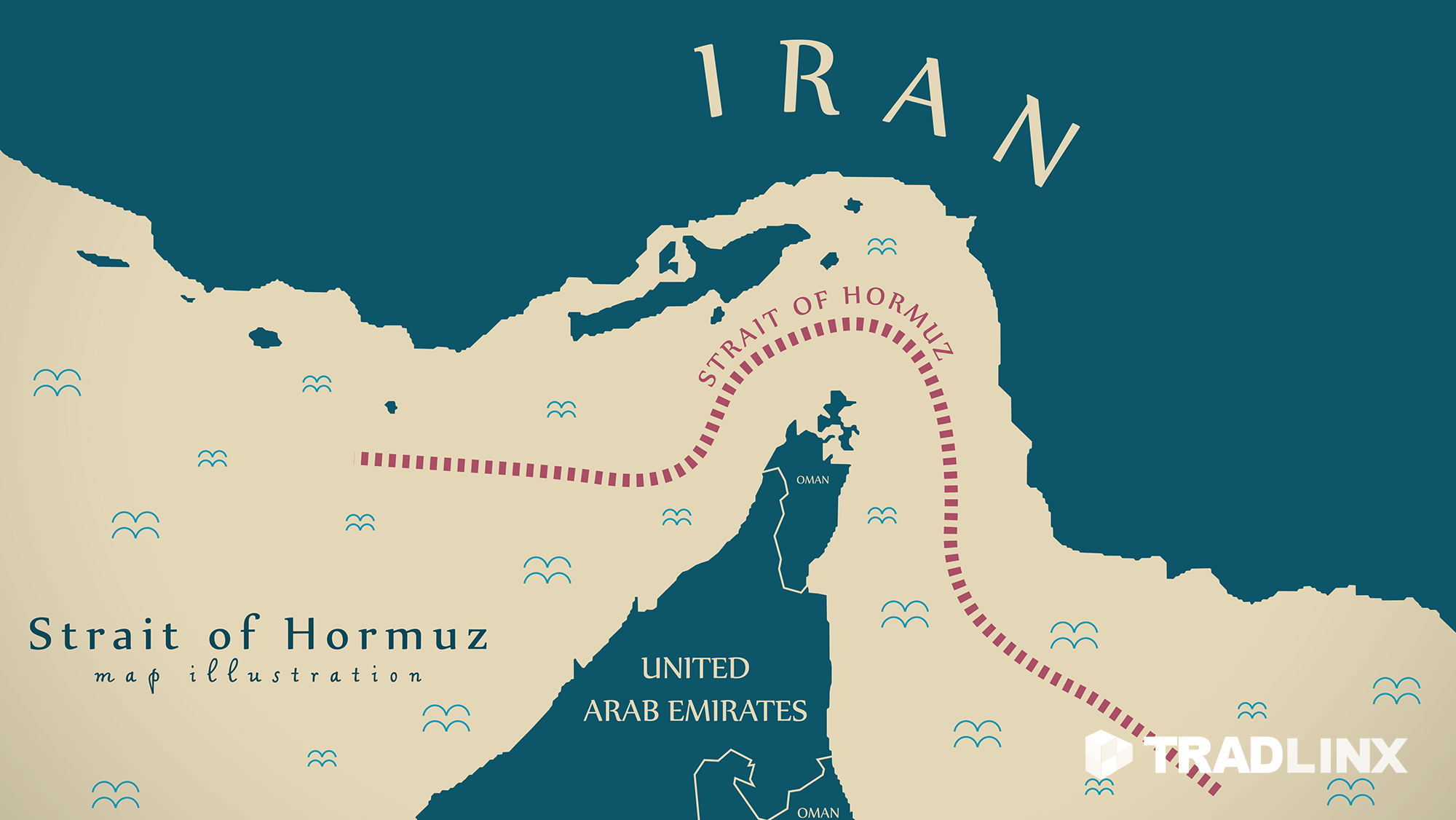
The world's most important oil chokepoint isn't just a geographical feature. It's the jugular vein of the global economy. If the Strait of Hormuz closes, even for a few days, you're not just looking at a spike in gas prices. You're looking at a systemic collapse of supply chains that will take months to untangle. Most analysts talk about "market volatility" as if it’s some abstract concept. It isn't. It’s a ship carrying two million barrels of crude sitting idle while a refinery in Asia runs dry and a plastic manufacturer in Ohio shuts down its assembly line.
The math is simple and terrifying. About 20% of the world's total petroleum liquids consumption passes through this narrow stretch of water between Oman and Iran. We're talking roughly 21 million barrels per day. There is no "Plan B" that can handle that volume. Pipelines through Saudi Arabia and the UAE exist, but they can only bypass a fraction of that flow. If the gate shuts, the world loses a fifth of its oil supply instantly.
The Myth of the Quick Recovery
People think that once the Strait reopens, things go back to normal. That’s a fantasy. The shipping industry operates on a razor-thin schedule. When you block a primary artery, you create a massive backlog of tankers. These vessels can’t just "speed up" to make up for lost time. They have specific docking windows at ports. If a tanker is two weeks late, it misses its slot. That creates a pileup at the offloading terminal, which then delays the next ship, and the next.
This is what experts call the "ripple effect." Think of it like a multi-car pileup on a highway. Even after the wreckage is cleared, the traffic jam lasts for hours. In the case of global energy, that "traffic jam" translates to weeks of empty storage tanks and months of price instability. According to data from the U.S. Energy Information Administration (EIA), the Strait is the world's most important chokepoint because there are simply no realistic alternatives for the sheer volume of high-sulfur crude coming out of the Persian Gulf.
Why Pipelines Won't Save Us
You'll hear politicians point to the East-West Pipeline in Saudi Arabia or the Abu Dhabi Crude Oil Pipeline. Sure, they help. But let’s look at the numbers. The total capacity of these bypass routes is about 7 to 8 million barrels per day. Even if they run at 100% efficiency—which they never do—you're still left with a 13 million barrel per day deficit.
- The Saudi East-West Pipeline can move about 5 million barrels per day.
- The Habshan-Fujairah pipeline in the UAE adds another 1.5 million.
- Iraq has some northern routes, but they're often plagued by political instability and technical limits.
That leaves a massive gap. Markets hate gaps. When the physical oil isn't moving, paper traders go into a frenzy. You’d likely see Brent crude jump by $30 or $50 a barrel in a single afternoon. That cost isn't absorbed by oil companies. It’s passed directly to you at the pump and in the price of every consumer good delivered by a truck.
The LNG Crisis No One Mentions
Everyone focuses on oil, but the real nightmare might be Liquefied Natural Gas (LNG). Qatar is one of the world’s top LNG exporters, and every single drop of their gas has to go through the Strait. Unlike oil, which can be stored in massive strategic reserves like the U.S. SPR, LNG is much harder to stockpile long-term.
Power plants in Japan, South Korea, and parts of Europe rely on a steady "conveyor belt" of LNG tankers. If that belt stops, lights go out. You can’t just swap an LNG-reliant power grid to coal or solar overnight. The dependency is structural. A closure doesn't just mean expensive gas; it means potential energy rationing in major industrial economies.
The Insurance Nightmare
Even if the Strait isn't physically blocked by a sunken ship or a minefield, the mere threat of conflict sends insurance premiums into the stratosphere. Lloyd’s of London and other major insurers designate the area as a "Listed Area." If tensions escalate, "War Risk" premiums kick in.
I’ve seen cases where the cost to insure a single voyage increases by hundreds of thousands of dollars in 24 hours. Shipowners aren't charities. If it becomes too expensive or too dangerous to insure a hull, they won't sail. They’ll drop anchor in the Gulf of Oman and wait. This creates a de facto closure even if the water is technically open. The physical flow of energy is secondary to the financial flow of risk management.
Strategic Reserves Are a Band-Aid
The U.S. and other IEA members keep Strategic Petroleum Reserves (SPR) for exactly this reason. But the SPR is designed for supply disruptions, not a total blockade of the world’s main energy hub. Releasing 1 million barrels a day from the SPR sounds like a lot until you realize the Hormuz deficit is 20 times that.
Using the SPR during a Hormuz closure is like using a squirt gun to put out a house fire. It might keep the prices from hitting $300 a barrel, but it won't stop the economic contraction. We saw how sensitive the markets were during the 1973 oil embargo. Today’s global economy is far more interconnected and far more reliant on "just-in-time" delivery. We don't have the "fat" in the system we used to have.
Real World Consequences for Your Wallet
If you think this is just a Middle East problem, you’re wrong. The price of oil is global. If the supply from the Gulf drops, refineries in New Jersey or California have to bid against refineries in Shanghai for the remaining oil from West Africa or the North Sea. Prices go up everywhere simultaneously.
Basically, you’ll see the impact in three stages:
- Immediate: Gas prices at your local station jump 20-40% within 48 hours.
- Intermediate: Airfare and shipping surcharges make travel and online shopping significantly more expensive.
- Long-term: Plastic production, fertilizer manufacturing, and chemical industries face massive overhead, leading to "cost-push" inflation on everything from groceries to electronics.
Moving Forward and Protecting Interests
It's clear that the global energy architecture is dangerously fragile. Relying on a 21-mile wide channel for the survival of the global economy is a gamble we've been losing for decades. To mitigate this risk, diversification isn't just a buzzword; it's a survival strategy.
Governments need to stop treating strategic reserves as political tools to lower gas prices before elections and start treating them as genuine emergency buffers. For the average person, the best move is to reduce personal exposure to oil price shocks. This means looking at energy efficiency not as an environmental hobby, but as financial hedging. Whether it’s switching to electric heat pumps or looking at EVs, the goal is to decouple your personal "bottom line" from the whims of a chokepoint thousands of miles away. The reality is that as long as we are tethered to Gulf crude, our economy remains a hostage to geography.
Check your local energy providers for "fixed-rate" contracts if they're available. These can protect you from the sudden monthly spikes that occur when global headlines turn sour. Diversify your own dependencies before the Strait forces your hand.