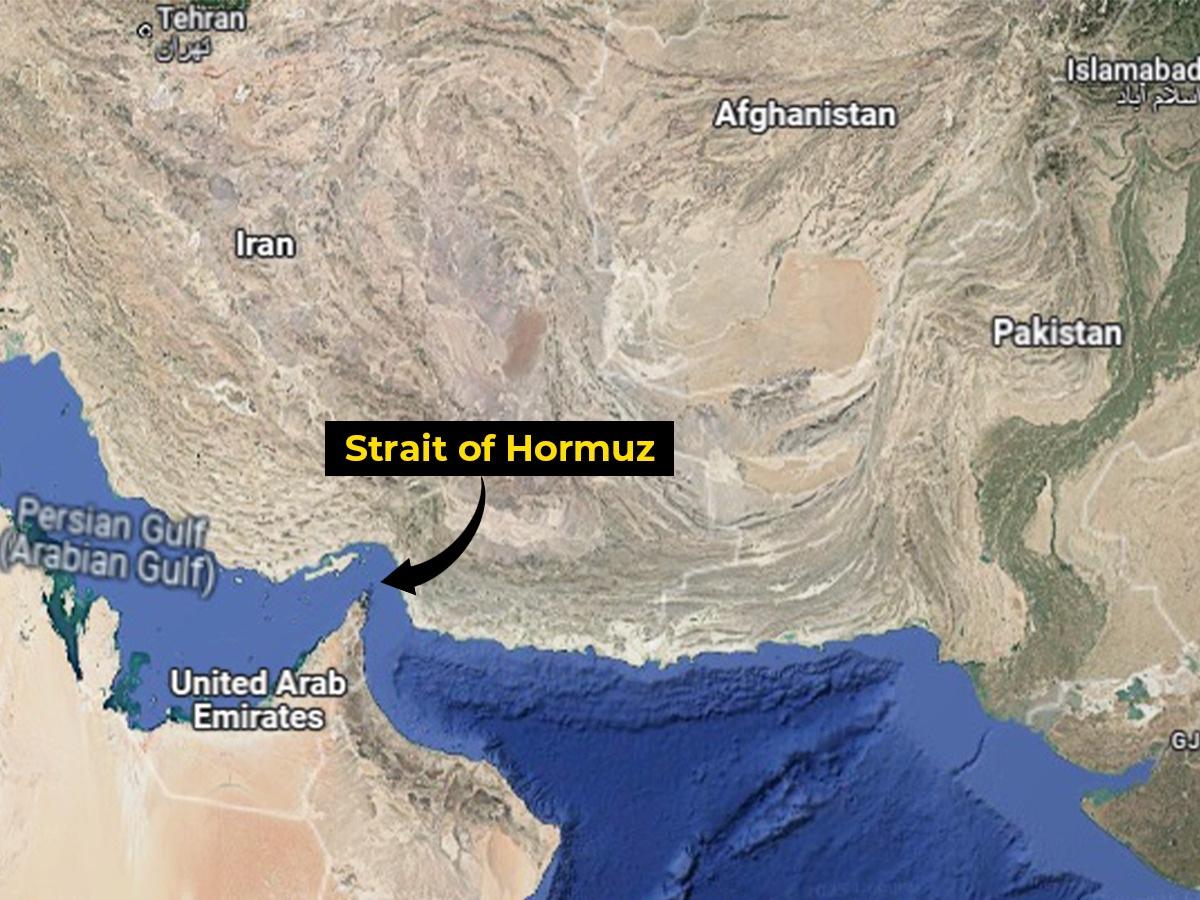
The global energy market currently functions under a regime of artificial scarcity dictated by the closure of the Strait of Hormuz. When President Trump characterizes the waterway as a potential "gusher" that the United States can open "with a little more time," he is describing a shift from a defensive maritime posture to an offensive resource-capture model. This strategy assumes that the physical control of the world’s most critical maritime chokepoint—through which roughly 20% of global oil consumption formerly flowed—can be converted into a direct economic windfall.
To evaluate the validity of this "gusher" thesis, one must deconstruct the mechanics of the blockade, the cost of breaking it, and the secondary market effects of a forced reopening.
The Three Pillars of the Hormuz Blockade
The current paralysis in the Persian Gulf is not merely a result of naval presence but a combination of three distinct deterrent factors that any "opening" operation must simultaneously neutralize:
- Kinetic Sea Denial: Iran’s deployment of the Shahed-136 and its derivatives provides a low-cost, high-precision mass capability. These "suicide drones" function as a distributed battery, allowing Tehran to target tankers at a cost-ratio heavily skewed against traditional naval defense systems.
- Insurance Parity: As of late March 2026, shipping insurance premiums for the Strait have increased by 400% to 600%. Even if the U.S. Navy provides physical escorts, the commercial viability of transit remains underwater unless the U.S. government fully underwrites the risk through the Terrorism Risk Insurance Act (TRIA).
- The Force Majeure Spiral: Major producers, including Saudi Aramco and QatarEnergy, have already declared force majeure. Reopening the Strait does not instantly restore production; it merely begins the multi-week process of clearing the backlog of stranded vessels and restarting shut-in wells in southern Iraq and the Safaniya offshore fields.
The Cost Function of a "Gusher" Reopening
The "gusher" refers to the sudden reintroduction of approximately 15 million barrels per day (bpd) of curtailed supply back into the global market. However, the price of "opening" the Strait is measured in more than just military sorties. The strategic logic follows a specific cost function:
$$C_{total} = C_{kinetic} + C_{underwriting} + C_{escalation}$$
Where:
- $C_{kinetic}$ represents the operational expenditure of neutralizing thousands of Iranian coastal assets and mine-laying vessels.
- $C_{underwriting}$ is the fiscal liability assumed by the U.S. Treasury to guarantee the hulls of private tankers.
- $C_{escalation}$ is the risk premium added to oil prices if Iran responds by targeting the energy infrastructure of U.S. allies, such as desalination plants or refineries in the UAE and Saudi Arabia.
Trump’s assertion that the U.S. can "take the oil" suggests a transition from simple escorting to the seizure of Iranian export terminals like Kharg Island. Kharg handles nearly 90% of Iran’s exports. By occupying or controlling these nodes, the U.S. could theoretically redirect Iranian flows to pay for the cost of the military campaign, effectively treating the conflict as a self-funding security operation.
Strategic Asymmetry: Why the U.S. Gains from High Prices
A critical nuance missed in standard reporting is the divergent impact of $110-per-barrel oil. While high prices act as a regressive tax on U.S. consumers, the U.S. position as the world’s largest oil producer creates a paradoxical benefit.
The U.S. domestic energy sector currently operates with a massive surplus. High global prices driven by the Hormuz closure incentivize maximum domestic "drill, baby, drill" activity. If the Strait remains closed, the U.S. captures market share in Europe and Asia that was previously held by Persian Gulf producers. If the Strait is opened via U.S. force, the U.S. claims the "liberator's dividend" by dictating the terms of the flow.
The Bottleneck of Alternative Routes
Proposals to bypass the Strait via pipelines through Turkey or Saudi Arabia face a hard mathematical ceiling.
- Pipeline Capacity: Current viable bypass infrastructure can only handle approximately 6.5 million bpd.
- The Deficit: This leaves a shortfall of over 11 million bpd compared to pre-war levels.
- Logistics of Rerouting: Rerouting ships around the Cape of Good Hope adds roughly 14 to 20 days to transit times, effectively reducing the world's available tanker capacity by 30% through sheer time-delay.
Tactical Recommendation for Market Participants
The "gusher" is a high-variance event. If the U.S. moves to "take the oil" within the next two to three weeks, as indicated by the President's recent deadlines, we will likely see a "volatility peak" followed by a rapid price collapse.
- Hedge Against the Reopening: Long positions in Brent and WTI are currently crowded. The strategic play is to monitor for the commencement of U.S. "risk insurance" escorts. This will be the leading indicator that the blockade is being treated as a solved technical problem rather than a political one.
- Monitor the SPR: The release of 172 million barrels from the Strategic Petroleum Reserve is a bridge to the "gusher." If the release rate accelerates, it signals a high-confidence move to clear the Strait within a 30-day window.
- Evaluate Allied Participation: The refusal of France, Germany, and the UK to join the maritime mission increases the likelihood of a unilateral U.S. move. Unilateralism allows the U.S. to claim the "fortune" the President mentioned without sharing the subsequent trade concessions or oil-capture rights with NATO allies.
The strategic end-state is not merely the restoration of the status quo. It is the permanent alteration of Persian Gulf power dynamics, where the U.S. military presence evolves from a "security guarantor" to an "active manager" of the flow.
Move capital toward U.S.-based midstream assets that stand to benefit from increased export demand regardless of the Strait's status. If the "gusher" opens, the volume will overwhelm current global shipping capacity, making tankers and storage the primary value captures. If the Strait remains closed, the U.S. export infrastructure becomes the only viable source for the "desperate" nations currently distanced from the military operation.