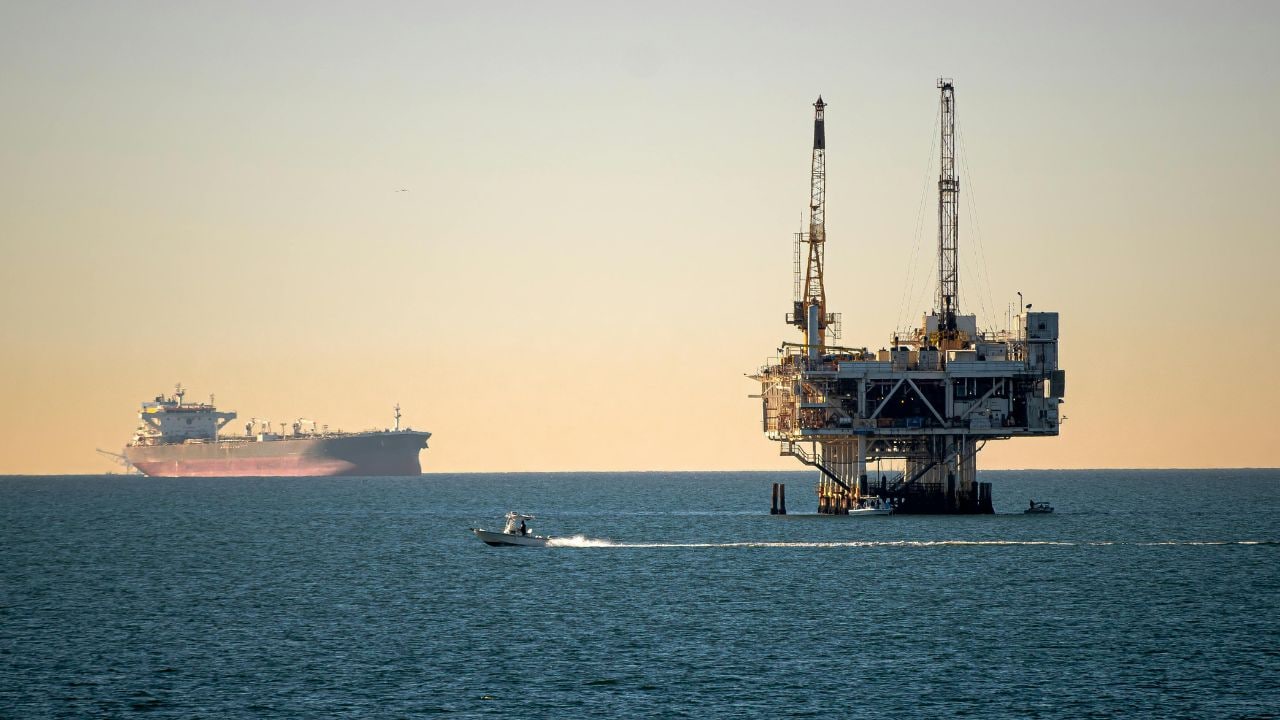
The United States Treasury’s decision to permit the entry of Russian crude oil already in transit—mimicking a recent policy shift by India—represents a prioritization of global price stability over the absolute enforcement of the $60 price cap. This maneuver is not a retreat from the sanctions regime but a tactical recalibration forced by the physical constraints of the Strait of Hormuz. When maritime chokepoints face credible threats of closure or significant disruption, the global oil supply chain transitions from a "just-in-time" model to a "survival-at-sea" model. In this environment, any volume of oil already loaded onto tankers represents a critical buffer against a systemic price shock.
The Mechanics of the Transit Waiver
The logic of allowing "in-transit" cargo to bypass stricter enforcement mechanisms rests on three operational pillars:
- Clearing the Floating Storage Backlog: Tankers that have already departed their ports of origin represent locked capital and fixed supply. Forcing these vessels to turn back or remain in legal limbo creates a "floating storage" crisis. This reduces the global availability of active hulls, driving up Worldscale shipping rates and indirectly inflating the landed cost of all crude, not just Russian grades.
- Mitigating the Hormuz Risk Premium: The Strait of Hormuz handles approximately 20-30% of total global oil consumption. Any disruption there necessitates the immediate availability of Atlantic Basin or Ural-grade alternatives to prevent a parabolic move in Brent futures. By permitting Russian oil already on the water to reach its destination, the US Treasury provides a localized supply vent.
- Jurisdictional Realism: Once oil is on a vessel in international waters, the cost of enforcement—interdiction or secondary sanctions on the insurers—rises exponentially. The US is opting for a "path of least resistance" that maintains the optics of the price cap for future sales while ensuring current barrels reach refineries.
The Cost Function of Energy Security vs. Geopolitical Leverage
Sanctions are inherently a trade-off between the desire to atrophy a rival’s revenue and the need to protect domestic economic health. This tension is expressed through a specific cost function where the "Pain Threshold" ($P$) is defined by the intersection of the "Sanction Efficacy" ($E$) and "Domestic Inflation Sensitivity" ($I$).
$$P = \int (E - I) dt$$
When $I$ (Inflation Sensitivity) spikes due to a potential blockade in the Middle East, the value of $E$ must be artificially lowered to keep $P$ manageable. This explains the specific timing of the US permit. The administration has calculated that the political cost of a gas price surge in an election year far outweighs the marginal benefit of blocking a few million barrels of Russian Urals that have already been paid for or financed via non-Western banks.
Strategic Divergence: The India-US Alignment
India’s earlier move to accept Russian tankers that were previously turned away served as the blueprint for this American policy shift. The alignment of these two disparate actors highlights a rare moment of "Convergence of Necessity."
- India’s Position: As a massive net importer, India’s primary concern is the "crush spread" of its refineries. Russian crude, even with shrinking discounts, remains the most viable feedstock to keep their domestic economy shielded from Middle Eastern volatility.
- The US Position: While the US is a net exporter of total petroleum, it is a massive importer of specific heavy grades and remains tethered to global Brent pricing. By following India’s lead, the US prevents a scenario where Russian oil is diverted exclusively to "dark fleet" operators, which would further erode Western visibility into global flows.
This shift signals a transition from "Total Isolation" to "Managed Flow." The goal is no longer to stop the oil from moving, but to ensure it moves through channels that do not trigger a global recession.
Logistics of the "Already in Transit" Clause
Defining "already in transit" is the primary technical challenge for compliance officers. The Treasury defines this based on the "Date of Loading" on the Bill of Lading. This creates a specific window—typically 30 to 45 days—where the oil is "clean" for discharge regardless of shifting geopolitical winds.
The second limitation of this policy is the "Hedge Window." Refiners who bought this oil under the assumption of legality must be allowed to settle their hedges. If the US were to abruptly block these shipments, it would trigger a wave of defaults in the commodity derivatives market. The systemic risk to the financial architecture of energy trading is a hidden variable that the Treasury is desperate to avoid.
The Hormuz Bottleneck and Supply Chain Friction
The threat to the Strait of Hormuz does more than just threaten volume; it increases "Friction Costs."
- Insurance Surcharges: War risk premiums for tankers in the Persian Gulf can jump 500% in a 24-hour period.
- Re-Routing Realities: Avoiding the strait or navigating it under heightened security adds days to the voyage. This effectively reduces the "Velocity of Oil"—the speed at which a barrel moves from the wellhead to the pump.
- Cargo Substitution: Refineries are calibrated for specific API gravity and sulfur content. If Middle Eastern "Arab Light" is blocked, Russian "Urals" (a medium-sour grade) is one of the few technically compatible substitutes available in volume.
By permitting Russian transit, the US is essentially buying an insurance policy against a total stop in Middle Eastern exports. It is a cynical but necessary acknowledgment that in a global energy crisis, there are no "clean" barrels.
Structural Erosion of the Price Cap Mechanism
This waiver represents a significant, though perhaps temporary, erosion of the Price Cap’s integrity. When exemptions are granted based on external shocks (like the Hormuz disruption), it signals to the market that the cap is a "fair weather" tool.
The "Dark Fleet"—vessels operating outside of G7 insurance and shipping services—now accounts for an estimated 10-15% of the global tanker capacity. Every time the US or India softens its stance on transit, the incentive for shipowners to remain in the "compliant" fleet diminishes. They see that the rules are fluid, whereas the demand for energy is constant. This creates a structural bottleneck where the Western world loses more and more oversight of the global maritime trade.
Operational Recommendation for Global Energy Desks
Market participants must now price in a "Geopolitical Waiver Premium." The assumption that sanctions will tighten linearly is flawed. Instead, sanctions will likely follow a "Pulse Pattern": tightening when global inventories are high and loosening the moment a chokepoint like Hormuz or Bab el-Mandeb is threatened.
Strategic positioning should focus on:
- Time-Spread Volatility: Anticipate extreme volatility in the front-month contracts as transit waivers are announced or expired.
- Logistics Arbitrage: Prioritize entities with "in-transit" flexibility. The ability to pivot a cargo that is already on the water is now more valuable than a long-term supply contract.
- Physical Buffer Stocks: Increase onshore storage in non-conflict zones. The "Already in Transit" rule is the only legal protection currently offered against sudden policy shifts; therefore, maximizing the volume of oil currently on the water—effectively using the ocean as a warehouse—is the most logical hedge against both blockade and bureaucracy.
The final strategic play is to treat the US Treasury's enforcement not as a set of static laws, but as a dynamic feedback loop sensitive to the price at the pump. When the Strait of Hormuz is at risk, the "legal" status of a barrel of oil is secondary to its "physical" presence.