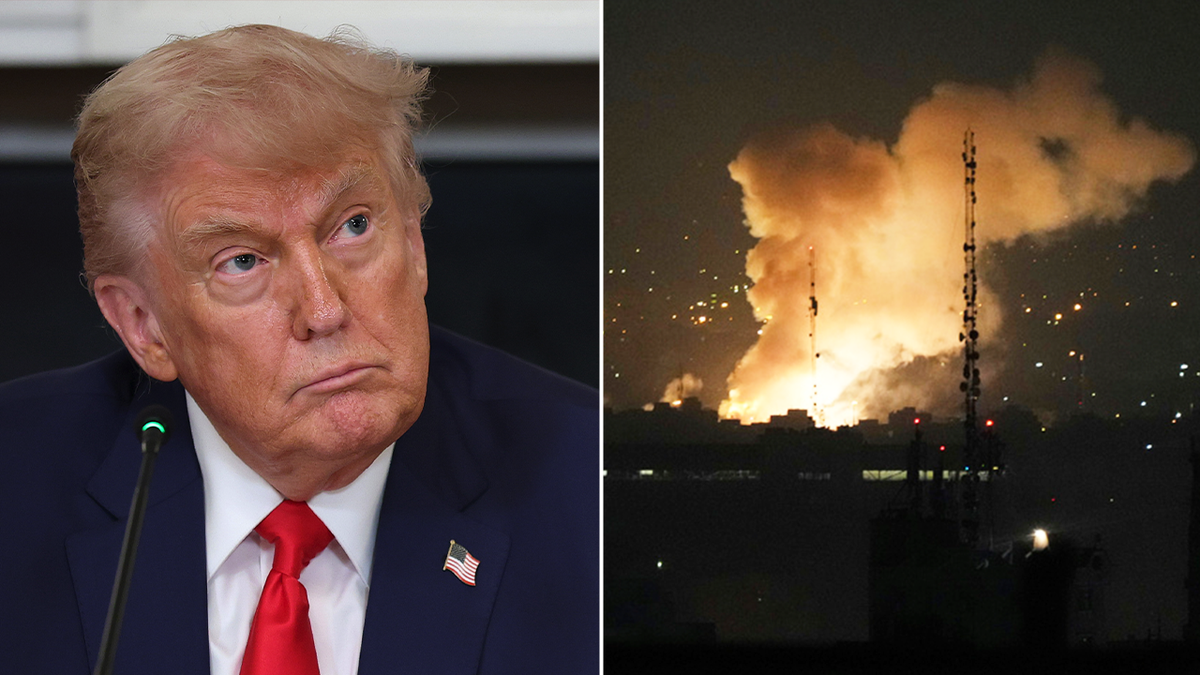
The sirens go off, the smoke plumes darken the Texas horizon, and the media playbook immediately shifts into its favorite gear: manufactured hysteria. Local news outlets scramble to use words like "catastrophe" and "unprecedented danger" while officials tell citizens to tape their windows shut and breathe through wet rags.
It is a theatrical performance designed to mask a boring industrial reality. For a different look, read: this related article.
If you live near the Gulf Coast, you are told that every flare-up is a brush with death. The competitor’s coverage focuses on the terror of the "shelter in place" order. They treat the refinery as a ticking time bomb managed by incompetent suits. They are wrong. These incidents, while visually jarring and structurally expensive, are often the system working exactly as it was designed to work.
The "lazy consensus" suggests that a refinery explosion is a failure of safety protocols. I’ve spent years analyzing the high-pressure architecture of downstream energy assets, and I can tell you the opposite is true. The explosion isn’t the failure; it’s the final, violent relief valve of a system that is built to sacrifice steel to save lives. Similar insight on this matter has been published by Reuters Business.
The Myth of the Zero-Risk Refinery
The public demands a world where volatile hydrocarbons are processed at $450^\circ\text{C}$ and $100$ atmospheres of pressure with zero kinetic output. That world does not exist.
When a unit at a refinery near Port Arthur or Corpus Christi goes "thermal," the media asks why it happened. The better question is why it doesn't happen every single day. We are currently operating some of the most complex chemical labyrinths on the planet using infrastructure that, in many cases, dates back to the Lyndon B. Miller era.
We’ve optimized these plants for "uptime" because the global economy screams if gasoline prices tick up three cents. You cannot demand record-breaking throughput and then act shocked when the laws of thermodynamics enforce themselves.
- Pressure Vessels: These are designed with specific failure points.
- Blast Walls: They don't protect the equipment; they redirect energy away from the control rooms.
- The Sacrifice: In modern engineering, we accept that the machine will occasionally destroy itself to prevent a vapor cloud from migrating into a residential neighborhood.
The "shelter in place" isn't a sign that the world is ending. It’s a legal buffer. It’s the cheapest insurance policy the city and the corporation can take out while they wait for the sensors to confirm what the engineers already know: the wind is blowing the particulate matter exactly where the models predicted it would.
Why "Shelter in Place" is Often Security Theater
Ask anyone who actually works the boards in a refinery what they think of a general "shelter in place" order for a three-mile radius. They’ll tell you it’s mostly about traffic control.
The biggest danger during a refinery event isn't the chemical plume—it’s the five thousand panicked residents jumping into SUVs and causing a massive pile-up on a two-lane highway, blocking emergency services.
- The Dilution Problem: By the time a localized explosion’s smoke reaches a house two miles away, the concentration of toxic particulates has usually dropped below the Threshold Limit Value (TLV) for short-term exposure.
- The VOC Obsession: Media reports love to mention Volatile Organic Compounds (VOCs). They rarely mention that your backyard charcoal grill or a busy highway intersection often produces higher localized concentrations of benzene than a dissipated plume from a refinery fire.
- The Window Myth: Duct-taping your windows does almost nothing for a chemical gas bypass, but it keeps you busy and stationary. A stationary population is a manageable population.
The industry insider knows the real threat isn't the fire you see on the news. The real threat is the "silent bypass"—the slow, steady leaks that don't make for good B-roll footage but actually impact long-term health. We focus on the big bang because it’s easy to film. We ignore the maintenance backlogs that cause them because looking at a spreadsheet isn't "breaking news."
The Financial Incentives of "Accidents"
Let’s talk about the money, because that’s where the real skeletons are buried.
When a refinery has an "event," the immediate reaction is to look at the stock price. Usually, it dips. Then, something interesting happens. The reduced capacity in the region tightens supply. Crack spreads—the difference between the price of crude oil and the petroleum products extracted from it—actually widen.
In a twisted bit of market logic, a refinery fire can sometimes be the most profitable thing to happen to the other five refineries on the coast.
"I've seen companies spend $50 million on a post-incident cleanup only to make $200 million in quarterly profit because the supply squeeze raised margins across their other assets."
This isn't a conspiracy; it's the byproduct of a lean-inventory manufacturing model. We have no slack in the system. When the Texas coast sneezes, the global energy market gets pneumonia. We have traded "safety margins" for "profit margins," and the public is complicit every time they demand cheaper fuel.
The Engineering Reality vs. The Political Narrative
Politicians love to stand in front of a smoking chimney and demand "stricter oversight." It wins votes. But more regulations often lead to "compliance theater" rather than actual safety.
Real safety is found in Mechanical Integrity (MI) programs. It’s in the unglamorous work of ultrasonic testing on a pipe elbow that hasn't been replaced since 1994.
- The Competitor's Take: "Government must step in to regulate these dangerous entities."
- The Insider's Reality: The government (EPA/OSHA) is often years behind the curve on the latest metallurgy. The best safety comes from the insurance companies. If an underwriter refuses to cover a hydrocracker unit, that unit gets fixed. The market regulates safety more efficiently than a bureaucrat with a clipboard ever will.
We need to stop pretending that we can "regulate" our way out of the inherent volatility of refining. If you want the benefits of a modern industrial society, you have to accept the statistical certainty of industrial accidents.
Dismantling the "People Also Ask" Delusions
"Is it safe to live near an oil refinery?"
Define safe. You are statistically more likely to die from a car accident on your way to work or from heart disease related to a sedentary lifestyle. But humans are bad at assessing risk. We fear the "big scary fire" and ignore the "slow boring risk." Living near a refinery is a trade-off: lower property taxes and high-paying local jobs vs. a 0.01% increase in lifetime respiratory risk. Most people take the deal and then complain about the terms.
"What chemicals are released during a refinery explosion?"
Mainly carbon soot, sulfur dioxide ($SO_2$), and various hydrocarbons. Is it "good" for you? No. Is it the "toxic death cloud" the headlines claim? Rarely. Most of it is consumed in the high-heat combustion of the initial blast. The black smoke looks terrifying, but it’s mostly unburnt carbon.
"Why do they happen so often in Texas?"
Because Texas actually builds things. You don't have refinery explosions in Vermont because Vermont doesn't provide the fuel that keeps the East Coast from freezing. The Texas coast is the engine room of the Western Hemisphere. Engines get hot. Sometimes they throw a rod.
The Uncomfortable Advice for the Modern Resident
If you actually want to be safe, stop buying duct tape and start reading the Risk Management Plan (RMP) that every facility is required to file.
Look at the "Worst Case Scenario" (WCS) data. Most of those scenarios involve a total vessel failure under specific weather conditions that occur less than 1% of the time. If you aren't in the immediate blast radius (the "kill zone"), your biggest risk is literally the panic of your neighbors.
The next time you see a headline about a Texas refinery explosion, don't look for the "shelter in place" instructions. Look at the unit that went down. If it’s a Fluid Catalytic Cracker (FCC), buy gas tonight, because the price is going up tomorrow.
Stop treating these events as moral failings of "Big Oil" and start seeing them for what they are: the high cost of maintaining a high-energy civilization on a budget. We are running a 21st-century economy on 20th-century iron, and we’re doing it with a workforce that is retiring faster than we can train replacements.
The miracle isn't that a refinery exploded today. The miracle is that the other 120 in the country didn't.
Go outside, breathe the air, and realize that the smoke on the horizon is just the sound of the world’s most complex machine clearing its throat. You aren't in danger; you're just a witness to the friction of reality.
If you're truly worried about the "toxic" environment, turn off the news. The adrenaline spike from their fear-mongering is doing more damage to your arteries than the $SO_2$ ever will.