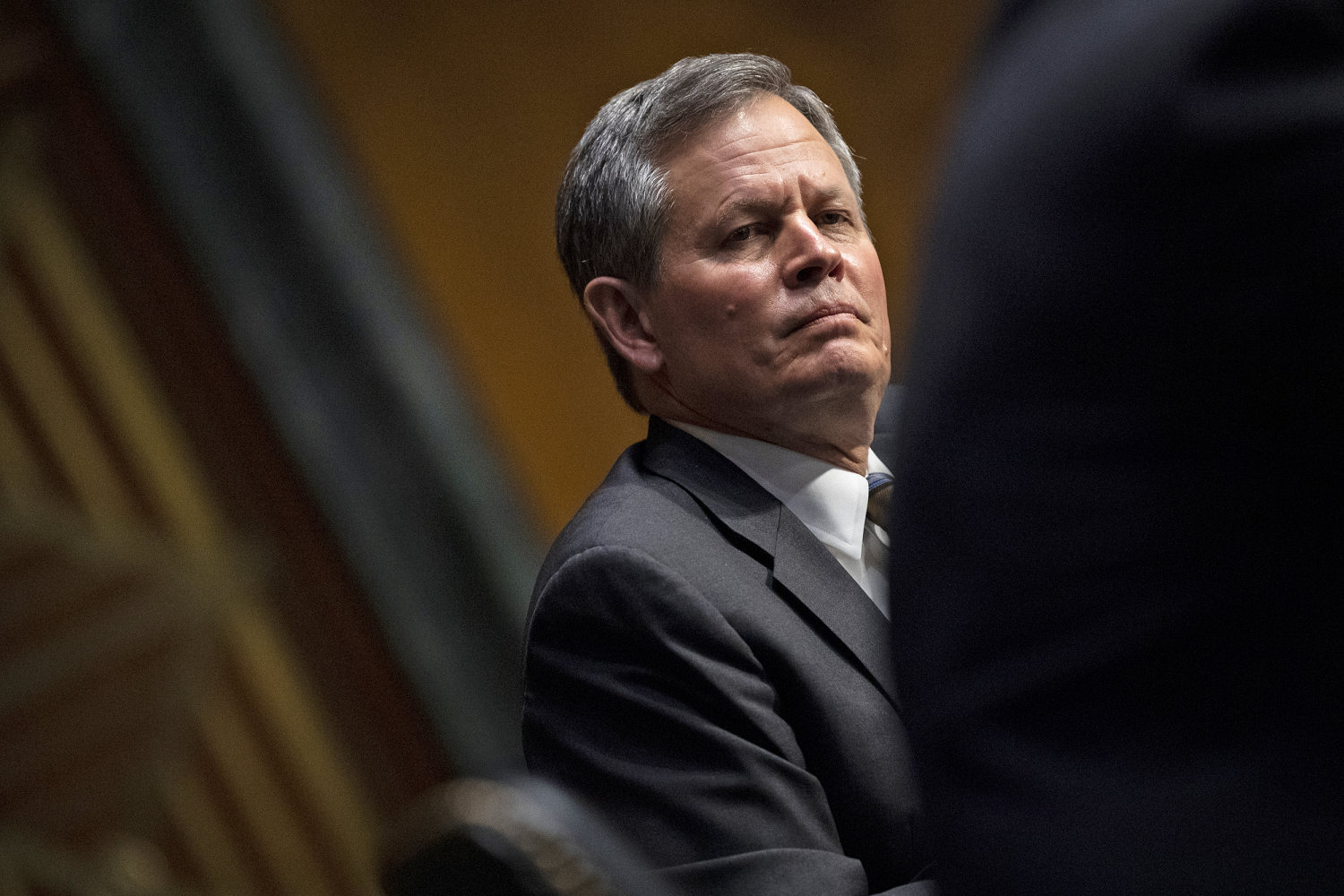
The political shockwaves out of Montana just leveled the playing field for the 2026 election cycle. Senator Steve Daines, the man who practically hand-delivered the Republican Senate majority in 2024, won’t be on the ballot for a third term. It’s a massive pivot. Usually, a sitting senator with his kind of fundraising muscle and institutional power cruises toward reelection. Instead, he’s stepping back at the height of his influence. This isn't just a local Montana story. It’s a national power shift that forces both parties to redraw their entire 2026 map.
Most folks expected Daines to stay and potentially climb the leadership ladder even higher. He’s been the architect of the GOP’s most successful recruitment strategies in years. By choosing to walk away now, he’s created a vacuum in a state that has become increasingly "red" but still possesses a stubborn streak of independent populism. You can bet every political consultant from Helena to D.C. is currently rewriting their strategy memos.
The Architect of the Red Wall Steps Down
Daines didn’t just occupy a seat. He ran the National Republican Senatorial Committee (NRSC) with a cold, calculated efficiency that many of his predecessors lacked. He was the one who pushed for "electable" candidates over firebrands, a move that paid off in spades during the last cycle. Seeing him opt out of his own race feels like a star quarterback retiring right after winning the Super Bowl.
His departure means Republicans lose the incumbency advantage in a cycle where they’re already defending a tricky map. Montana has trended Republican, sure, but it’s not Alabama. Jon Tester’s long career proved that a specific kind of Democrat can win there if the GOP candidate isn't a perfect fit. Without Daines at the top of the ticket to anchor the base, the seat is suddenly in play. It’s not a "toss-up" yet, but it’s definitely "leaning" rather than "safe."
Why the Timing of This Move Matters
Political timing is rarely accidental. Daines is leaving while his reputation is sterling within his party. He’s not leaving under a cloud or after a defeat. He’s leaving as the guy who won. That gives him immense kingmaker status in the upcoming primary.
The 2026 midterms are already shaping up to be a referendum on the current administration’s second-term agenda. Historically, the party in power loses ground during the midterms. If Daines had stayed, he’d be the heavy favorite. By leaving, he’s inviting a potentially messy primary. Montana voters hate being told what to do by outside PACs, and a crowded field could lead to the kind of infighting that gives Democrats a sliver of hope.
The Montana Political Identity Crisis
Montana is a weird place politically. It’s a state that loves its guns and its wilderness equally. Daines understood that balance. He leaned into the "Big Sky" brand while remaining a loyal foot soldier for the national GOP platform.
When you look at the potential successors, the names being floated are predictable but carry baggage. You’ve got House members like Ryan Zinke or Matt Rosendale who might see this as their "now or never" moment. But here’s the thing. Neither of them has the same broad appeal that Daines cultivated. Zinke has the pedigree but carries ethical scars from his time in the Interior Department. Rosendale has a loyal base but has struggled to win statewide in the toughest fights.
What This Means for the Senate Majority
Every single seat counts when the margins are this thin. The GOP currently holds a functional lead, but 2026 was always going to be a test of endurance.
- Fundraising Voids: Daines was a vacuum cleaner for campaign cash. He could call up donors in Big Sky or Wall Street and get the check. A newcomer won't have those deep-rooted networks on day one.
- Resource Diversion: The RNC and NRSC now have to spend money defending Montana. That’s money that won't go to flipping seats in Michigan or Pennsylvania.
- Candidate Quality Control: Daines was the guy vetting the candidates. Who vets the person replacing him?
Democrats See a Narrow Path
Don't think for a second the DNC isn't looking at this as a gift. While Montana has moved toward the right, the "Daines Factor" was a huge part of that stability. Without him, the race becomes about local issues—public land access, property taxes, and healthcare in rural areas.
If the Democrats can find a "mountain populist" candidate—someone who doesn't sound like they’re reading from a Brooklyn teleprompter—they can make this race expensive and exhausting for Republicans. They won't win easily, but they don't necessarily need to win to make this a win. If they force the GOP to spend $50 million defending a "safe" seat, they’ve already won a strategic victory.
Looking at the Hard Data
If you look at the 2024 results, the GOP dominance in Montana was clear, but the margins in high-growth areas like Missoula and Bozeman suggest a shifting demographic. These aren't just college towns anymore. They’re tech hubs and "Zoom towns" filled with people who might not share the traditional Montana GOP values.
Daines was able to bridge that gap by focusing on economic growth. A more ideological successor might lose those suburban voters. That’s the gamble the GOP is taking by moving on from a proven incumbent. It’s a high-stakes game where the prize is the direction of the federal judiciary and national fiscal policy for the next decade.
The Power Vacuum in Helena
The scramble isn't just at the federal level. This move trickles down. If a sitting Congressman jumps into the Senate race, that opens a House seat. If a state legislator jumps for the House seat, it creates a domino effect all the way down to the local level.
Montana politics is about to become a game of musical chairs. For voters, it means a relentless barrage of campaign ads starting much earlier than usual. For the country, it means the Senate map just got a lot more interesting.
The smart move for any donor or activist right now is to watch the Montana primary polling like a hawk. The minute a frontrunner emerges, look at their stance on federal land management. In Montana, that’s often the "hidden" issue that decides who goes to Washington.
The GOP needs to avoid a "race to the bottom" in the primary. If they nominate someone too far outside the mainstream, they’re handing a lifeline to a Democratic party that was otherwise gasping for air in the West.
Check the filing deadlines and watch the early fundraising reports for the Montana Secretary of State's office. Those numbers will tell you more about the 2026 Senate than any cable news pundit ever could. Start tracking the "cash on hand" for potential candidates like Zinke or Gianforte if they decide to play. That's where the real story lives.