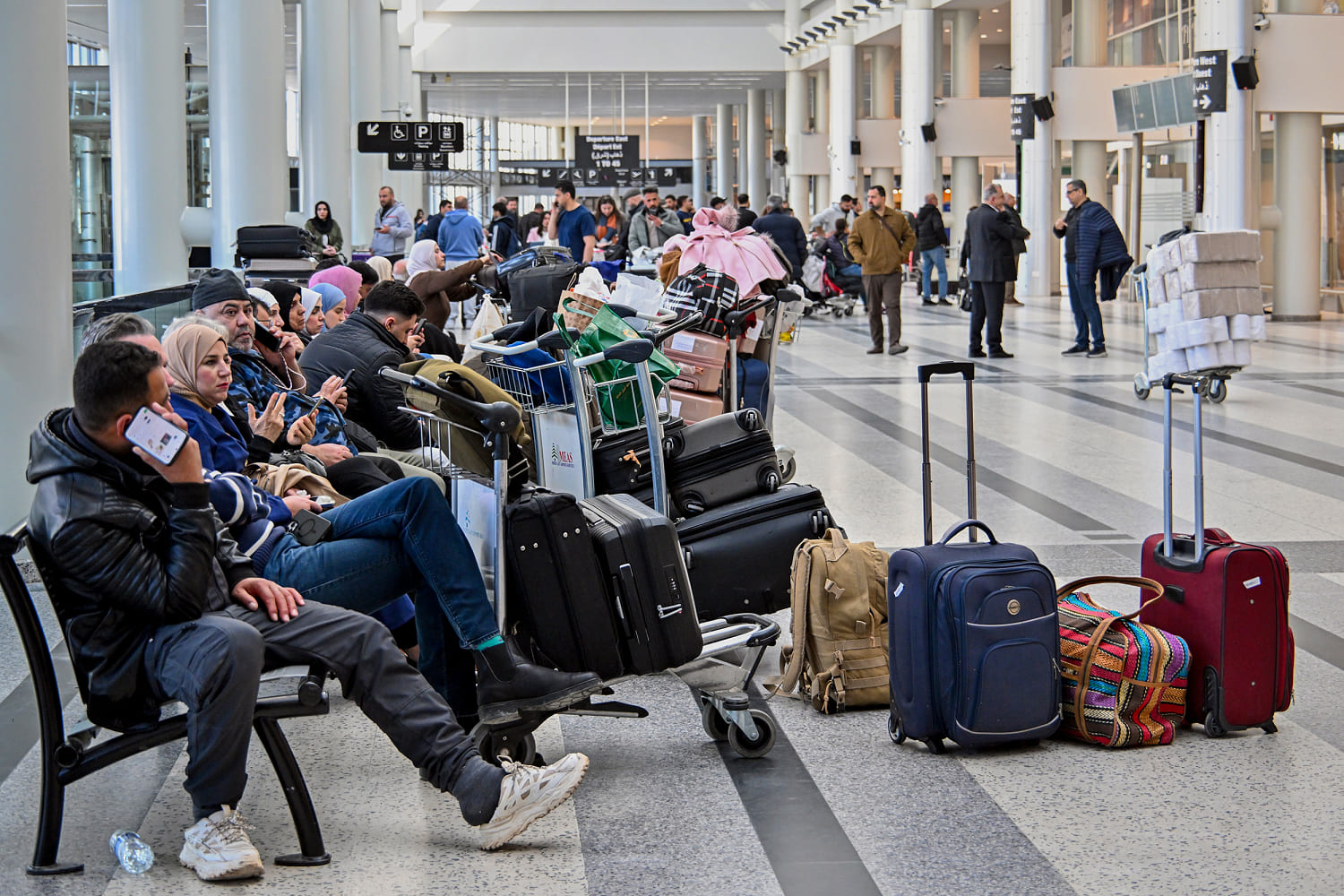
The phone call arrived at 3:14 in the morning. It was not a call—it was a frantic, muffled plea for help transmitted across half the planet, caught in the tenuous web of a satellite connection that flickered with every passing cloud.
My brother, Elias, was not supposed to be in a war zone. He was supposed to be finishing a consulting contract, packing his bags, and navigating the mundanity of a commercial flight home. But the city had folded inward overnight. The bridges were checkpoints. The streets were veins clogged with fear.
When thousands of Americans found themselves stranded in a place that had suddenly become hostile, the official response was not a rescue. It was a statement. A press release. A series of carefully calibrated words meant to dampen panic rather than resolve the terror of those trapped on the ground.
There is a profound, hollow ache in realizing that for your government, you have become a variable in a geopolitical calculation rather than a person.
Consider the mechanics of abandonment. It rarely happens through active malice. It happens through the paralysis of bureaucracy. When the first reports of the crisis surfaced, the administration’s focus was tilted toward optics and risk mitigation. They weighed the dangers of extraction against the risks of diplomatic entanglement. They discussed logistics in air-conditioned rooms while the people they were tasked with protecting were huddling in basements, listening to the rhythmic thud of artillery encroaching on their neighborhoods.
Elias sent a text. No movement. Airport is closed. They are saying we are on our own.
That phrase—on our own—is the death knell of trust. It is the moment when the social contract rips. We pay taxes, we adhere to the rule of law, and in return, we expect that if the floor falls out from beneath us in a foreign land, a hand will reach down to pull us back. When that hand does not appear, or when it lingers in the air while committees debate the cost of its reach, the silence is deafening.
The administration’s public posture was one of concern. They promised that they were working around the clock. They spoke of safe passages and coordinated efforts with local partners. But ground truth is a stubborn beast. It does not care about press cycles. It does not respond to diplomatic cables.
I remember reading the headlines. They were sterile. Thousands stranded. Officials urge caution. These words did not carry the weight of the air in that basement. They did not convey the reality of running out of clean water or the gut-wrenching decision of whether to attempt a dash to the border in a civilian vehicle or wait for an evacuation that might never come.
The reality is that these crises are often treated as fire drills for the state. If the optics remain controlled, the policy is deemed a success. But for the thousands of families waiting for a signal, for a plane, for a way out, the success of the policy is irrelevant. The only metric that matters is survival.
What happens when the state fails to act is a form of betrayal that scars a citizen’s identity. It forces an impossible choice: you either cling to the belief that your government is coming, or you descend into the raw, predatory instinct of self-preservation. Many choose the former, and in doing so, they gamble their lives on the competence of distant bureaucrats.
I know the frustration of being the one left behind. I know the feeling of watching a government spokesperson deliver a calm, measured assessment of a situation that is actively destroying your world. The disconnect is not just a gap in communication; it is a chasm of human experience. They are talking about exit strategies. You are talking about making it to the next sunrise.
The administration’s struggle in this instance wasn't just about the logistics of moving people through a war zone. It was about the failure to recognize that these aren't just statistics. They are teachers, students, aid workers, and retirees. They are not bargaining chips to be leveraged in a regional conflict.
History has a cruel way of repeating these patterns. We see it in the way evacuations are often prioritized—the high-value assets and diplomatic personnel move first, while the private citizens, the ones who didn't know they were standing on a powder keg until the fuse was already lit, are left to navigate the debris.
There is a cold logic to this, perhaps. A state must preserve its function before it can attend to its diaspora. But that logic offers little comfort when you are watching your family member's location ping drift toward a danger zone, and the official map still shows everything as stable.
The crisis of abandonment is never really over, even when the last plane lands. It lives on in the quiet, lingering suspicion that the promise of protection is a conditional one. It changes the way you look at a passport. It stops being a key to the world and starts looking like a piece of paper that only holds value when the wind is blowing in your favor.
Elias made it out, eventually. Not because of a coordinated government operation, but because a local driver took a bribe to weave through back alleys, avoiding the main arteries where the fighting was heaviest. He arrived at the border with nothing but his clothes and a look in his eyes that I haven't been able to talk him out of since.
The administration hailed the completion of the evacuation. They counted the heads of those who returned. They closed the file.
But out there, in the dust, the shadow of that choice remains. The thousands who were left to their own devices didn't just survive an evacuation. They survived a government that decided, for a time, that they were expendable.
You cannot measure the cost of that in a budget line. You measure it in the silence that follows when a survivor looks at a flag and feels nothing but the phantom weight of a phone that stopped ringing.
The dust never quite settles. It just waits for the next time the world turns, and the promise, fragile as it is, is put to the test again. The question is not whether the government can pull us out. It is whether, when the sky starts falling, they will even try to see us.