The machinery of war in South Sudan never truly cooled; it simply transitioned into a profitable, low-intensity stalemate. While international observers focus on the repeated delays of national elections, now pushed to late 2026, the reality on the ground has already bypassed the ballot box. The world's youngest nation is not "re-sliding" into civil war because, for the millions displaced and the thousands still dying in localized "cleansing" operations, the conflict never ended.
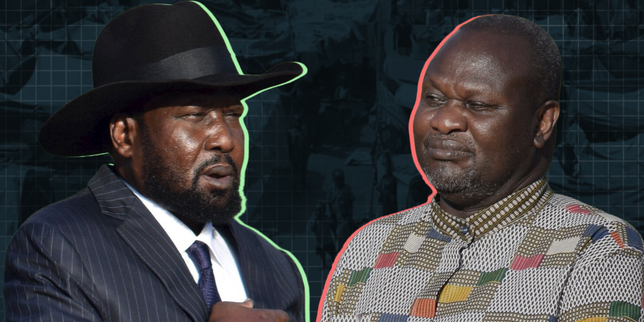
What we see today is a predatory elite class in Juba using the veneer of a peace deal to consolidate wealth while the periphery burns. The 2018 Revitalized Agreement on the Resolution of the Conflict in South Sudan (R-ARCSS) was supposed to be a roadmap. Instead, it became a survival manual for the two protagonists, President Salva Kiir and First Vice President Riek Machar. They have successfully trapped the country in a cycle of "no war, no peace" that serves their immediate interests while the economy undergoes a total cardiac arrest.
The Economic Engine of Instability
War is expensive, but for the South Sudanese elite, peace is proving even more costly to their grip on power. The national treasury is functionally empty. This is not just a matter of poor management; it is a structural collapse. The primary artery of the state—oil—has been severed.
The conflict in neighboring Sudan has resulted in significant damage to the pipelines that carry South Sudanese crude to the Red Sea. Without this revenue, the government cannot pay the salaries of the very soldiers tasked with maintaining order. When a soldier isn't paid, he doesn't just quit. He uses his rifle to collect his own "tax" from the local population. This is the granular reality of the security crisis. It isn't a grand ideological struggle between Dinka and Nuer elites anymore. It is a desperate, fragmented scramble for resources among men with guns who have been abandoned by their commanders.
The hyperinflation of the South Sudanese Pound has rendered the average civil servant’s salary worth less than a few bags of grain. In Juba, the markets are quiet because no one can afford the imports. In the states of Jonglei and Warrap, the quiet is more ominous. It is the silence of abandoned farms.
The Myth of the Ethnic Monolith
Most analysis of South Sudan falls into the trap of viewing the conflict as a binary struggle between the Dinka and the Nuer. This is a dangerous oversimplification that ignores the fractured nature of modern South Sudanese politics. The "Dinka" are not a monolithic voting block, nor are the "Nuer."
Internal fractures within the Dinka power structure are currently as volatile as the rivalry between Kiir and Machar. Powerful generals and regional governors are carving out autonomous fiefdoms, aware that Kiir’s health and political longevity are finite. These sub-national actors are the ones driving the "communal violence" reported in the media. By arming local militias to settle land disputes or cattle raids, these power brokers demonstrate their relevance to Juba. It is a bloody form of collective bargaining.
Furthermore, the opposition is equally fragmented. Riek Machar’s influence over the SPLM-IO (Sudan People's Liberation Movement-In Opposition) has waned. Younger commanders, tired of living in what they perceive as a gilded cage in Juba, are defecting or forming their own splinter groups. These "Holdout Groups" did not sign the 2018 deal and have no incentive to respect its terms. They see the Juba government not as a partner in peace, but as a sinking ship they intend to scuttle.
The Election Trap
The international community, led by the UN and the Troika (US, UK, and Norway), has spent years pushing for elections as a magic bullet for legitimacy. This is a mistake.
To hold a credible election, you need a unified national army, a census, and a settled population. South Sudan has none of these. The "unified forces" envisioned in the peace deal exist mostly on paper. In practice, soldiers still owe their loyalty to their specific ethnic commanders. If an election were held tomorrow, it would not be a democratic exercise; it would be a census of grievances.
The government’s decision to postpone the vote to December 2026 was presented as a logistical necessity. In reality, it was a tactical retreat. Kiir knows that a failed election—or one perceived as a sham—could trigger the very explosion he is trying to delay. But delay is not a strategy. It is a stay of execution. The political class is betting that they can outlast the patience of the international community, continuing to siphon off what remains of the country's mineral wealth while the population subsists on humanitarian aid.
Humanitarianism as a Subsidy for Failure
There is a cynical feedback loop occurring between Juba and the international aid industrial complex. South Sudan is one of the most dangerous places in the world for aid workers, yet it is also one of the most dependent on them.
By providing food, medicine, and basic services, NGOs and UN agencies are inadvertently subsidizing the government’s failure. The elite in Juba feel no pressure to provide for their citizens because they know the "international community" will step in to prevent a total famine. This allows the state to spend its meager resources on weapons and security details for the ruling class.
The numbers are staggering. Over 7 million people—more than half the population—face acute food insecurity. This is not caused by drought alone. It is a man-made catastrophe. Fields are not planted because farmers fear being murdered. Grain stores are looted by roaming militias. Cattle, the traditional store of wealth, are stolen in raids that now involve heavy weaponry and tactical coordination.
The Regional Wildcard
South Sudan does not exist in a vacuum. Its fate is tied to the chaotic dynamics of the Horn of Africa. The civil war in Sudan has pushed hundreds of thousands of refugees back into South Sudan, a country that cannot even feed its own residents. This influx is straining the already fragile social fabric in border states like Northern Bahr el Ghazal and Upper Nile.
Then there is the role of regional hegemons. Ethiopia, Kenya, and Uganda all have vested interests in South Sudan, ranging from security concerns to lucrative construction contracts. Historically, these neighbors have acted as mediators, but their focus has shifted. Ethiopia is preoccupied with its own internal instabilities; Kenya is focused on its role as a regional financial hub and the unrest within its own borders. This leaves a vacuum where there used to be at least some regional pressure for accountability.
The Failure of Targeted Sanctions
For years, the standard response from Washington and Brussels has been targeted sanctions against high-ranking officials and an arms embargo. To be blunt: they haven't worked.
The individuals targeted by these sanctions have long ago moved their assets into opaque real estate markets in Nairobi, Entebbe, and Dubai. They operate through networks of front companies and relatives. The arms embargo is equally porous. Small arms flow across the borders with ease, often facilitated by the very regional neighbors who sit at the peace talks.
The "business" of South Sudan is too profitable for some to let peace get in the way. Whether it’s illegal logging, gold mining, or the diversion of fuel, there are shadow economies flourishing in the chaos. These networks are more resilient than any diplomatic memorandum of understanding.
Beyond the Juba Bubble
To understand why the country is failing, one must look away from the luxury hotels of Juba. In the bush, the state does not exist. There is no judiciary, no police force, and no social safety net. Justice is meted out through the barrel of a gun or through traditional systems that are being overwhelmed by the scale of modern violence.
The youth of South Sudan, a demographic that makes up the vast majority of the population, are being lost. They have grown up in a culture where the only path to status and security is through military service or militia membership. Education is a luxury. Displacement is a way of life. When we talk about "civil war," we are talking about a generation of young men who have never known a functional state and see no reason to believe in one.
This is not a "re-slide." It is a permanent state of emergency. The current government is a collection of rivals who hate each other but are bound together by a mutual fear of losing their grip on the treasury. They are not building a nation; they are managing a collapse.
The focus on the 2026 election date is a distraction from the deeper rot. Even if the vote happens, and even if it is relatively peaceful, it will not address the fact that the South Sudanese state is a hollow shell. The institutions required to govern—a functioning central bank, an independent court system, a professional military—simply do not exist in any meaningful form.
Demand that the political leaders in Juba account for the missing oil billions. Force a transparency on the security expenditures that dwarf the health and education budgets combined. Until the cost of maintaining the status quo becomes higher than the cost of genuine reform, the leaders of South Sudan will continue to play their deadly game of musical chairs while the music—and the country—fades into nothingness.
Stop looking for a single moment when the war restarts. It is happening now, in every village where a soldier steals a goat and in every office where a bureaucrat pockets a bribe intended for a clinic. The collapse is not a future event; it is the current reality.